Written by: Nobuhle Sithole Xaba
My internship journey at David Krut Arts
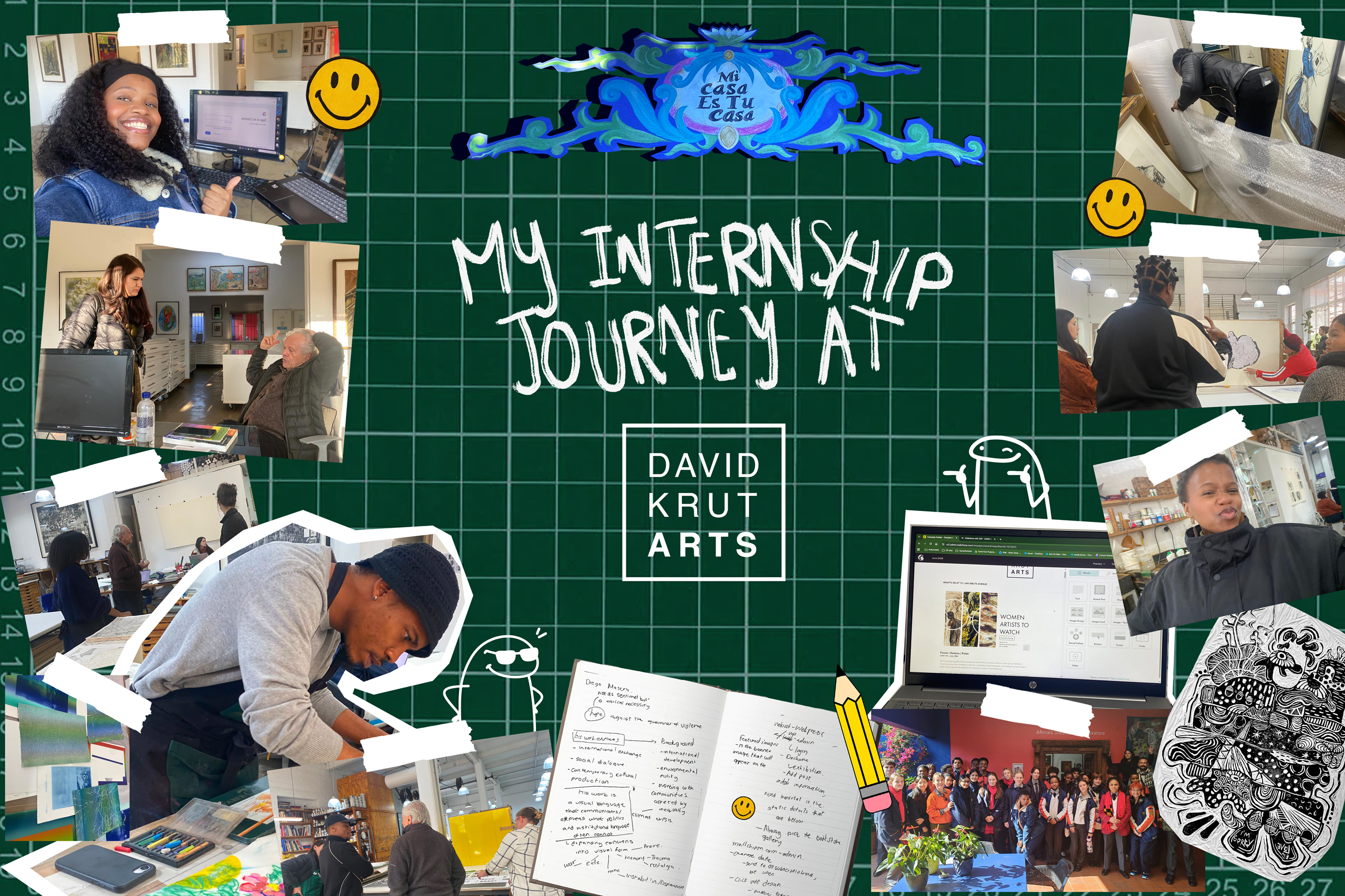
I arrived at the 151 gallery 30 minutes early, nervous but filled with so much excitement. Having the opportunity to be interning at the David Krut Gallery was an opportunity I did not take for granted. I did not yet know how much this internship would ask of me, or how much it would give back, but I was excited for the journey ahead.
By the end, I understood the David Krut Gallery the way you can only understand a place once you’ve worked inside it. It is an environment that is community-centred – not just a single “gallery,” but made of three pillars: the workshop, the gallery, and the bookstore, each one shaping the others and coming together to create a community that nourishes and nurtures creativity. The way the gallery prioritises long-term partnerships with artists speaks to its dedication and commitment to pouring into the creative space and supporting artists.

The Team
What I learned is that a gallery is defined by the team behind it, even before it showcases the artworks it displays.
- Marq welcomed me into warm conversations about artists like Maja Maljevic, Peter Cohen, and Heidi Fourie before I’d even put my bag down on my first day – a first taste of the intellectual energy that defines the space. He became my motivator, advisor, and friend at the gallery.
- Brilliant showed me, in real time, what it looks like to sell not just an artwork but an experience. She was warm, persuasive, never pushy, and always ready to teach — the one who first showed me how to properly pack and label a piece, how to know when to gently step back from a difficult client, and why you never offer a payment plan the moment you meet someone.
- Alison became something like my technical mentor. She was patient through every WordPress and Elementor tutorial, every viewing room I got stuck on, every “wait, what link do I even attach to this enquiry button?” moment.
- Noma opened up the unglamorous but essential machinery behind the scenes: the stock inventory system, the archiving process, the quiet risk of losing years of records to an outdated database.
- Sbongiseni Khulu, one of the workshop’s printer makers, described himself simply as an extension of the artist, and that framing has stayed with me. I was inspired by how much he knows about printing. He was quick to correct and teach, and willing to sit with my never-ending questions and answer every one of them. Watching him work reminded me that printmaking at David Krut isn’t a service performed on someone else’s vision; it’s a genuine collaboration, where the printer’s skill and instincts become part of how the work comes into being.
- Inno showed me a loving, motherly kindness and patience throughout the internship — making sure I was safe and comfortable, and showing me how to create invoices for bookshop orders.
- And then there was Ame Bell, who spoke to me openly about the realities of gallery life: the unglamorous administrative work, the importance of teamwork and selflessness, the fact that even a small mistake can look unprofessional to a client, so we hold each other to a high standard, together.
- My conversation with David Krut himself remains a highlight I don’t think I’ll forget: art, politics, geography, education, all in one conversation, and his belief that a good artist needs three things: knowledge, creation, and collaboration. Imagination, he told me, is the ceiling of what you can create; knowledge is what raises it.
I also had the privilege of meeting working artists at the workshop. Steve, still finding his direction; Nkhensani Mkhari, excited about new chapters in his life and practice; Stephen Langa, whose youthful energy defied everything I expected from his work that carries so much weight; and Mary Sibande, whose down-to-earth personality and consistency across decades of work reshaped how I think about a sustainable creative identity. Watching them work reminded me that behind every finished piece is a person still figuring things out – much like the rest of us.
What I Made
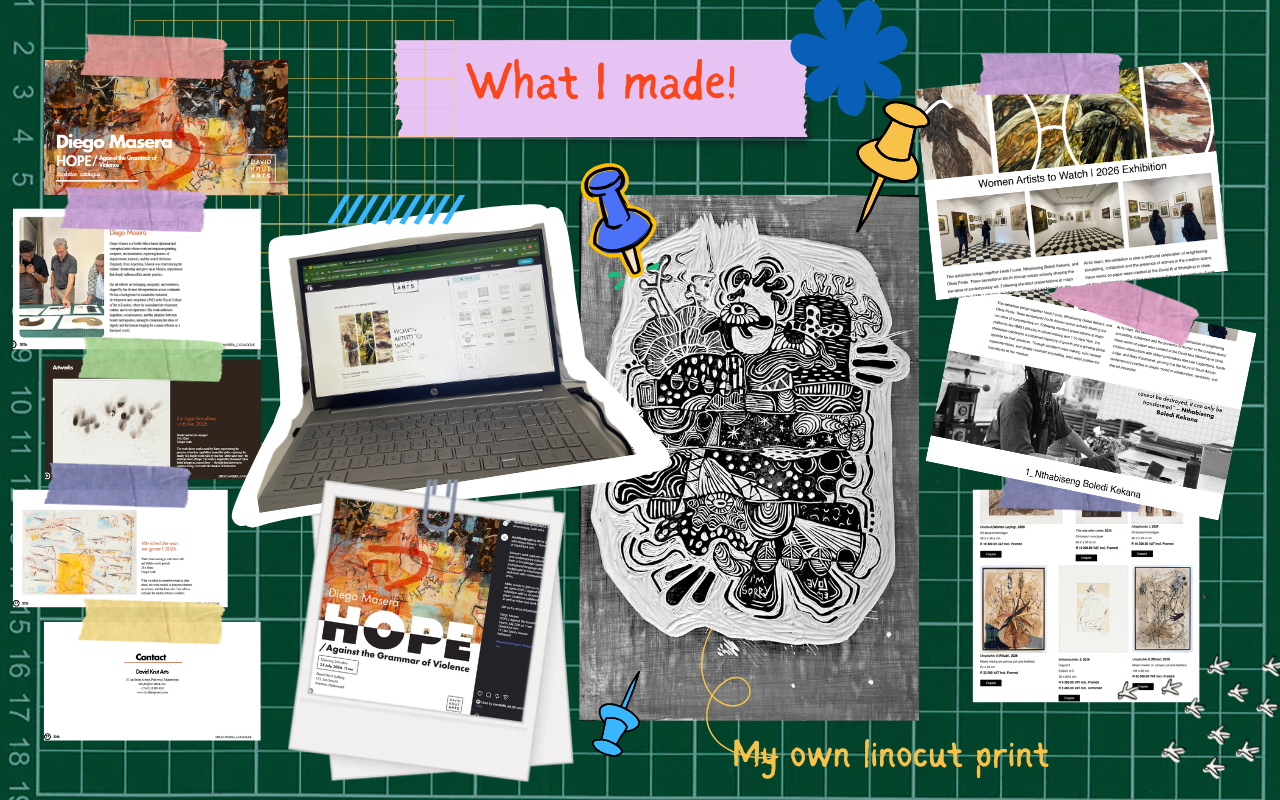
My hands were rarely idle. I designed a full exhibition catalogue for Diego Masera, moving from a rough first draft to a Canva redesign shaped by round after round of honest feedback. Feedback that taught me more about editorial restraint than any brief could. I built and rebuilt the Women Artists to Watch viewing room, wrote and published the monthly client mailer, and designed a rough mockup handout for the Joburg Art Fair.
I learned to pack and label artworks correctly: full name, title, edition number, bubble wrap on every side. I learned the linocut process from Kim, carving my own piece, “Every Night,” and discovering, almost by accident, how therapeutic that slow, careful cutting can be. I participated in a questionnaire game Marq built for visiting students, watching them talk passionately about artworks, and it reminded me why galleries open their doors to young people at all.
What Stayed With Me
If I had to compress this internship into a few lessons, they would be these:
The three pillars only work because they work together
The workshop, the gallery, and the bookstore are not three separate departments doing three separate jobs, but they are one ecosystem. What gets made in the workshop is shown in the gallery and written about in the mailer; what sells in the bookstore funds the space that lets artists keep making work. Understanding that interdependence changed how I see a gallery’s role altogether.
Nothing here happens alone
Every project I touched passed through several hands before it was finished. From Ame’s feedback, Alison’s tutorials, and Marq’s critical eye and feedback. Teamwork wasn’t a nice-to-have; it was the only way anything actually got made well.
A gallery is a community before it is a business
From the students who came through on a school visit, to the artists dropping in to talk through their next body of work, to the quiet mentorship happening in every corner of the workshop, I saw how deliberately David Krut Arts builds belonging, not just an audience.
Creativity needs protecting, not just admiring
Watching artists like Sbongiseni, Stephen, and Mary work, I understood creativity as something that has to be nurtured and defended, not just celebrated from a distance. The care taken with each artist’s process reflects a real belief that the work matters.
The importance of Archiving and inventory
Noma’s warning about the outdated DArt system losing archival information and the ongoing challenge of tracking artworks made years ago made it clear that a gallery’s memory is fragile. Losing track of a piece isn’t just a filing error; it’s a real financial and historical loss.
Galleries need young designers
Working alongside a team that has built this space over the years, I also came to appreciate the value of what I offered: a fresher, more current design instinct that could co-exist with the company’s brand identity and visual language. Legacy and new perspective need each other to keep a space like this alive and evolving.
An artist's survival
David’s honesty about artists needing income beyond their art, and Ame’s transparency about the gallery’s own financial realities, showed me that sustaining a creative life takes deliberate infrastructure: pricing, partnerships, administration, as much as it takes talent.
Flexibility is non-negotiable
No two days looked the same. I moved between design work, admin, packing artworks, learning new software, and sitting in on conversations I hadn’t planned for, often within the same afternoon. Being willing to shift gears without losing quality or attitude turned out to be one of the most useful things I brought with me – and one of the most valuable things I’m leaving with.
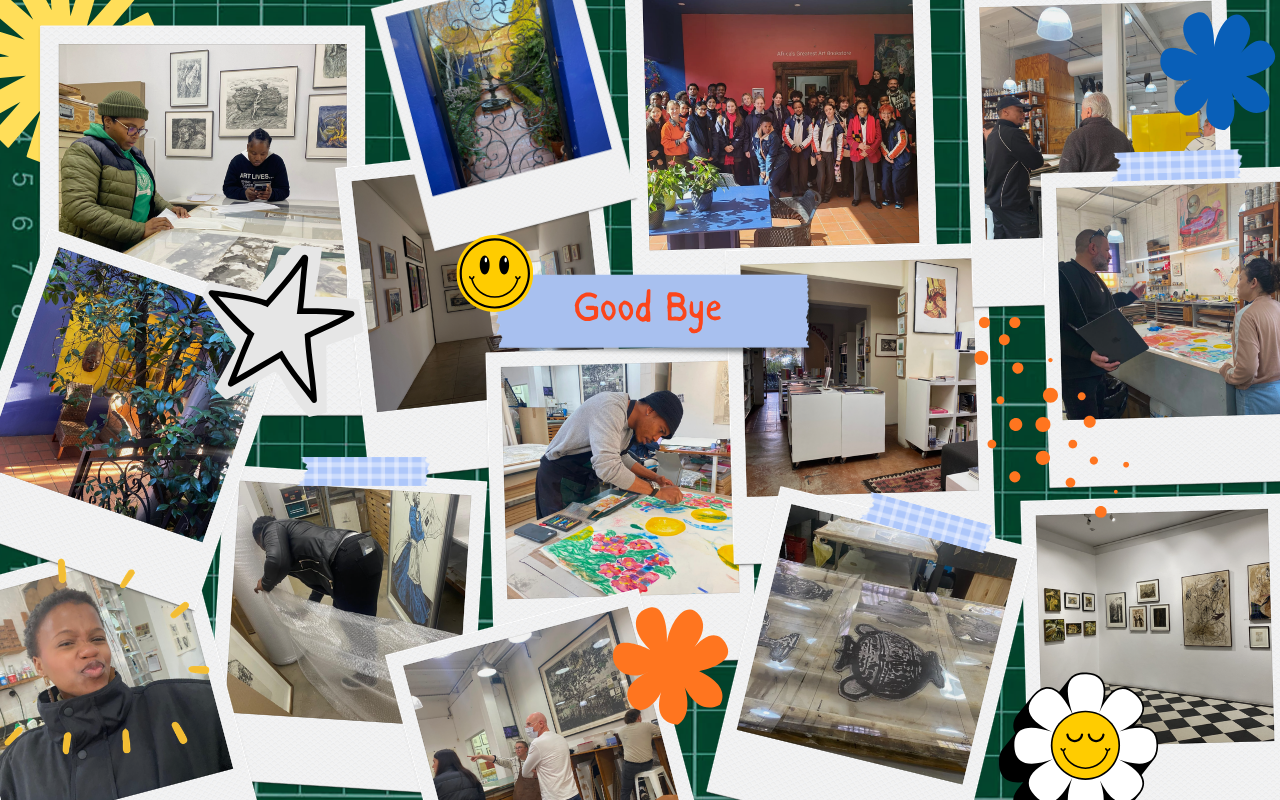
I’m deeply grateful to everyone at David Krut Arts for the generosity of their time and knowledge. This experience didn’t just add a line to my CV – it shaped how I see my own place in the art world going forward,
Thank you!