Blessing Ngobeni’s Guide to Reading His First Etchings
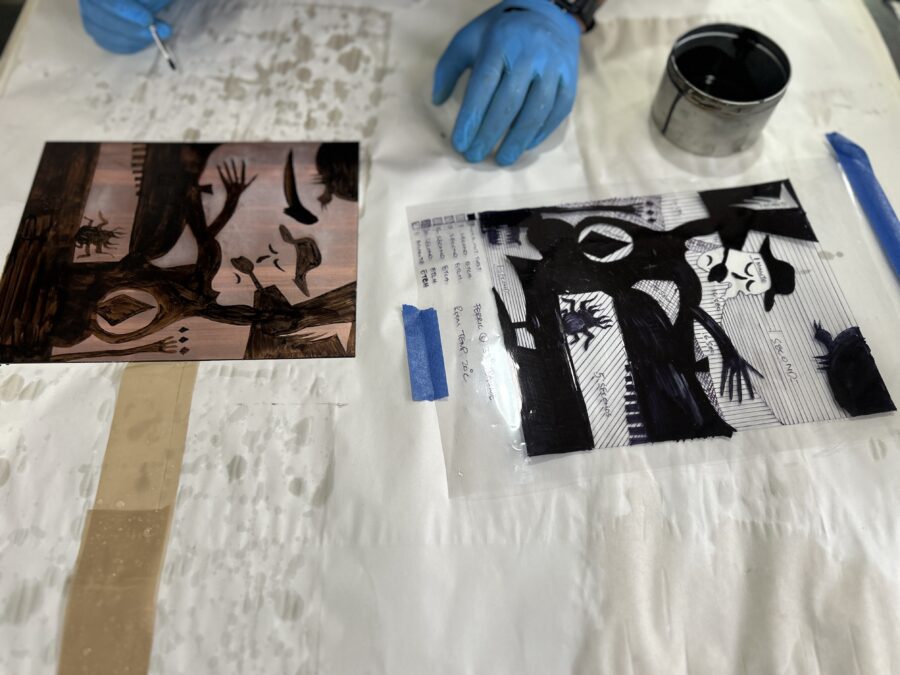
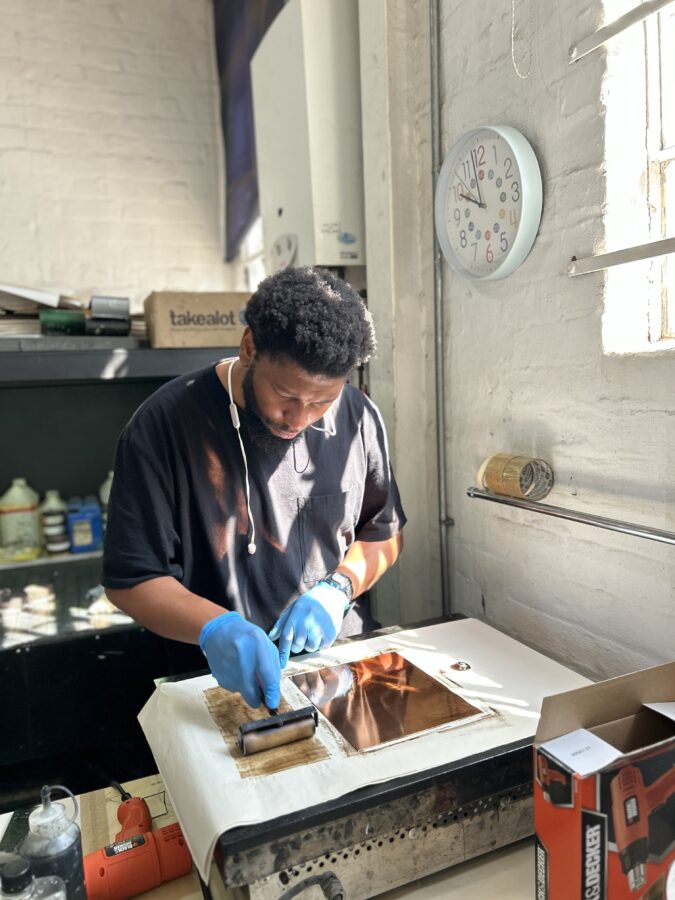
Blessing Ngobeni collaborated with David Krut Workshop Printer Sbongiseni Khulu on a 6 plate series of etchings in late 2025. These etchings explore the spirit of jazz through different cultures and contexts. You can read more about the project as a whole here. Ngobeni has curated a collection of writing that explains the inspiration, context and background behind each image, hoping to give the audience an insight to the meaning of each piece and what he hopes the viewer can take away from it.
The following text is from Ngobeni himself.
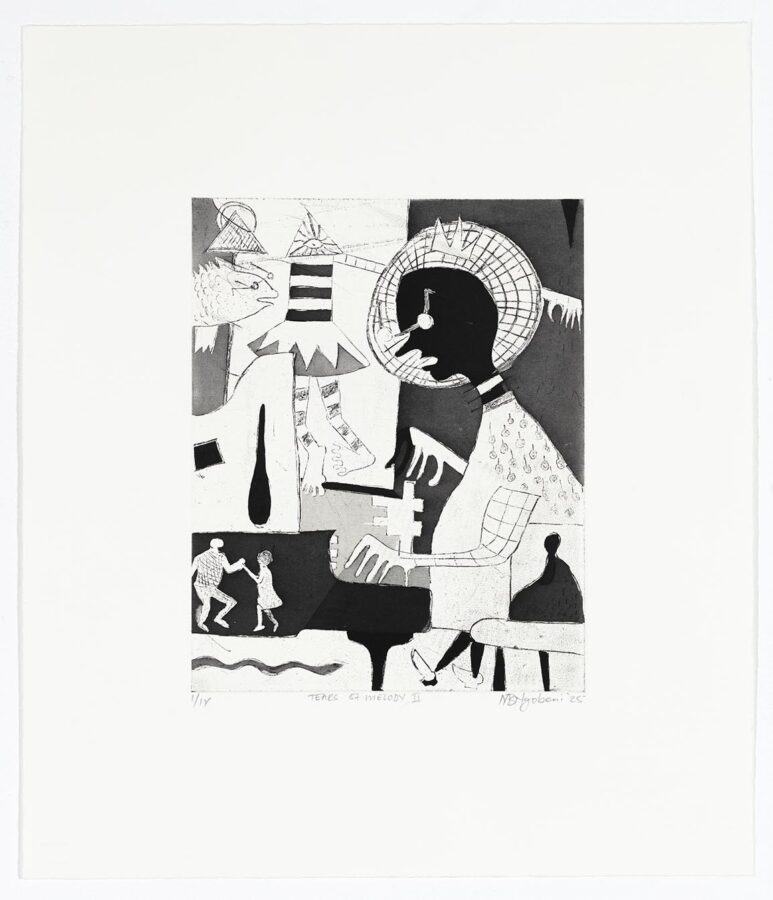
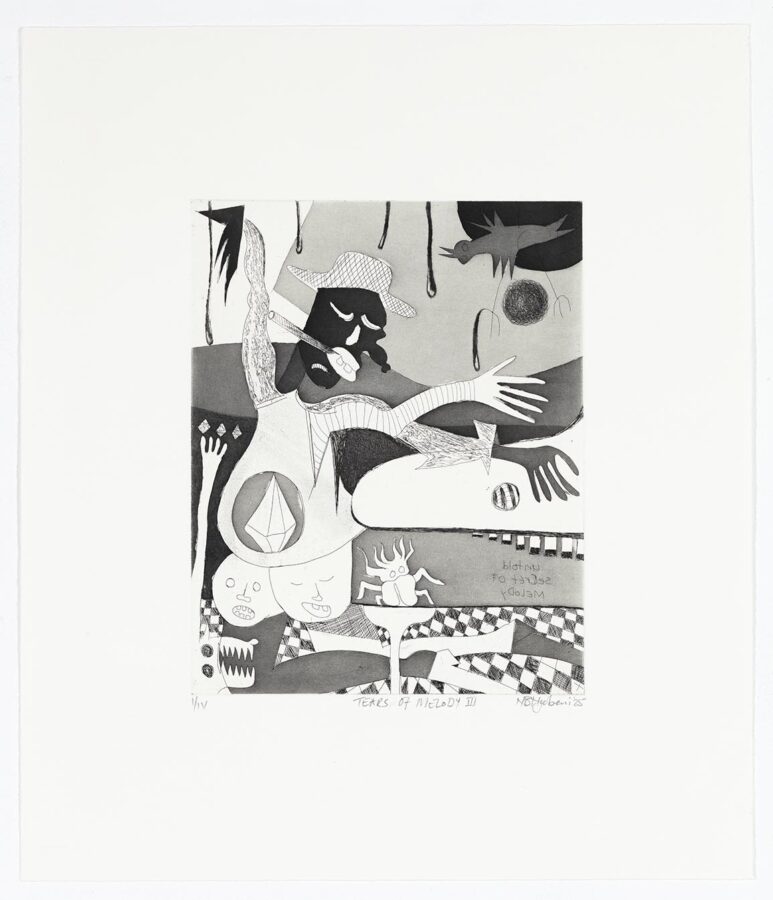
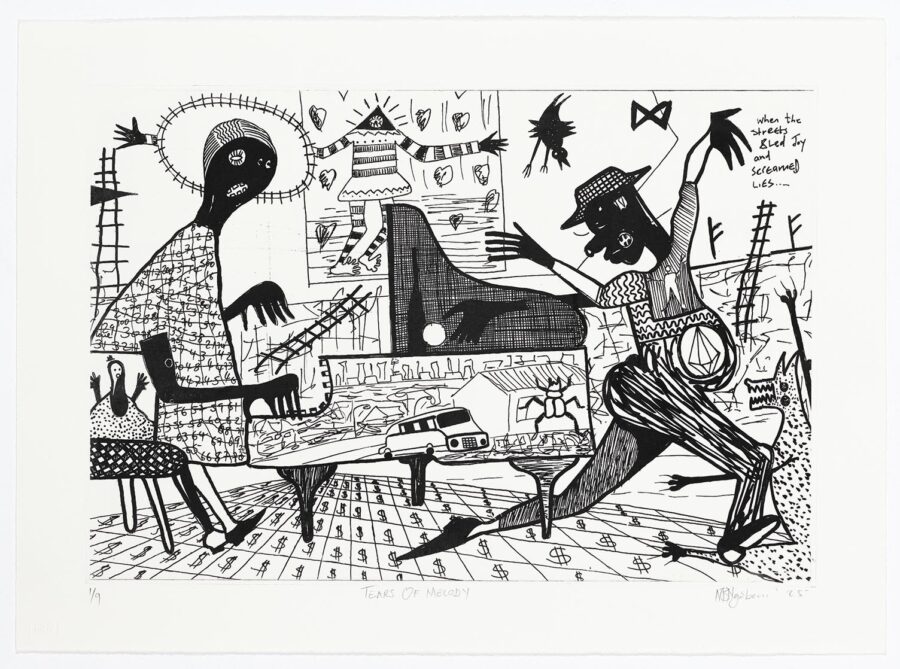
Tears of Melody
In Tears of Melody, the printing plate mating with a paper becomes a stage where sorrow and beauty perform side by side. It is the sound of pain that found rhythm, a cry that refused to die in silence. The work speaks to the paradox of creation: that even anguish can compose a song when filtered through the printmaker and artist’s hand. The “tears” represent more than sadness; they are the liquid memory of struggle, of a people, of an individual confronting the weight of existence.
They carry stories unsung, fragments of memory, injustice, and resilience. Yet, as they fall, they form melody, a harmony of chaos, where grief becomes art, and pain transforms into rhythm and colour.
In these etchings, emotion is not simply expressed but orchestrated. The etching movement plays like a musician’s bow, translating each emotional note into form, suggestive drips, scratches, bursts of light, and layered textures. The image was adopted from an original painting that is colourful and gold leaf may shimmer through, as if to suggest that within every tear lies a hidden brilliance, a quiet triumph of the human spirit.
Tears of Melody is not about sadness alone; it is about transcendence. It’s the story of how suffering sings — how brokenness, when reimagined through art, becomes a universal song of endurance and renewal.
The leading character that is adopted from my performance art piece titled “The Spirit of Water Dancing” a travelling spirit walking towards where human resides in search of where to belong.
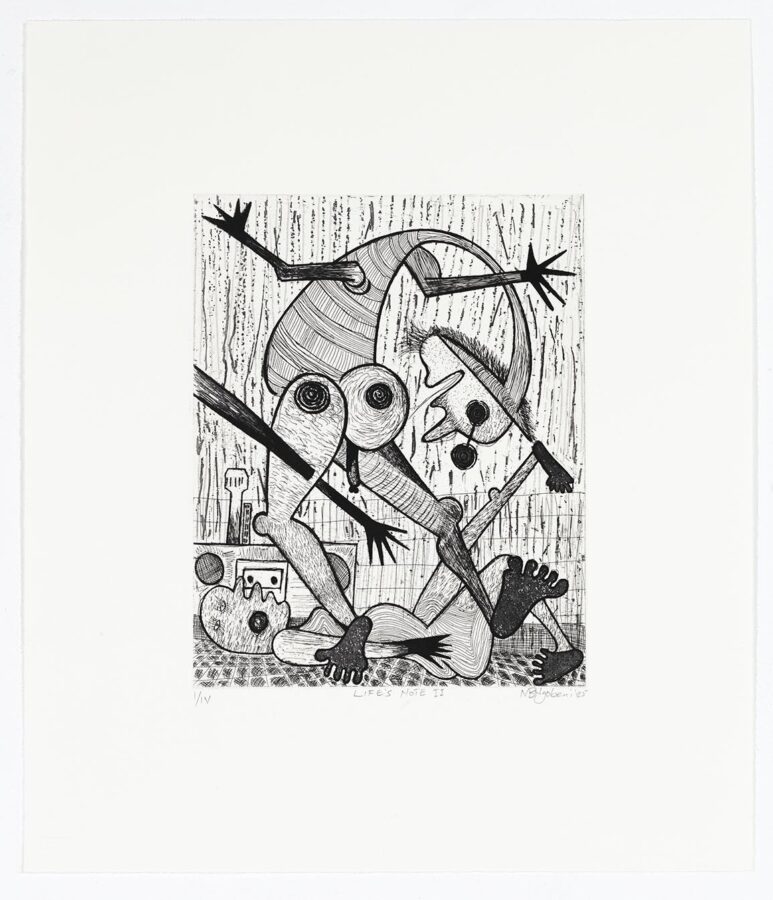
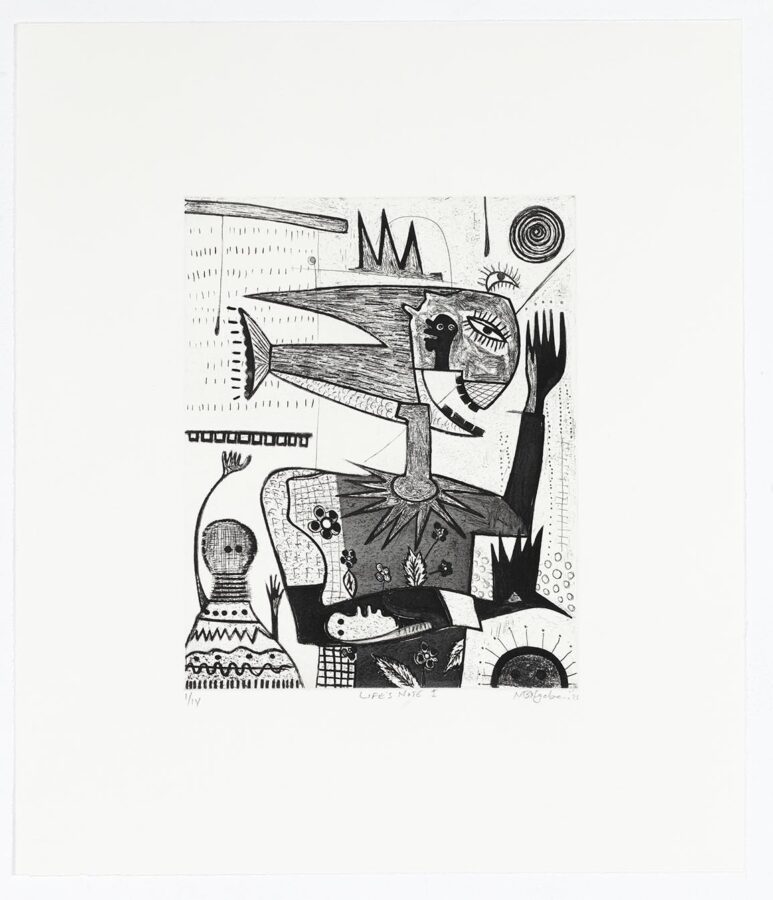
Life’s Notes
Every day writes its own note on the skin of existence. Some in rhythm, others in rupture. This work listens to the sound between those notes the pauses, the whispers, the forgotten melodies that live beneath the noise of survival.
In Life’s Notes, the canvas becomes a page of memory and resistance. Each mark, each stroke, carries a vibration of lived experience a song composed by the pressure of the world and the endurance of the human spirit. The figures, fragmented yet present, echo the improvisation of life itself: we play what we have, not always what we choose.
The work speaks to the idea that life is not written in harmony, but in overlapping layers of joy, struggle, loss, and rebirth.It’s a visual score, chaotic but honest, where colours behave like instruments, each one trying to find its voice in the orchestra of existence.
The artist becomes a conductor of time, weaving the gold of memory with the darkness of reality, transforming the unfinished symphony of human experience into something that feels eternal. The Spirit of the water dancing still appears as it guides the artists creative process and help with regeneration of strength towards challenging the status quo’s future.
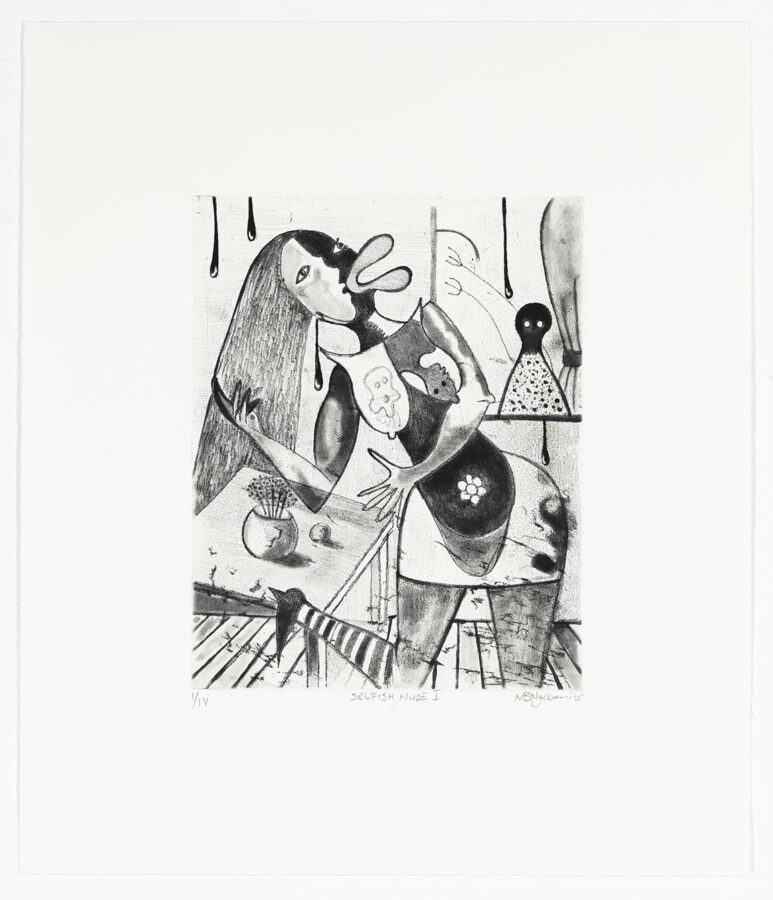
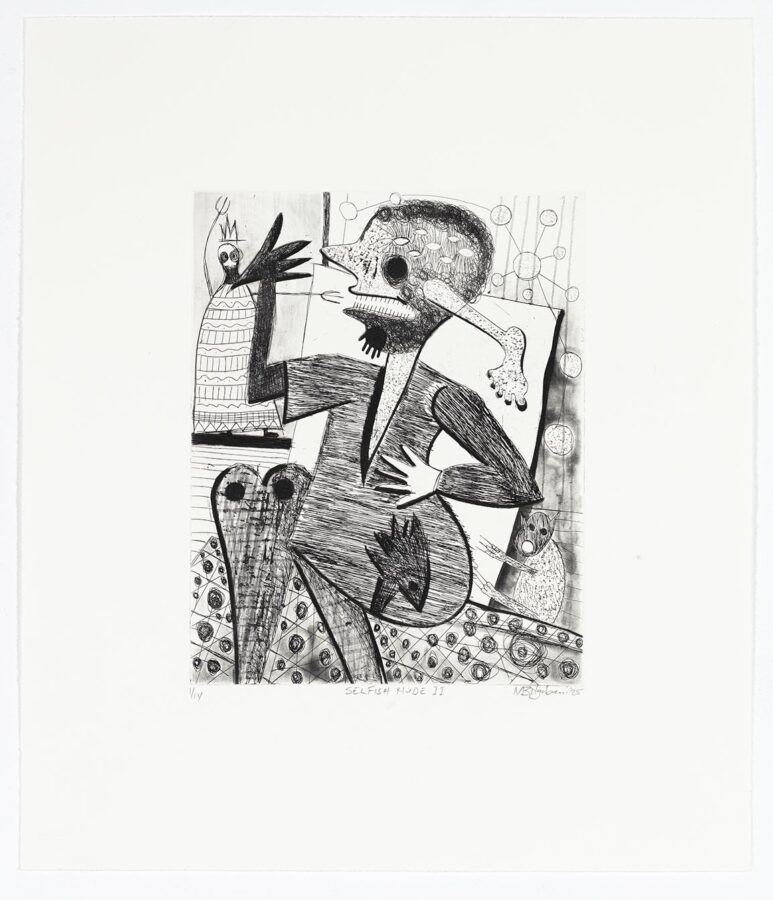
Selfish Nude: The Naked Truth of Desire
In Selfish Nude, the body is not a symbol of beauty, it is a confession. This work strips away the polite performances of identity to expose the raw, uncomfortable intimacy between the self and its desires. It’s not the nudity of flesh that I’m interested in, but the nudity of the mind, the layers we shed when we are alone with our thoughts, our fears, our hunger to be seen.
The figure in Selfish Nude carries no shame, yet no glory either. It floats between self-acceptance and self-obsession. In this space, vulnerability becomes power, and power becomes loneliness, memory, shining, fragile, seductive, reminding us how we decorate our pain to make it acceptable.
Society has taught us to hide behind clothing, not only of fabric but of roles: artist, citizen, lover, survivor. Here, those layers fall away. What remains is the naked ego, the self that claims space without apology, the self that chooses itself first. But Selfish Nude is not about arrogance. It’s about confrontation. It’s about seeing what is left when all performance is gone. What does it mean to be selfish enough to be honest?
In a world where everything is curated, the Selfish Nude stands as rebellion, a body unfiltered, a truth untamed. It whispers that perhaps the most radical act of love is to face oneself, without costume, without witness, without fear.
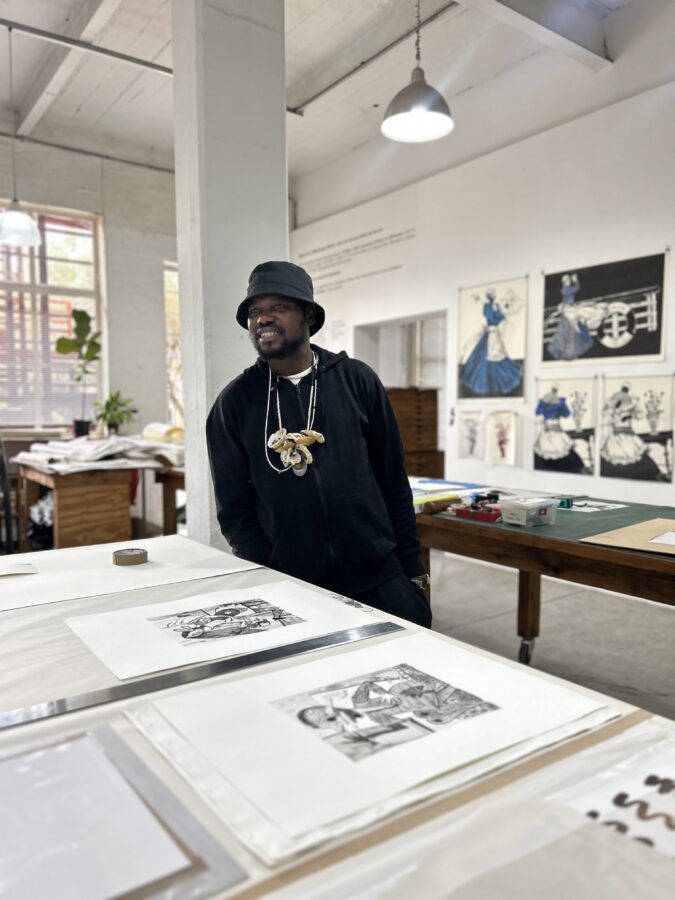
David Krut Arts was pleased to release Ngobeni’s collection of etchings at the INK MIAMI Art Fair 2025.
Blessing Ngobeni is a South African visual artist whose practice discusses and criticizes the country’s social and economic state. His visual language is influenced by the Dada, Neo-Expressionist and Surrealist artistic movements. After a difficult childhood that ended with Ngobeni in prison for 6 years, Blessing studied his matric and was exposed to the Tsoga (Wake Up) Arts Project which introduced him to the world of art.
Ngobeni has won the Standard Bank Young Artist Award(2020), Reinhold Cassirer Art Award (2012), 200 Young South Africans (Mail and Guardian) and the Art and Culture Lifetime Achievement Award (2013). The Blessing Ngobeni Art Prize is an award that grants winner a 12 week residency and solo show at the Everard Read Gallery, Johannesburg. The competition aims at assisting young and emerging artists under 35.