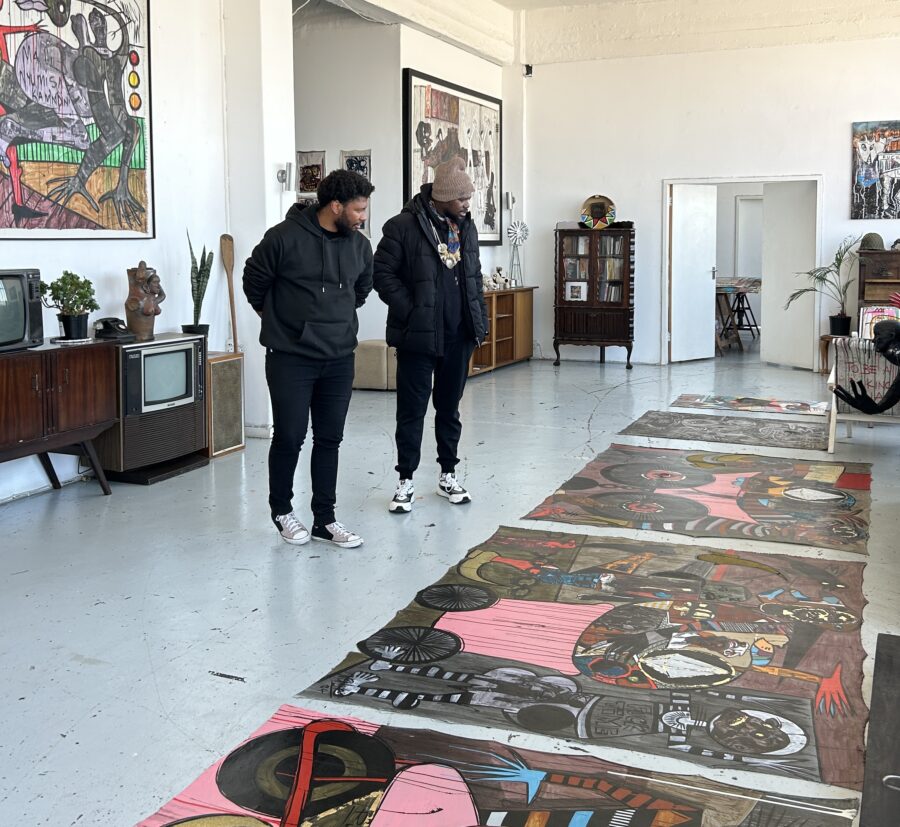
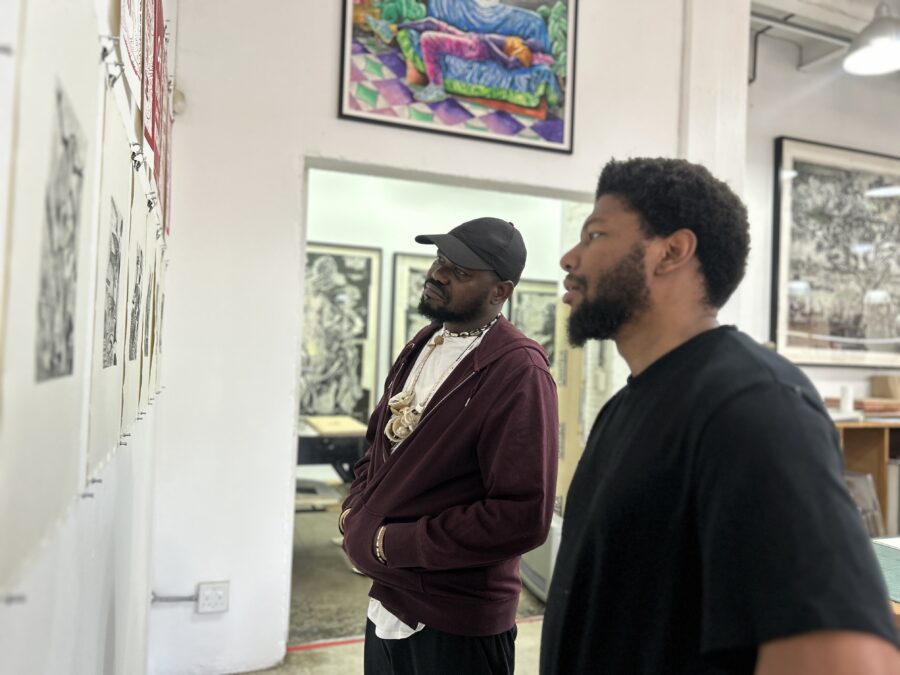
Khulu's first visit to Ngobeni's studio included a viewing of some recently completed paintings.
The project began in a sunlit studio at Ellis House, Johannesburg, where master printer Sbongiseni Khulu and Jesse Shepstone met with Blessing Ngobeni to discuss how printmaking could translate his gestural, music-inspired drawings into a tangible form. Soft-ground and hard-ground etching, alongside pronto lithography, became the instruments through which his painterly language could dance on copper and paper.
Blessing had been investigating the spontaneous spirit of jazz in large-scale paintings at the time (June 2025), noting how African dancers reacted to rhythm in various cultural contexts. His goal was to depict movement as music, using the body as a living instrument to convey cultural and historical themes. The gesture, the line, and the improvisational moment remained Blessing’s core, through Khulu’s supplied technical advice and resources.
Blessing Ngobeni’s journey is one of resilience, reinvention, and creative brilliance. His early life was marked by hardship, being sent to live with an abusive uncle he spent years isolated in the bush before leaving home at ten. A path through crime led to nearly six years in prison, where he discovered art, studied for his matric, and joined the Tsoga (Wake Up) Arts Project. Today, he is celebrated as one of South Africa’s most compelling contemporary artists, creating abstract works that explore self-enrichment, power, memory, and survival.
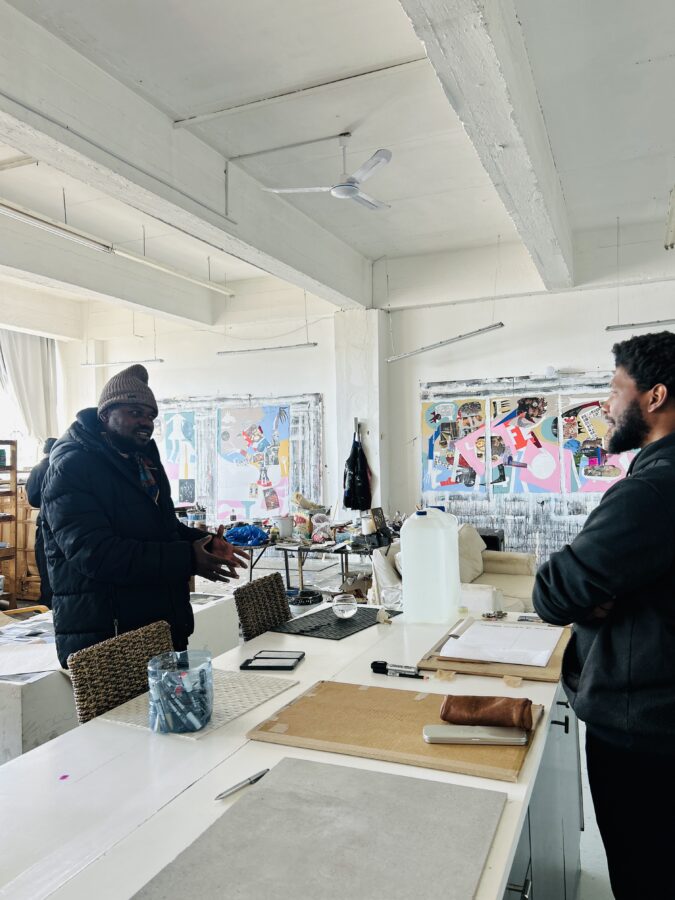
Ngobeni explaining his process to Khulu in his studio.
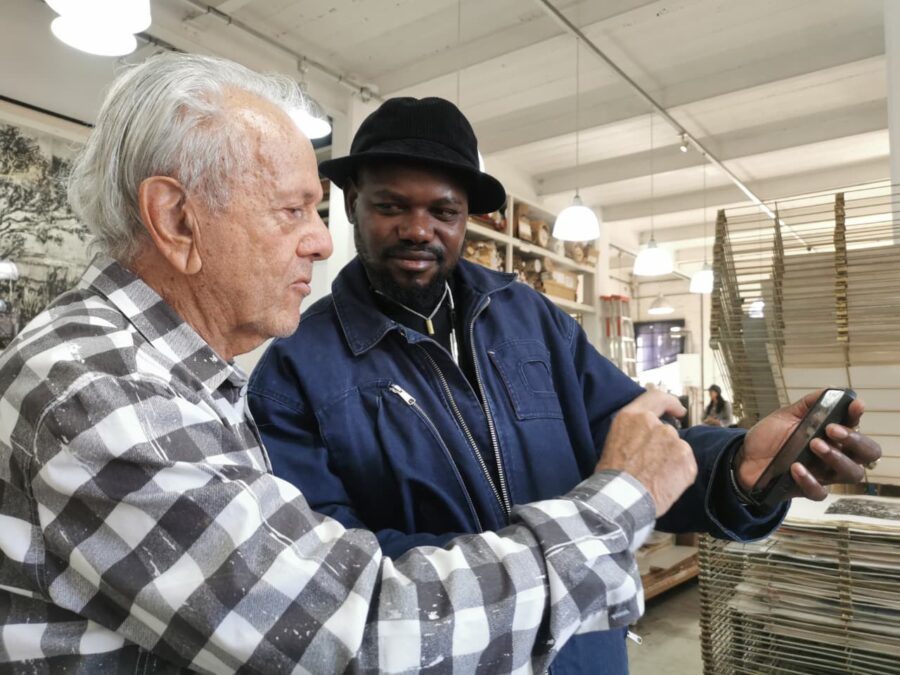
Reunited: David Krut and Blessing Ngobeni working together again after 15 years.
Sbongiseni Khulu discussing the intesnity of the tonal areas he is about to etch into Ngobeni's plate.
By July, Blessing had brought the 2 plates back to the group, full of lines, sketches, and creative energy. Each stage of development was a dialogue between Blessing’s emotive movements and the careful accuracy of printmaking as proofs were printed, changes were made, and layers of tone were carefully added. In addition to depicting the melody of the body, each etching became a negotiation, a balance between rhythm and pause, movement and stillness, and the gaps between the notes where memory and emotion exist.
The choices that shaped the series were made in August. In contrast to Blessing’s colourful painting style, a classic black-and-white colour palette was selected, emphasising gesture, movement, and improvisation above colour. Copper was etched with recurring imagery of birds, moons, drips, and water drops, creating a visual language of improvisation, rhythm, and reflection. His expressive energy took on a concrete form as each mark became a note in the series’ growing chorus.
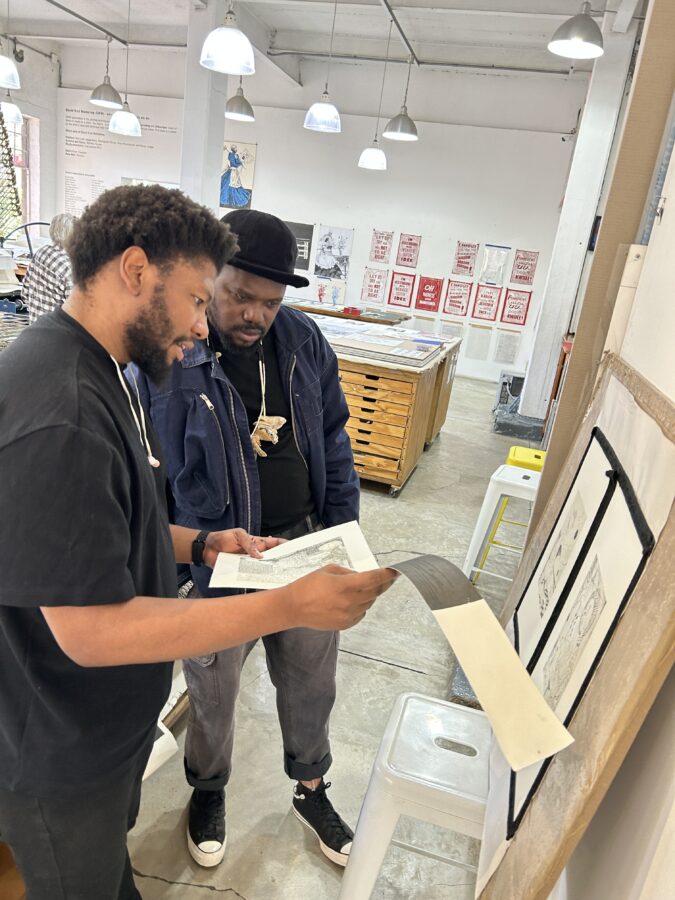
Ngobeni and Khulu discussing the changes made to the plates by looking at the different State Proofs.
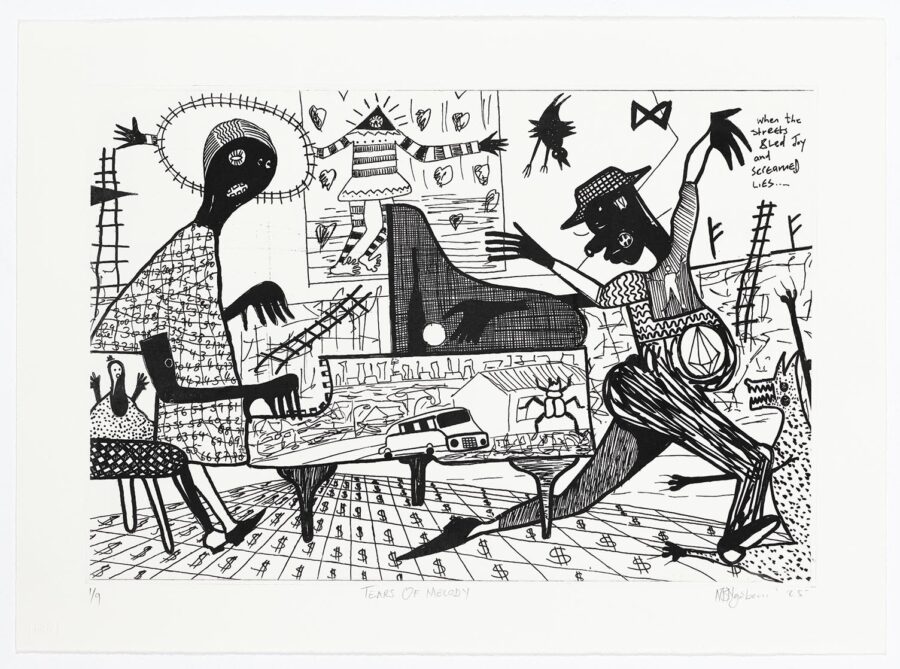
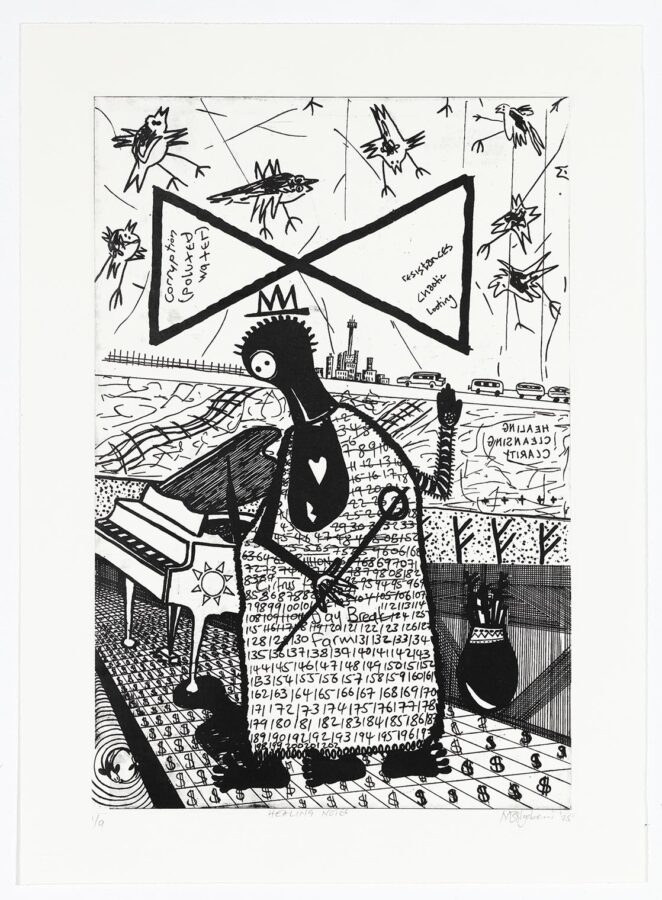
The six-plate etching series was drawing to completion as September went on. Each plate was carefully editioned, tonal corrections were made, and bon à tirer(BAT) proofs were approved. The two pronto lithographs, HEALING NOTES(2025) and TEARS OF MELODY I (2025), reveal thestarting point from which familiarity paved the way forNgobeni to tame the unknown. That familiarity can be traced back to the main subjects depicted in TEARS OF MELODY I. Eachcharacter already existedas Guernica inspiredpaintingscascading with life in the form of vibrantcollages and fields colour, titled TEARS OF MEMORY I and TEARS OF MEMORY II. Given that Picasso’s Guernica rejected to use colour, Ngobeni saw fit that the series of prints born as a response to his paintings also share that palette. All whilst still highlighting the unexpected gestures that have become synonymous with Ngobeni’s artistic practice, thus mirroring the flow and feel of his painting aesthetic withoutsimply reproducing it in a different medium. The entire process concluded in October, when outlines had been strengthened, drips were traced, plates were polished, and editions were signed. A visual symphony of rhythm, memory, and African expression, the collection which became known as The Excursion Seriesemerged as a harmonious interaction between performative mark-making and technical expertise.
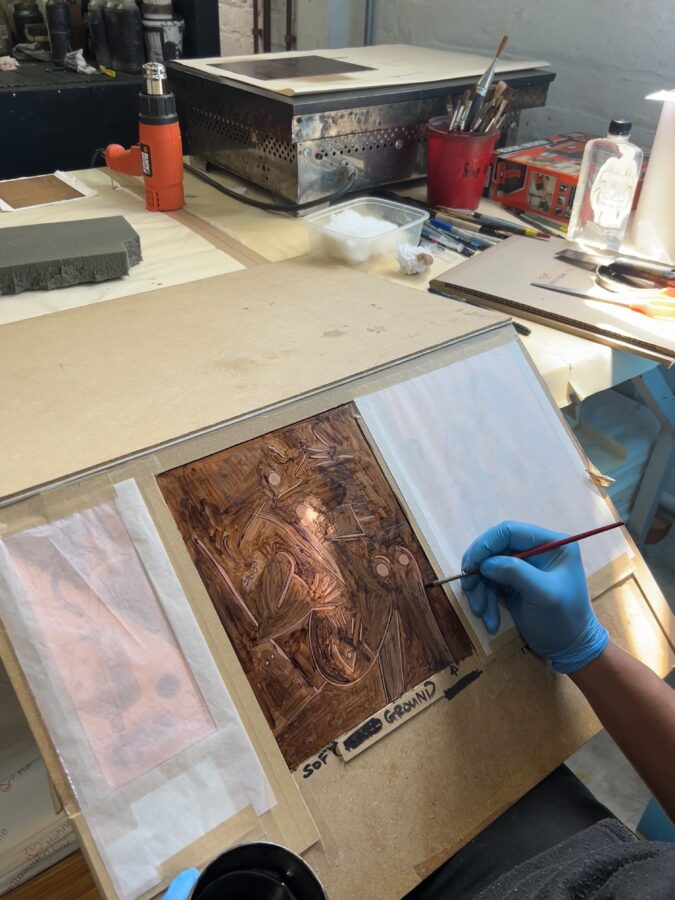
Sbongiseni Khulu painting liquid hard-ground onto the plate to protect the areas from the acid, darkening the image in specific areas by Blessing's instruction.
Tears of Melody: Turning Sorrow into Song
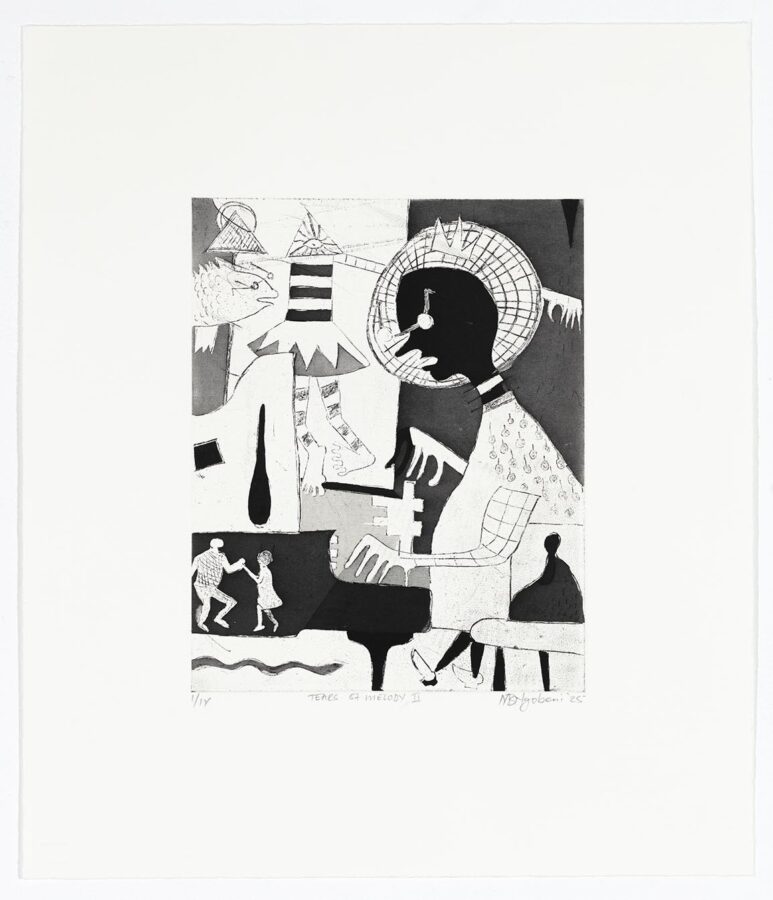
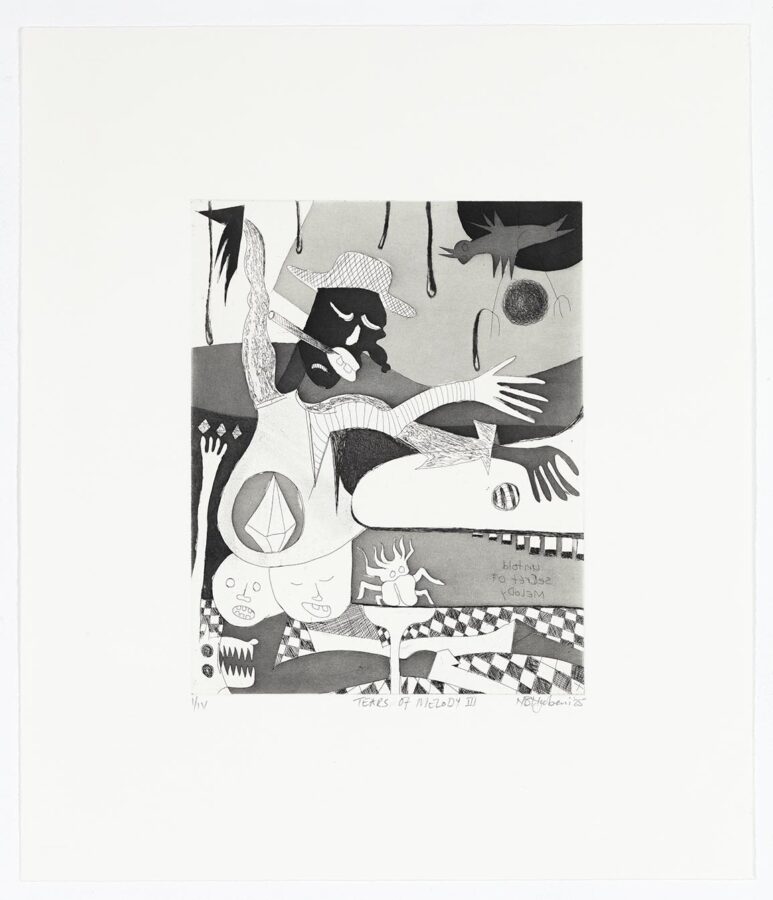
In Tears of Melody, Ngobeni transforms grief into rhythm. The etching plate becomes a stage where sorrow dances with beauty, each drip, scratch, and texture a visual note. Even in his first attempt at etching, Ngobeni captures improvisation and emotional resonance, turning pain into melody, chaos into harmony, and memory into art.
TEARS OF MELODY II
TEARS OF MELODY III
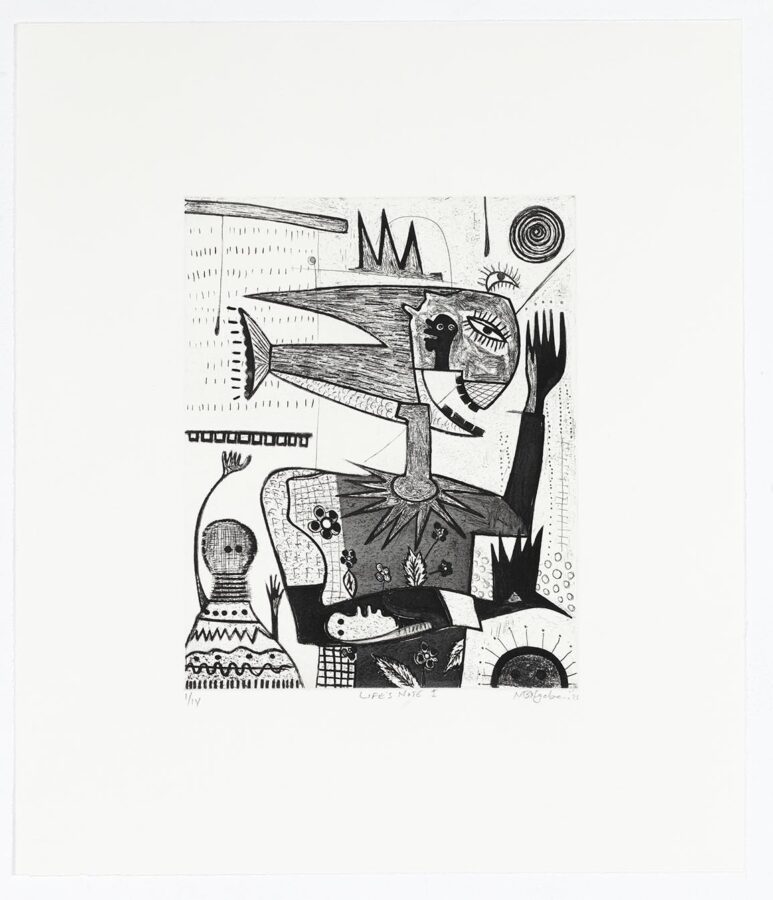
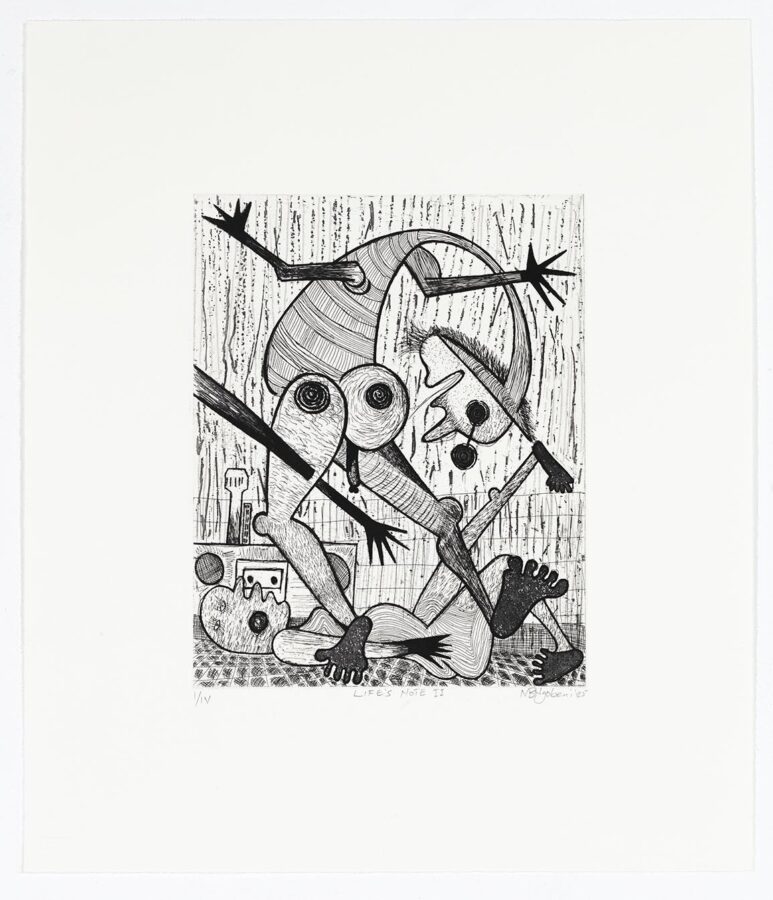
Life’s Notes & Healing Notes: Improvisation as Memory
Life’s Notes celebrates the improvisation of life itself: fragmented figures echo rhythms of joy, struggle, loss, and rebirth. Healing Notes goes further, turning trauma into visual music each mark a sound wave, each layer a note in a symphony of becoming. Ngobeni orchestrates memory and resilience, darkness and gold, creating prints that are not just images, but instruments of healing, reflection, and endurance.
LIFE'S NOTE I
LIFE'S NOTE II
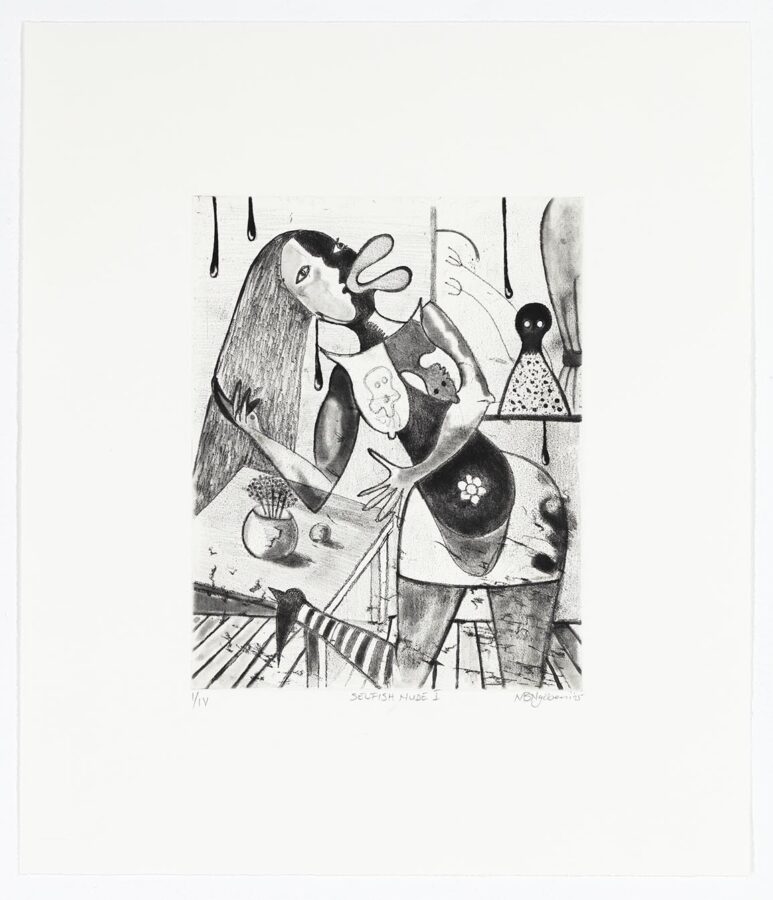
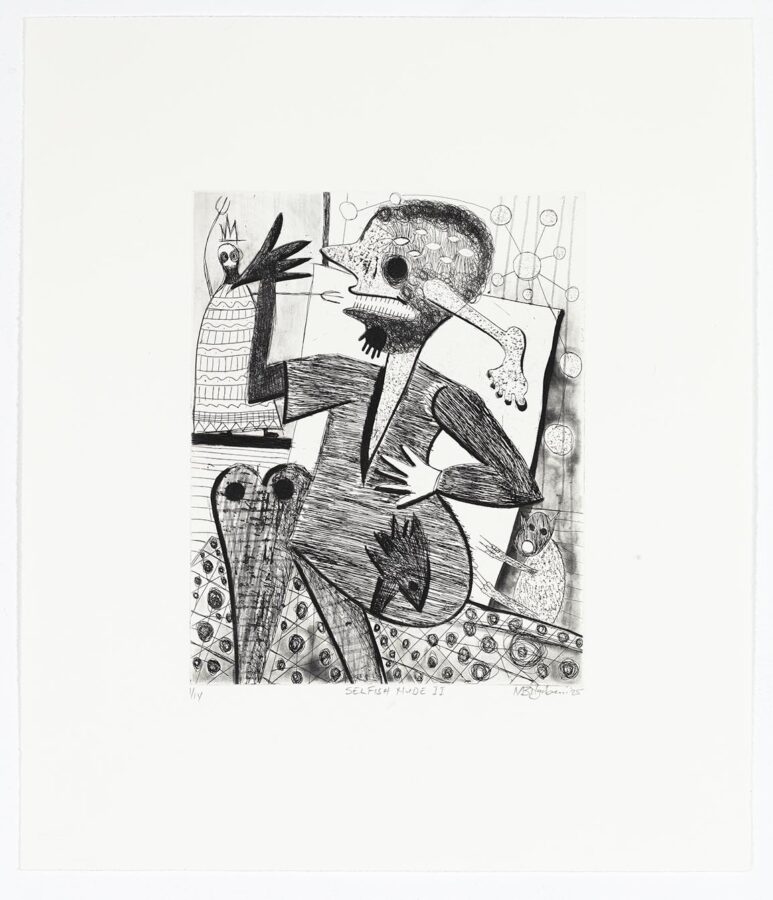
Selfish Nude: Radical Honesty
In Selfish Nude, the body is stripped bare, not of flesh, but of pretence. Vulnerable yet powerful, the figure confronts desire, identity, and self-recognition, reminding viewers that honesty with oneself is a radical act, and that embracing one’s own truth is both defiant and beautiful.
SELFISH NUDE I
SELFISH NUDE II
TEARS OF MELODY I
HEALING NOTES
For Ngobeni, this was uncharted territory. Guided by master printer Sbongiseni Khulu, he explored soft-ground and hard-ground etching, aquatint, spit bite, drypoint, and pronto lithography. The collaboration translated his painterly gestures into prints that are alive with movement, rhythm, and improvisation, proof that creativity thrives in experimentation and that first attempts can become masterpieces.
Blessing Ngobeni’s first etchings are more than prints; they are stories of resilience, rhythm, and transformation. They remind us that even in pain, chaos, and memory, art insists on being heard. Every mark, every tear, every note tells a story of survival, transcendence, and the enduring human spirit.
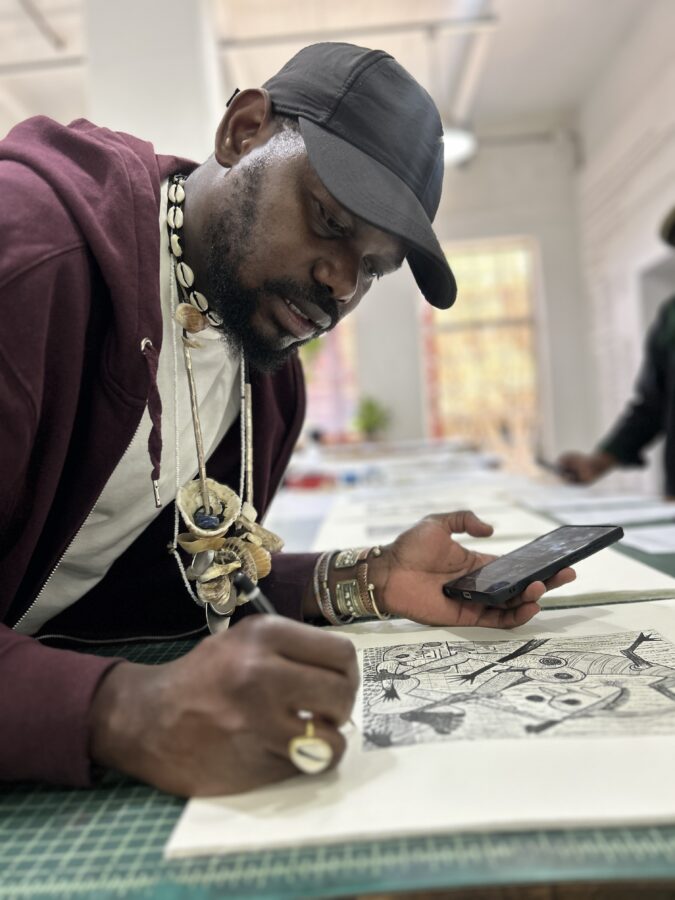
Blessing Ngobeni signing his edition of prints at the conclusion of the project.