Artist: William Kentridge
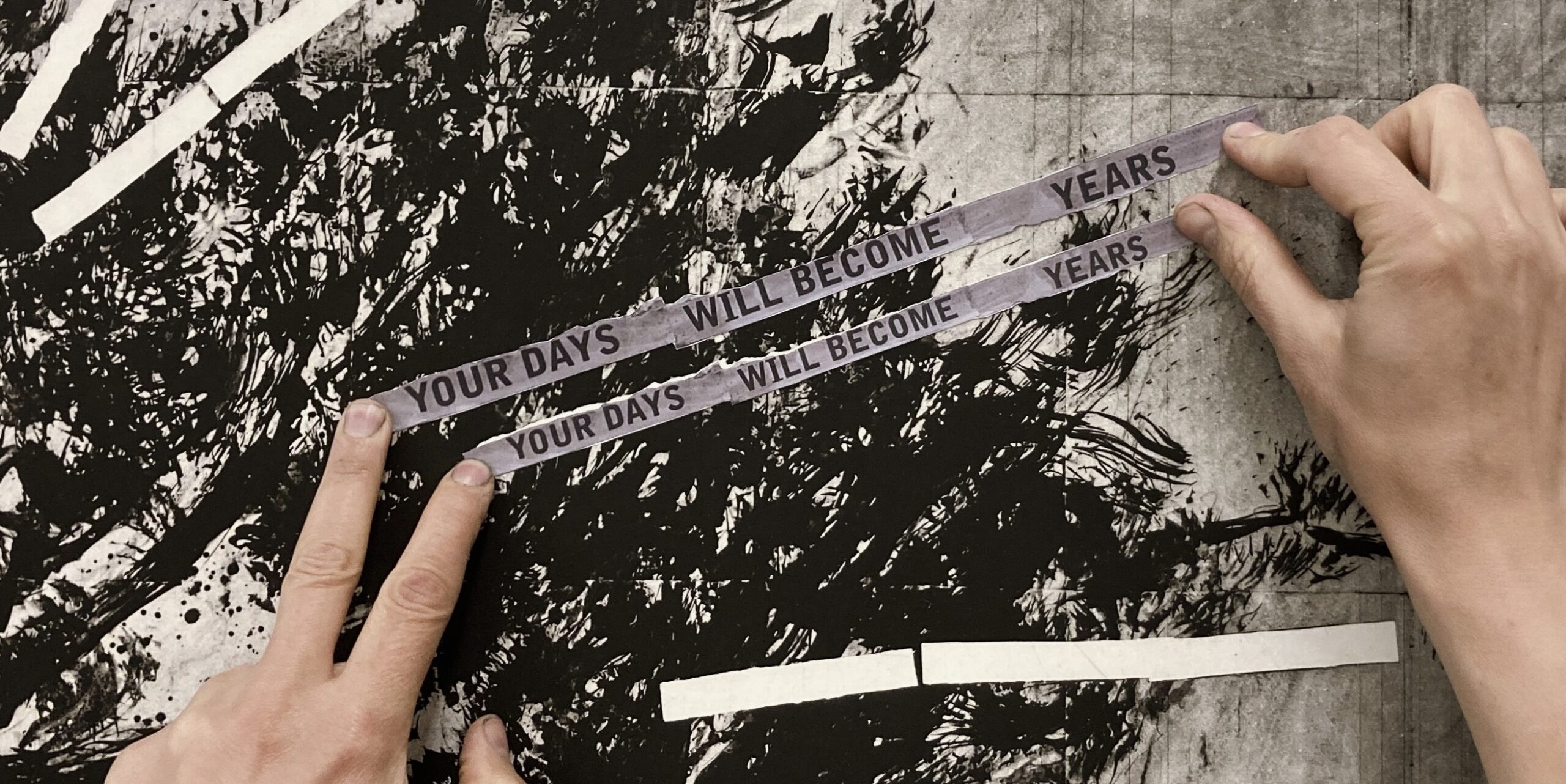
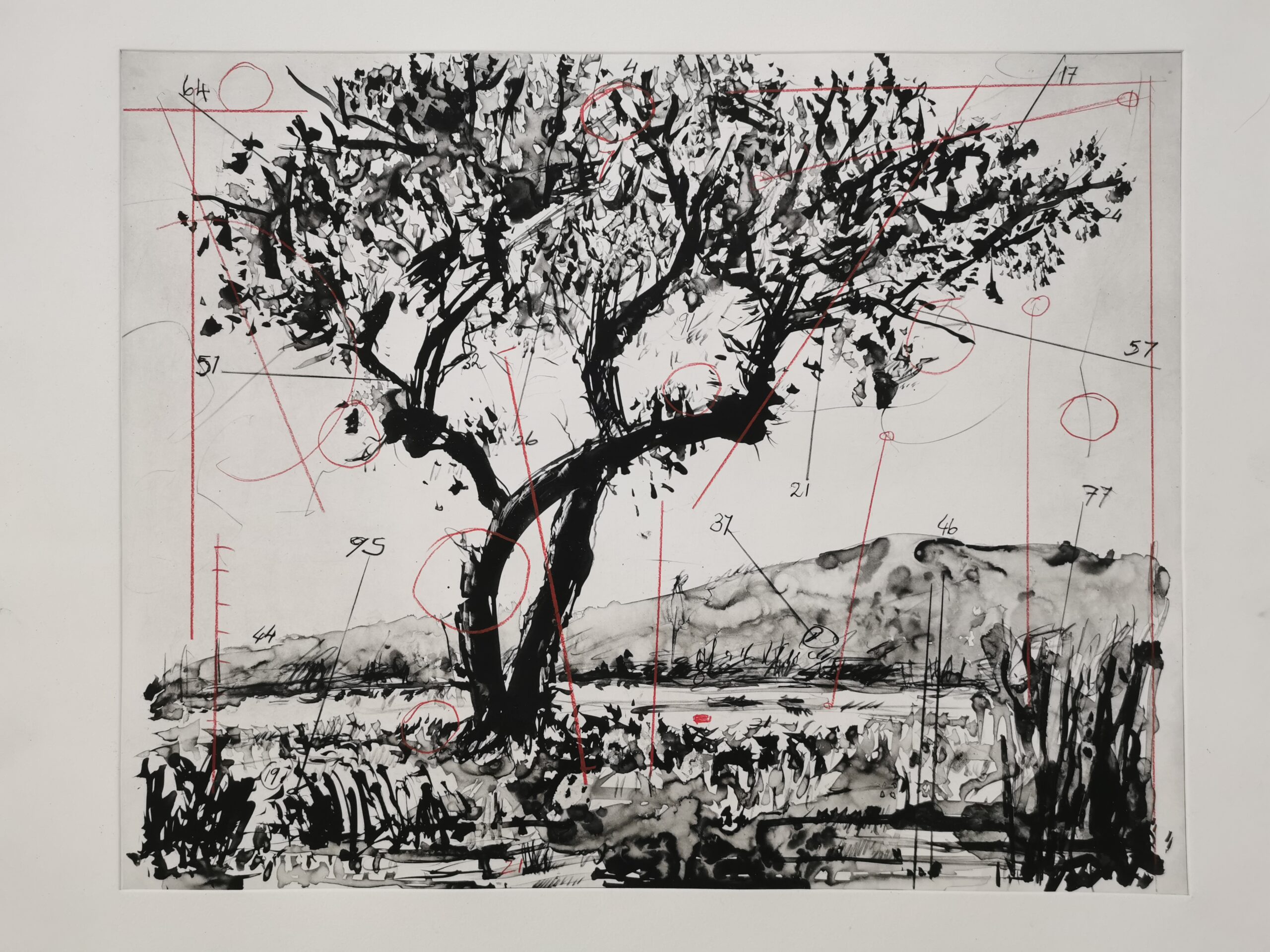
Title: The Old Gods Have Retired, 2022
Medium: Photogravure, sugarlift aquatint, direct gravure and dry point with hand painted chine-collé on 12 overlapping sheets of Hahnemühle Natural White 300gsm. Papers include found ledgers from the early 1900’s, encyclopaedia paper and others.
Publishers: David Krut Projects and Jillian Ross Print
Collaborating Master Printer: Jillian Ross
Photogravure by: Steven Dixon, Luke Johnson, Alex Thompson (Edmonton, Canada) with Zhane Warren (Cape Town, South Africa)
Editioning and image development: at David Krut Workshop (South Africa)
Editioning printers: Kim-Lee Loggenberg-Tim, Sbongiseni Khulu, Roxy Kaczmarek and Sarah Judge
Number of plates: 21
Sheets of paper per print:
Total sheets printed:
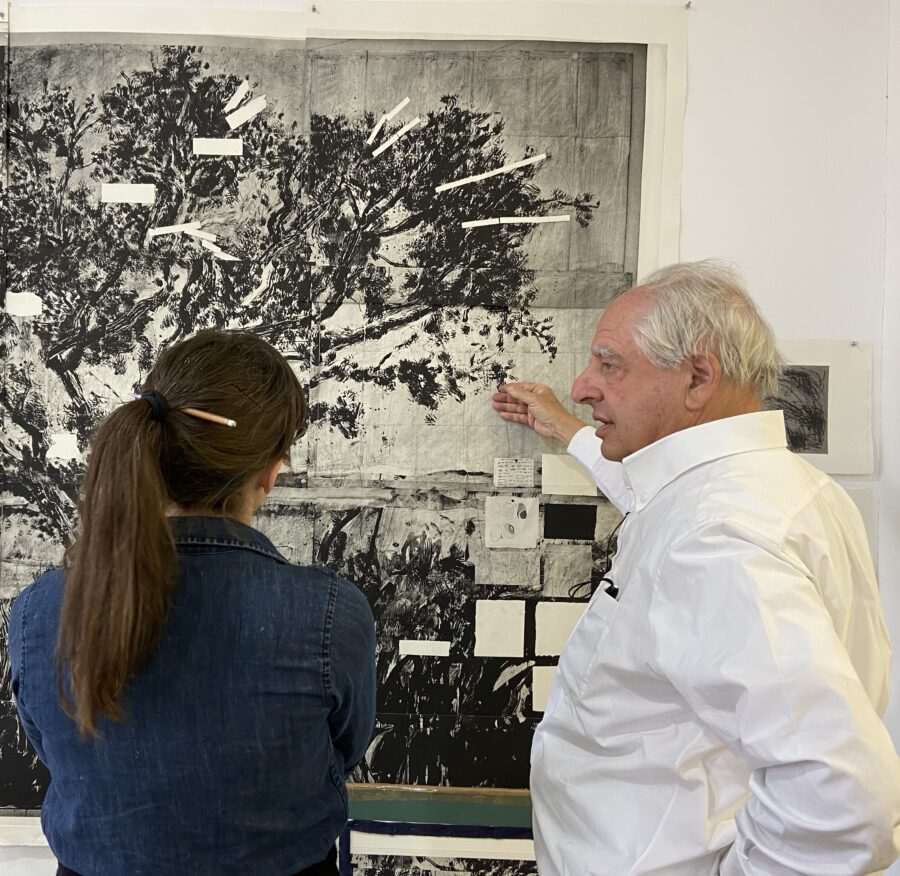

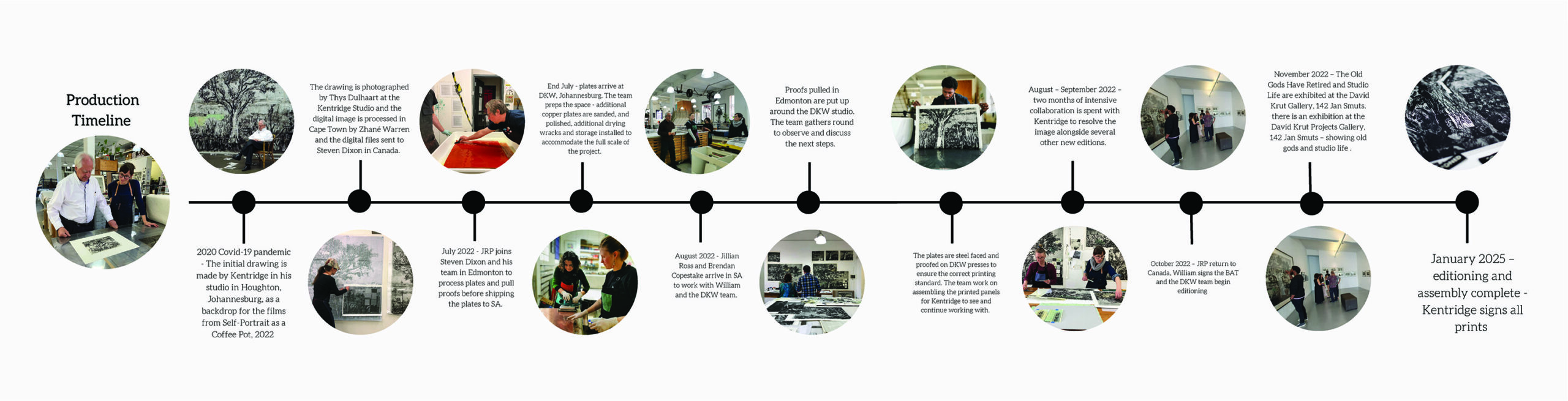
In 2020 William Kentridge, Jillian Ross Print and the David Krut Workshop began a journey to create one of the largest intaglio prints in the David Krut archive. The Old Gods Have Retired, 2022, is a photogravure etching made up of 12 overlapping sheets of Hahnemühle Natural White 300gsm made by a team of cross-continental printers under the precise instruction of renowned artist William Kentridge.
The narrative opens with the challenge of numerous COVID-19 lockdowns around the world making it impossible to travel and participate in, in person collaborations. The pandemic had forced a turning point. In March 2020, Jillian and her family returned to Saskatoon. From this unexpected reset, Jillian Ross Print (JRP) was born. The unique skills of multiple studios were used to produce the work, including those of photogravure experts Steven Dixon, in Edmonton, Canada, and Zhané Warren from Cape Town.
This period of isolation allowed Kentridge time for a sustained investigation into the significance of “studio life” in his working process and in the meaning of his work, which is grounded in politics, science, literature and history. David Krut first worked with Kentridge in the photogravure fine art process in 2001 by inviting Randy Hemminghaus, his associate New York master printer, to explore the medium with Kentridge and other accomplished artists. Revisiting photogravure David Krut Workshop collaborated with Kentridge on the Studio Life, a series of 12 photogravures that show William Kentridge at work in his Johannesburg studio. The images are stills from an introspective film series Kentridge created during the pandemic called Self-Portrait as a Coffee Pot. The photogravure plates were made in Cape Town with Zhane Warren and editioned by the Kim-Lee Loggenberg-Tim at the David Krut Workshop.
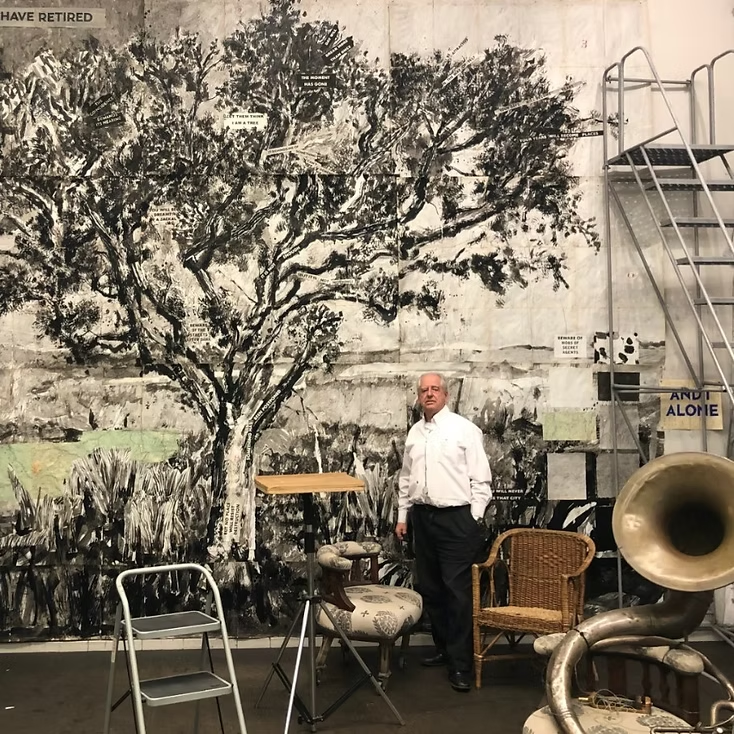
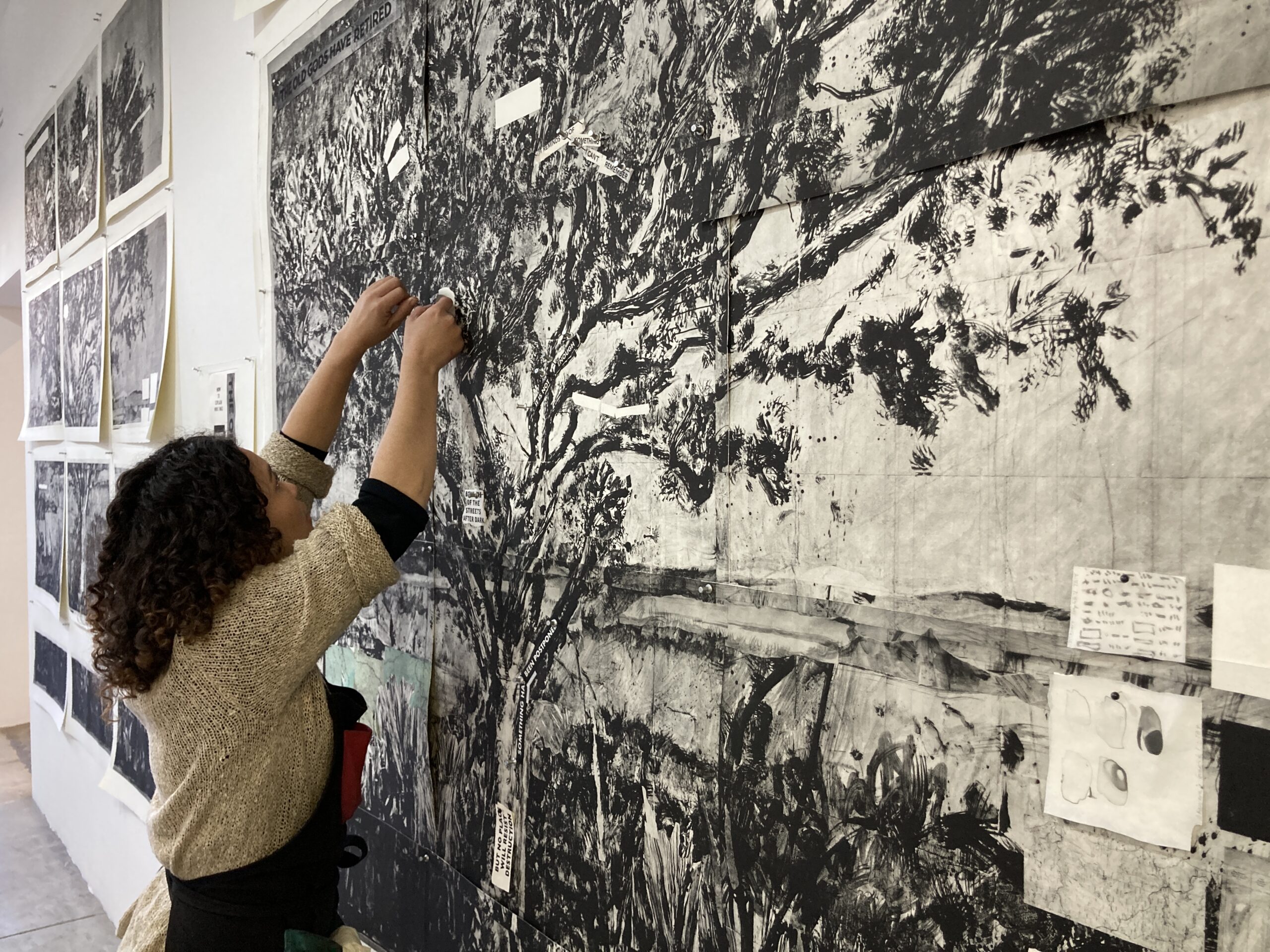
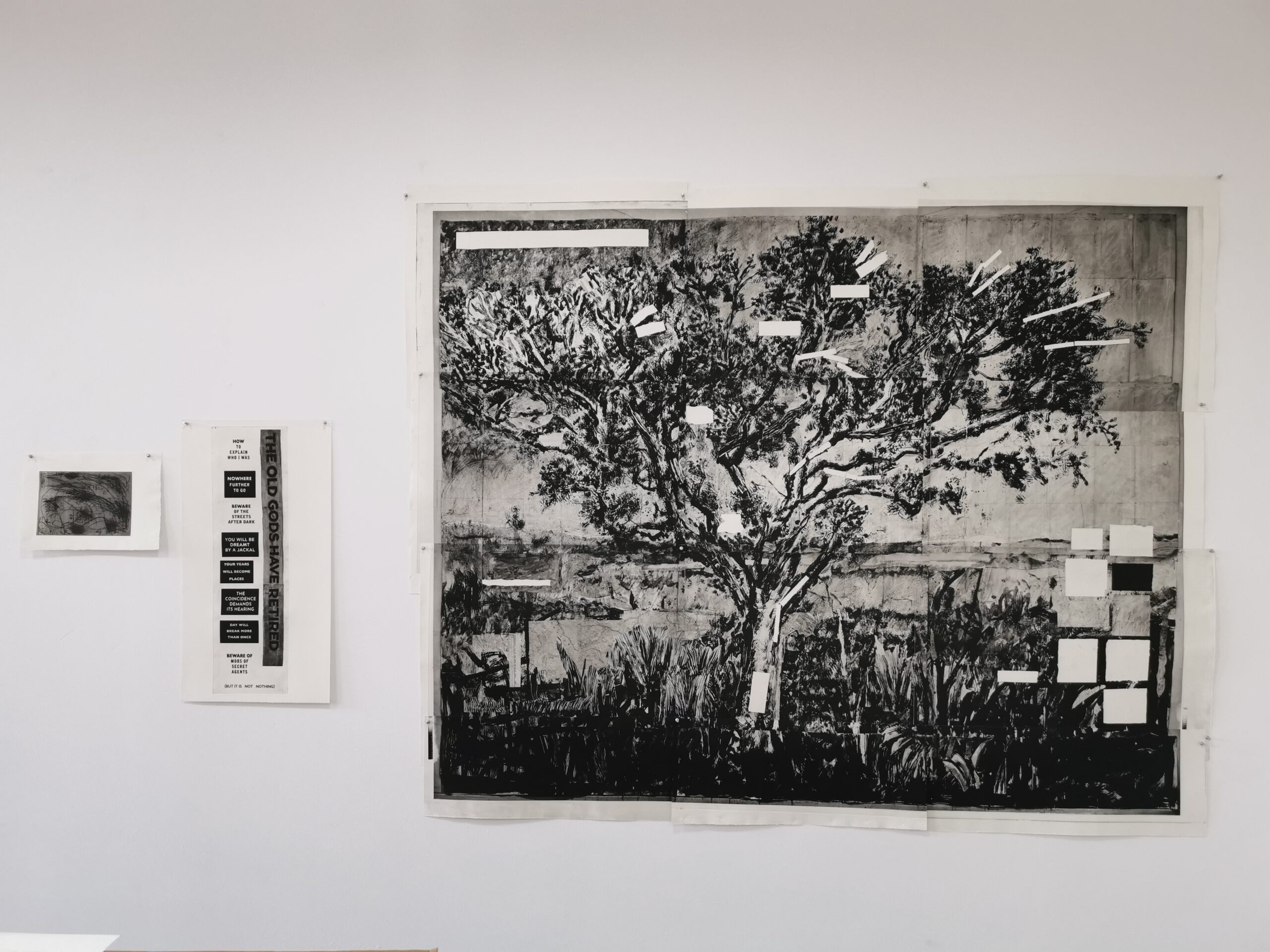
The origin of the Old Gods Have Retired, large-scale, multi-plate work stems from the even larger drawing of a tree created as the backdrop for the COVID-19 Pandemic film series Self-Portrait as a Coffee Pot. This work work was the conclusion to the Studio life gravures series. This monumental project speaks to the time, not least through scraps and splinters of text that appear almost as branches and leaves of the tree, and can be reconstructed in multiple ways, with various lyrical results and implications.
TREES – Jacqueline Flint, 2022
Trees have played an important role in the development of Kentridge’s artistic lexicon and have been present in his work in a variety of forms, the power of the trope ringing out in different ways through a number of Kentridge’s bodies of work. He has spoken frequently about the influence that images and ideas of trees have had in his life, and the ways in which these have become integrated into his work. In a lecture given at Berlin Mosse in 2014, Kentridge talks of the “tree as lehrstück” or the “lesson play” associated with Bertolt Brecht’s epic genre of theatre that explored acting as a route to learning; of the reluctance of a Swedish boat builder who worked on Kentridge’s Black Box project to use German oak, because of the shrapnel contained in the wood and of the strange sense of “trees still living holding the history in them.” In the same lecture, Kentridge ruminates on our ability to “meet the tree halfway” in our construction of meaning around it, and on the porousness of knowledge.
In another lecture, delivered as part of his Humanitas Visiting Professorship in Contemporary Art at Oxford University in May 2013, Kentridge remembers mishearing a word – tree-search, instead of t-shirt – and suddenly “in half a second, a whole etymology and history and examples of tree-searches unfolded.” In another instance of mis-heard words, Kentridge’s memory of his father working on the Treason Trial, or the “trees and tile” to his boyhood ears, has yielded innumerable metaphors for understanding the relationship between what we know and how we experience the world, piecing together fragments and fitting them together as we wend our way through the complex forest of history. In a conversation with Jane Taylor, Kentridge also recalls his frustration as a child that two white stinkwood trees at his family home in Houghton seemed to refuse to grow big enough to suspend a hammock between them, and his grief at the death of one of these trees during a lightning storm, many years later when he returned to occupy the same home in which he grew up. Over the course of decades, Kentridge has drawn out the metaphorical richness that trees offer to sense-making within his multidisciplinary practice: “a tree you could disassemble into its pages and hide in a library, like hiding a book in a forest.” The fact that Kentridge’s hometown and the locus of much of his work is Johannesburg, often called the largest human-made forest, cannot be overlooked.
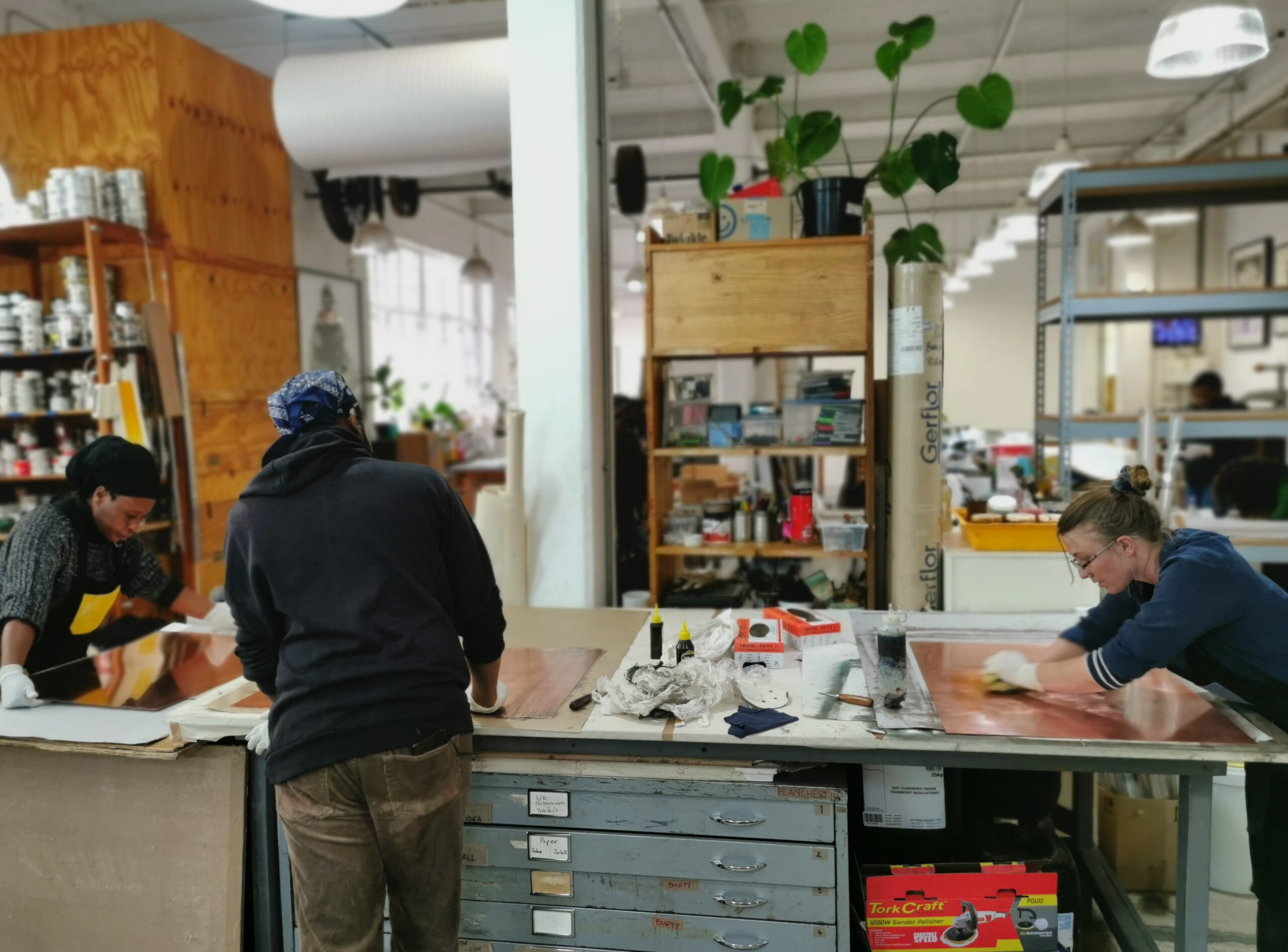
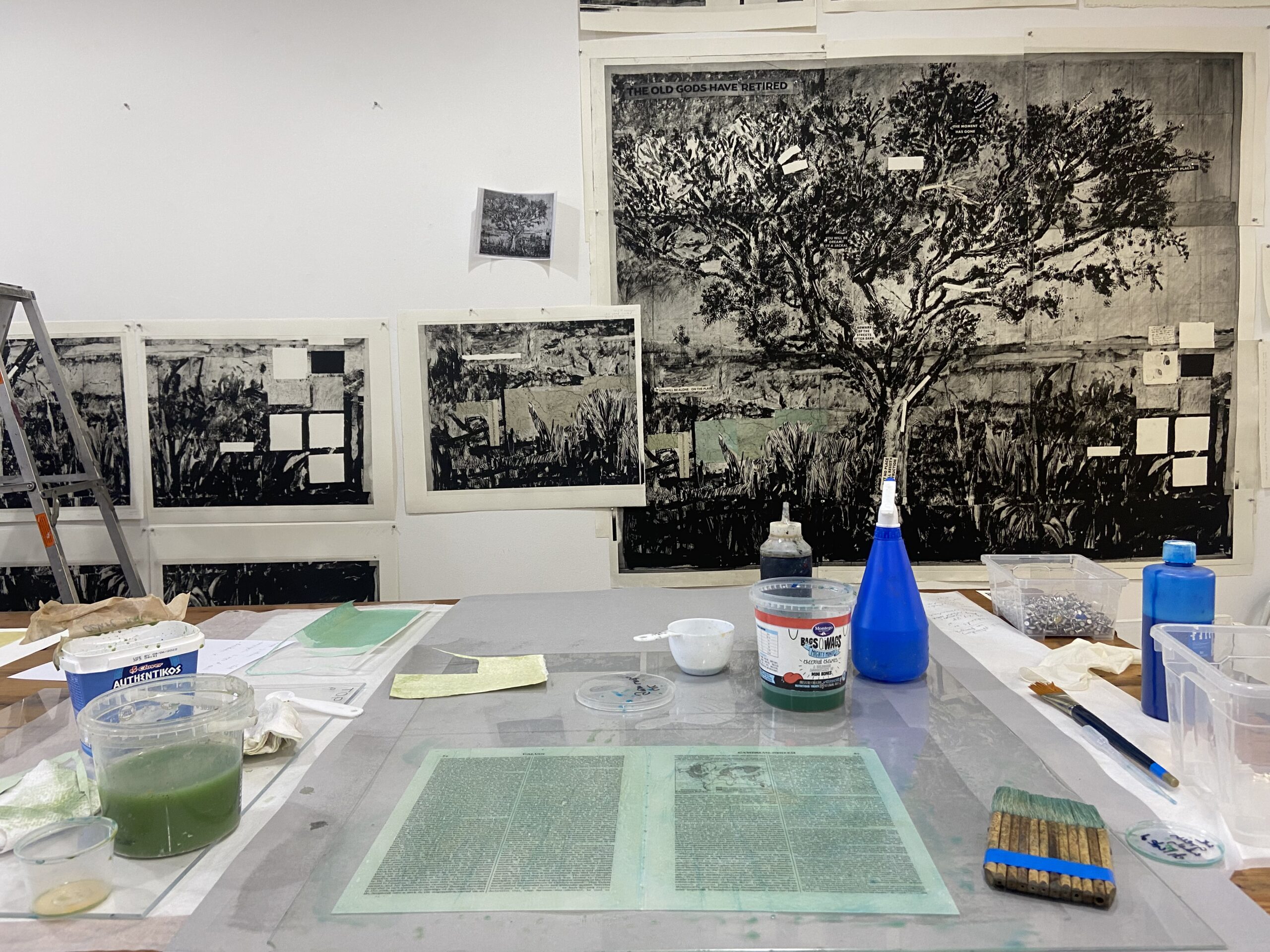
DKW Team preparing the studio
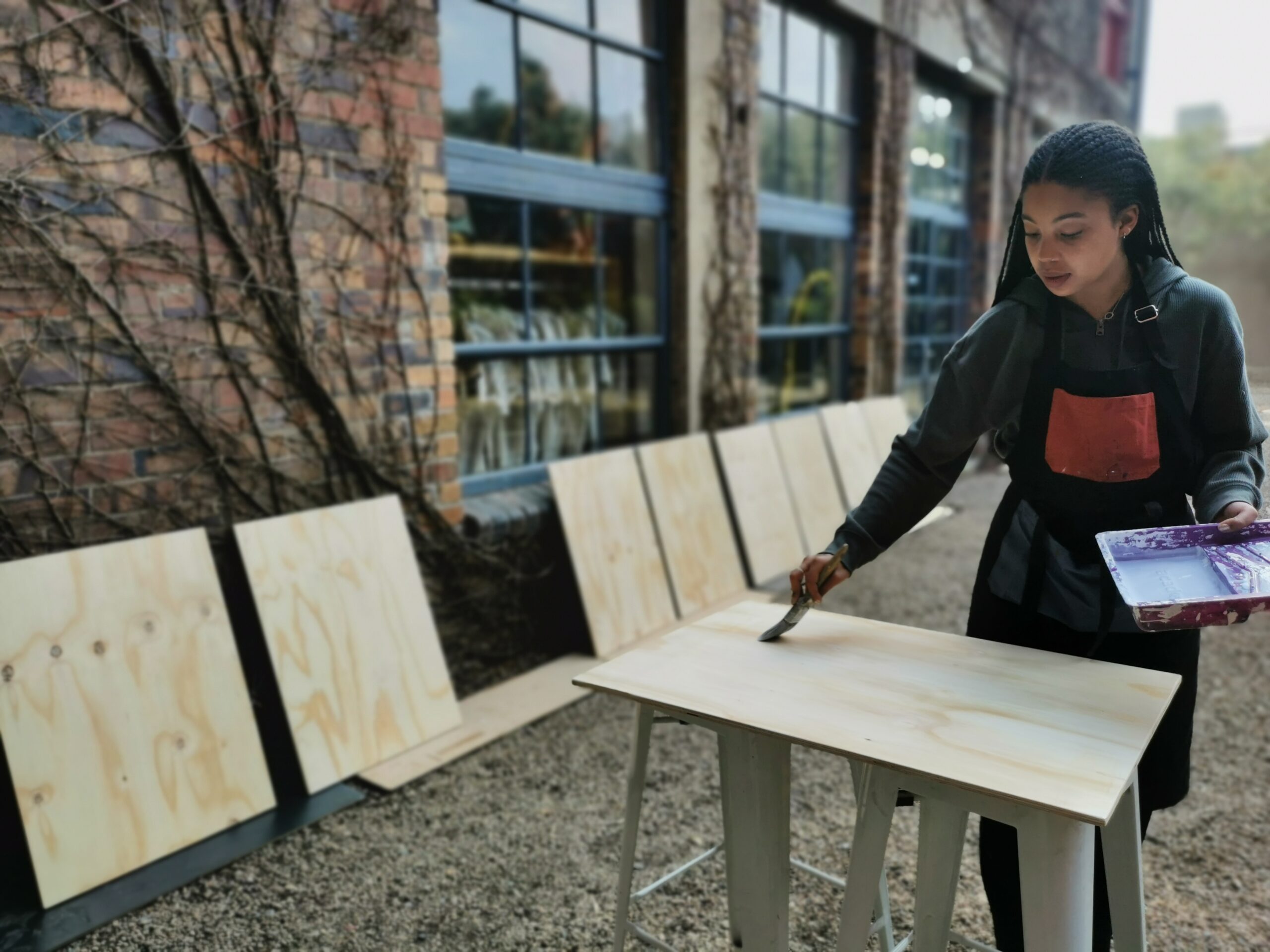
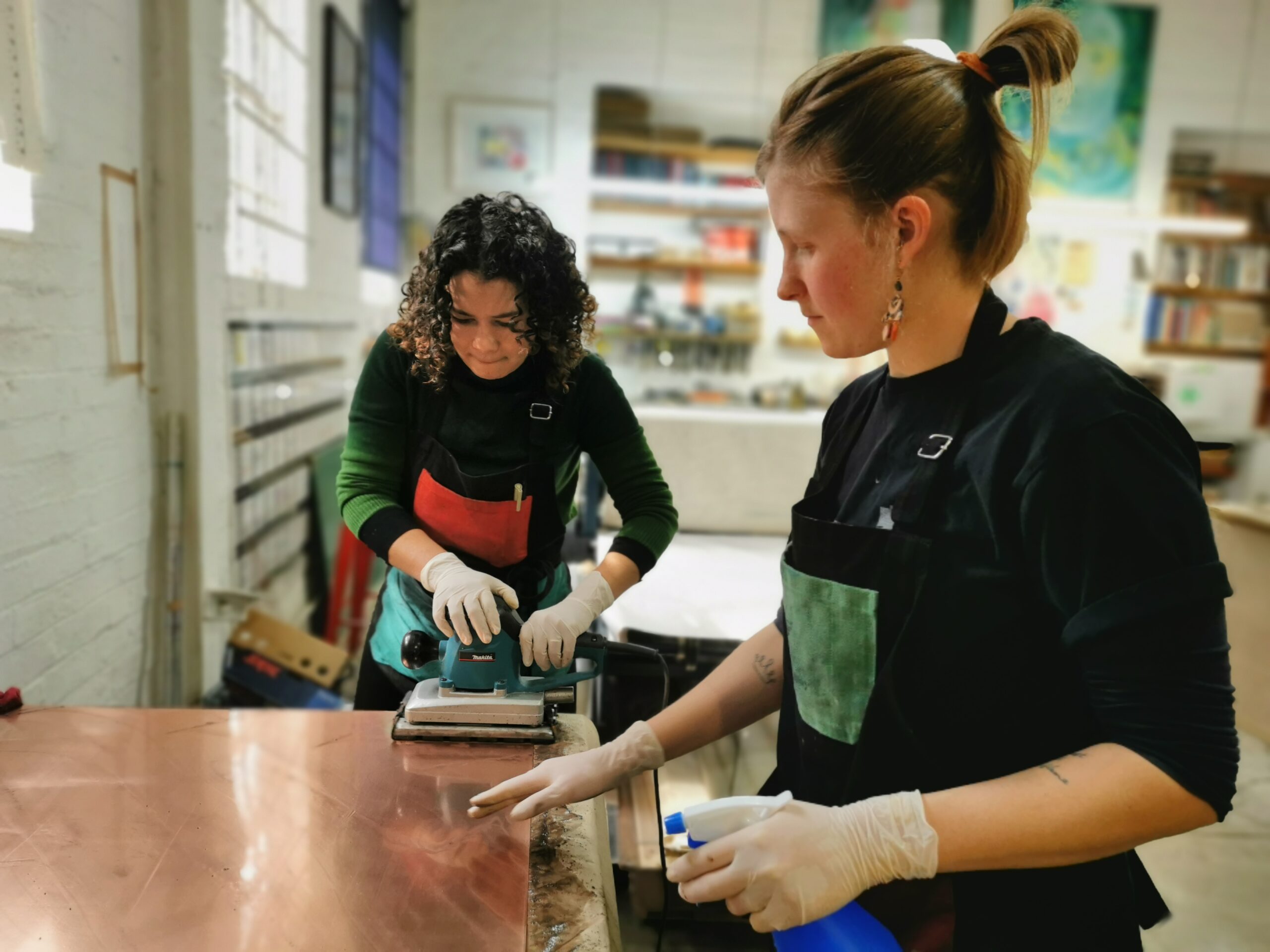
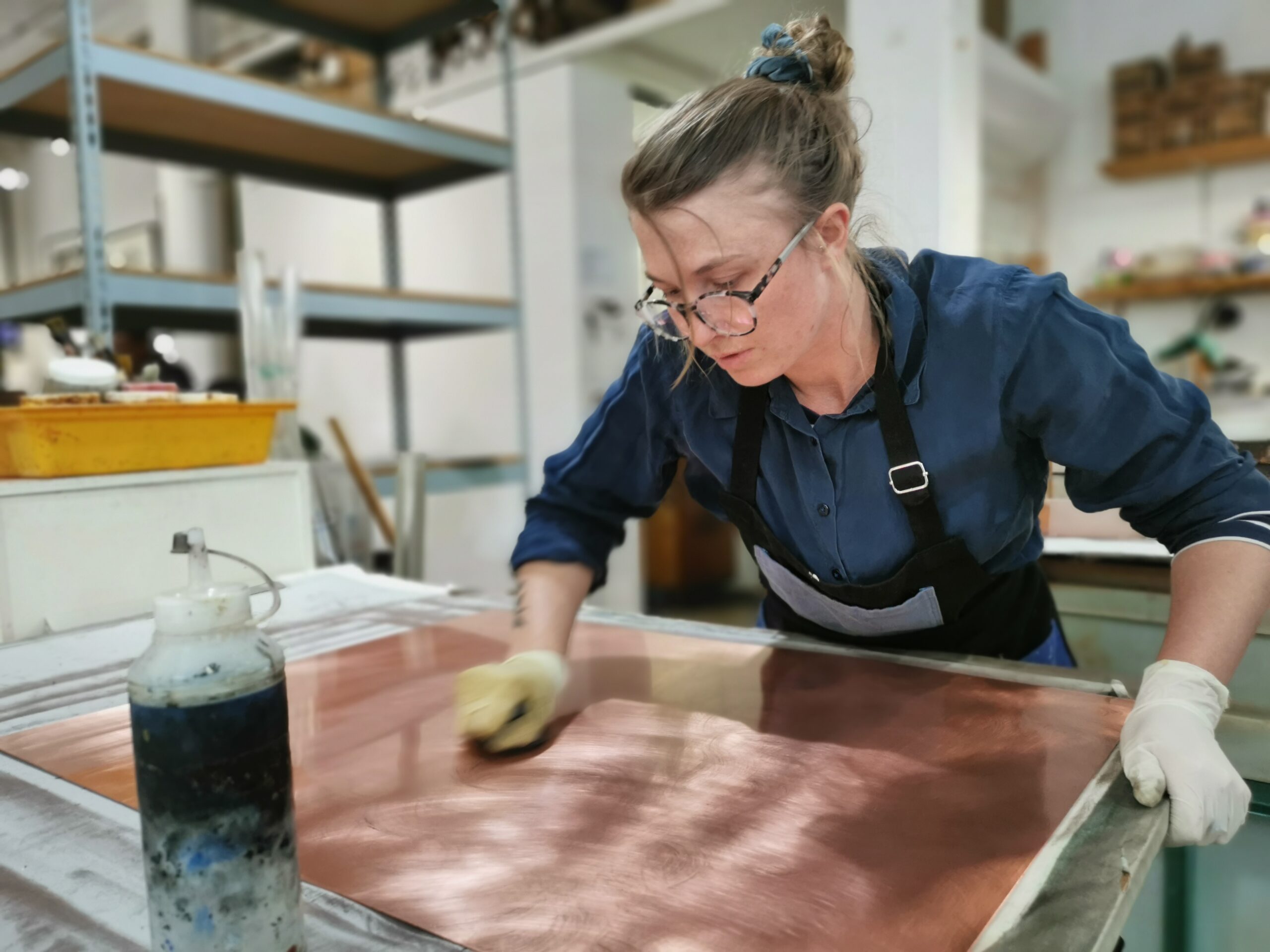
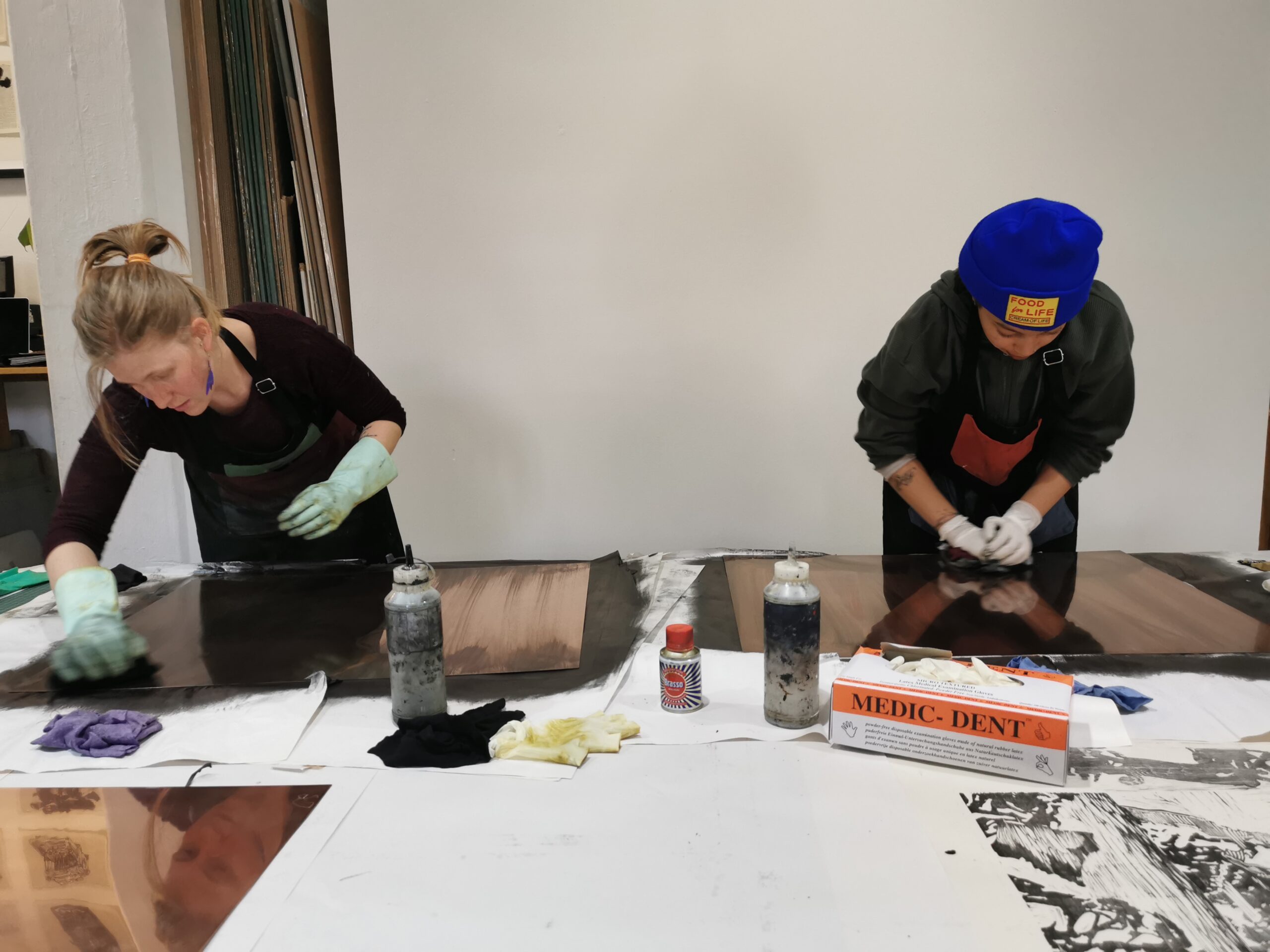
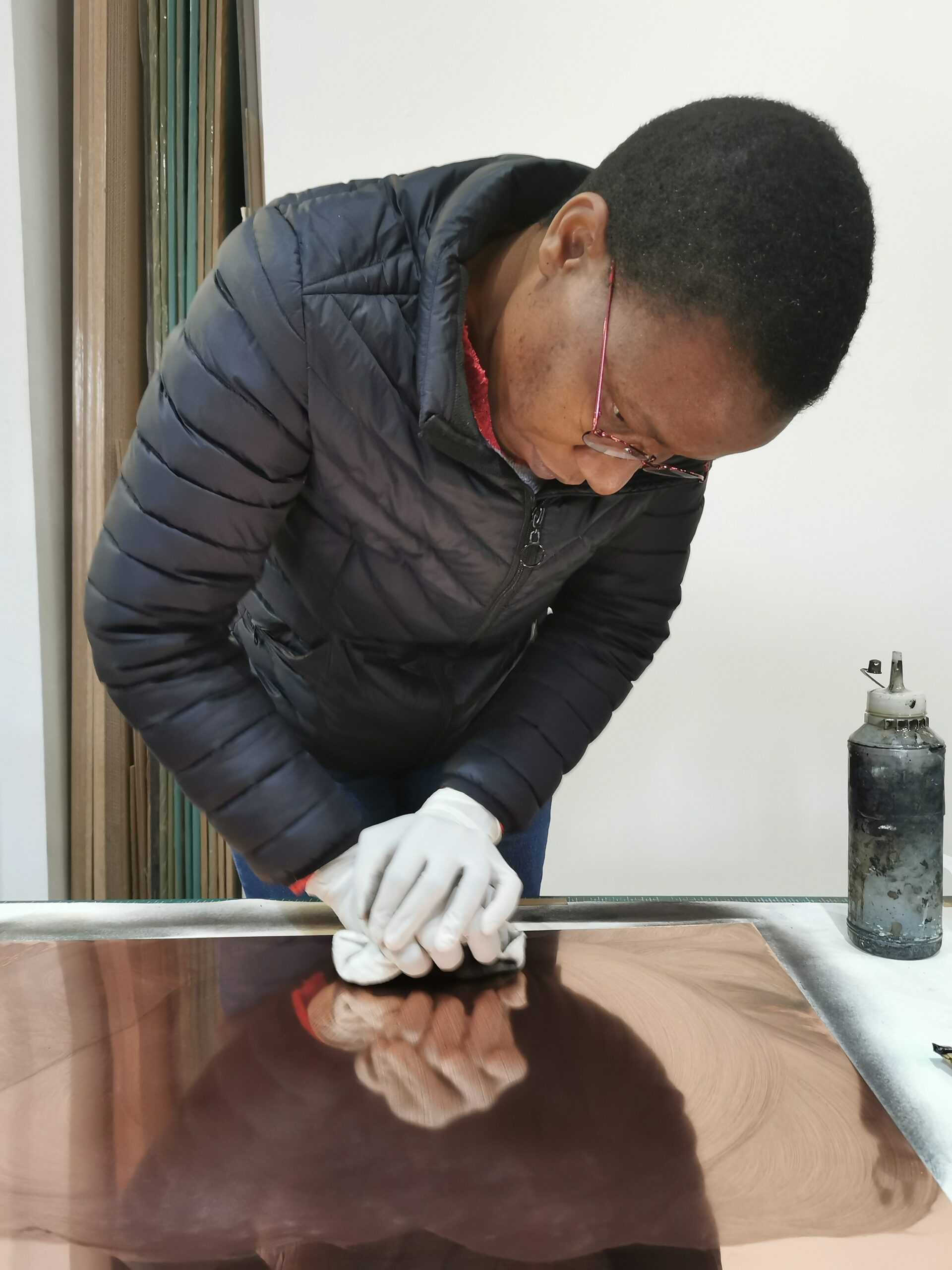
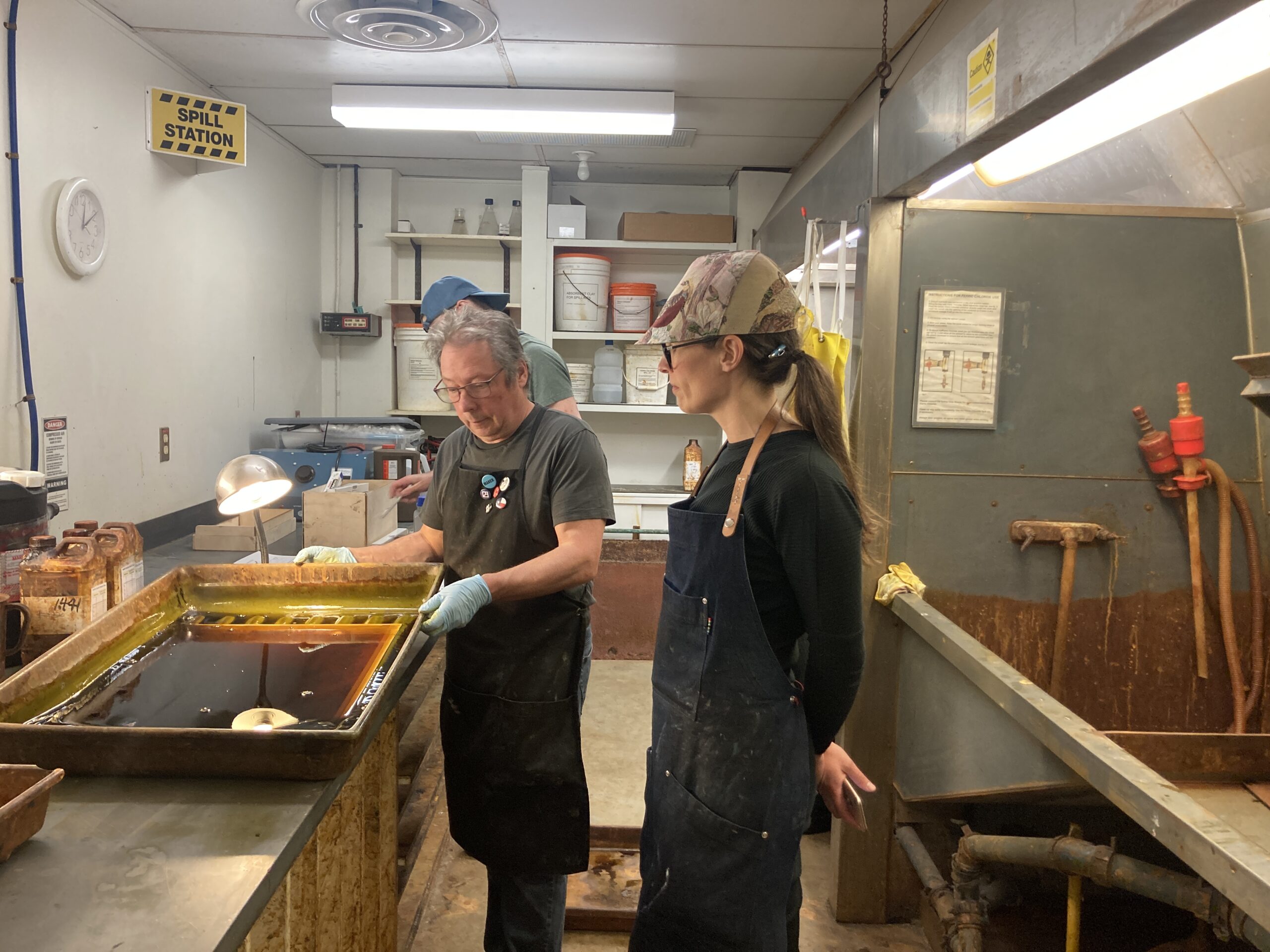
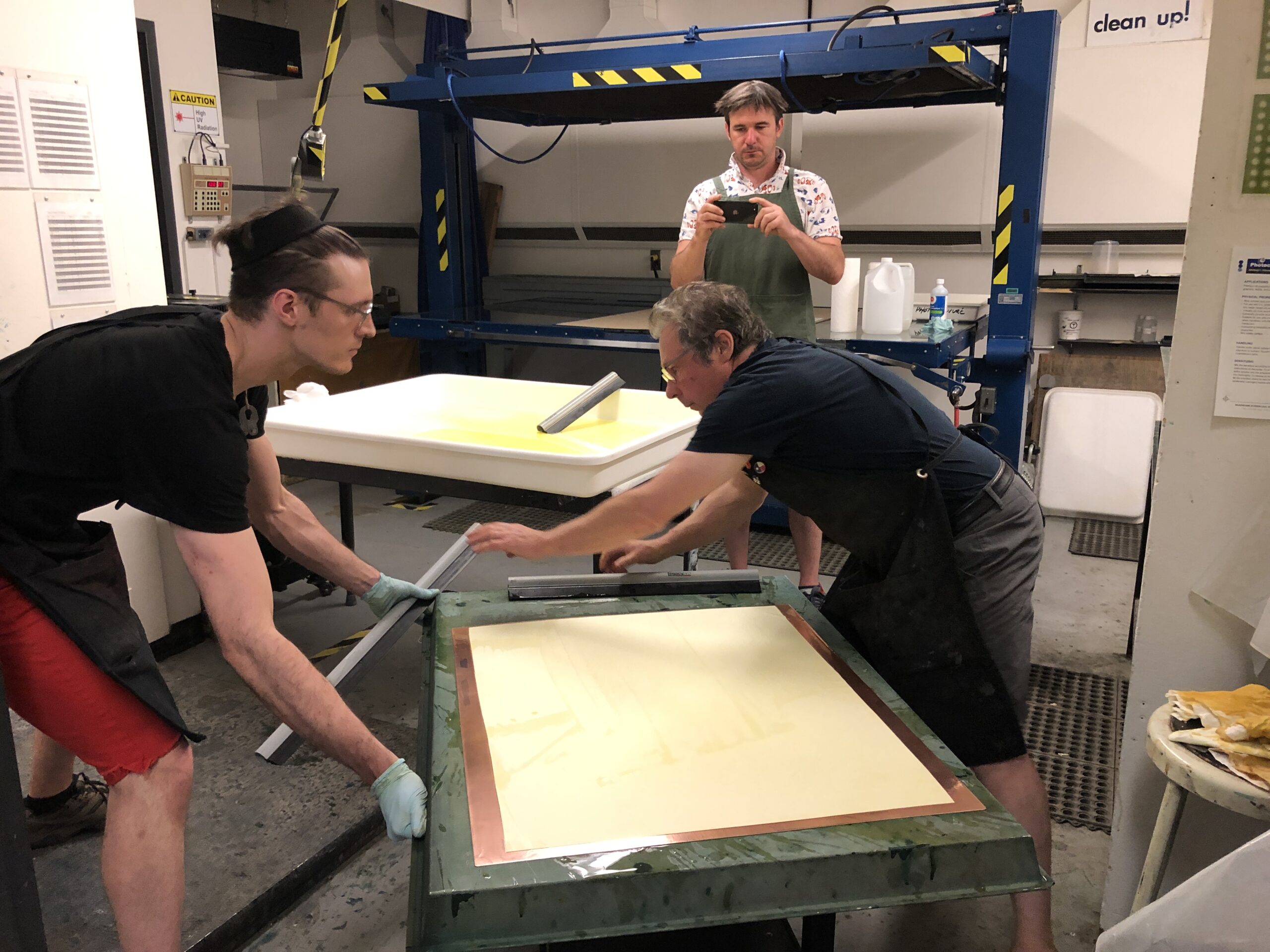
JRP Team making plates in Edmonton



Testing at the David Krut Workshop
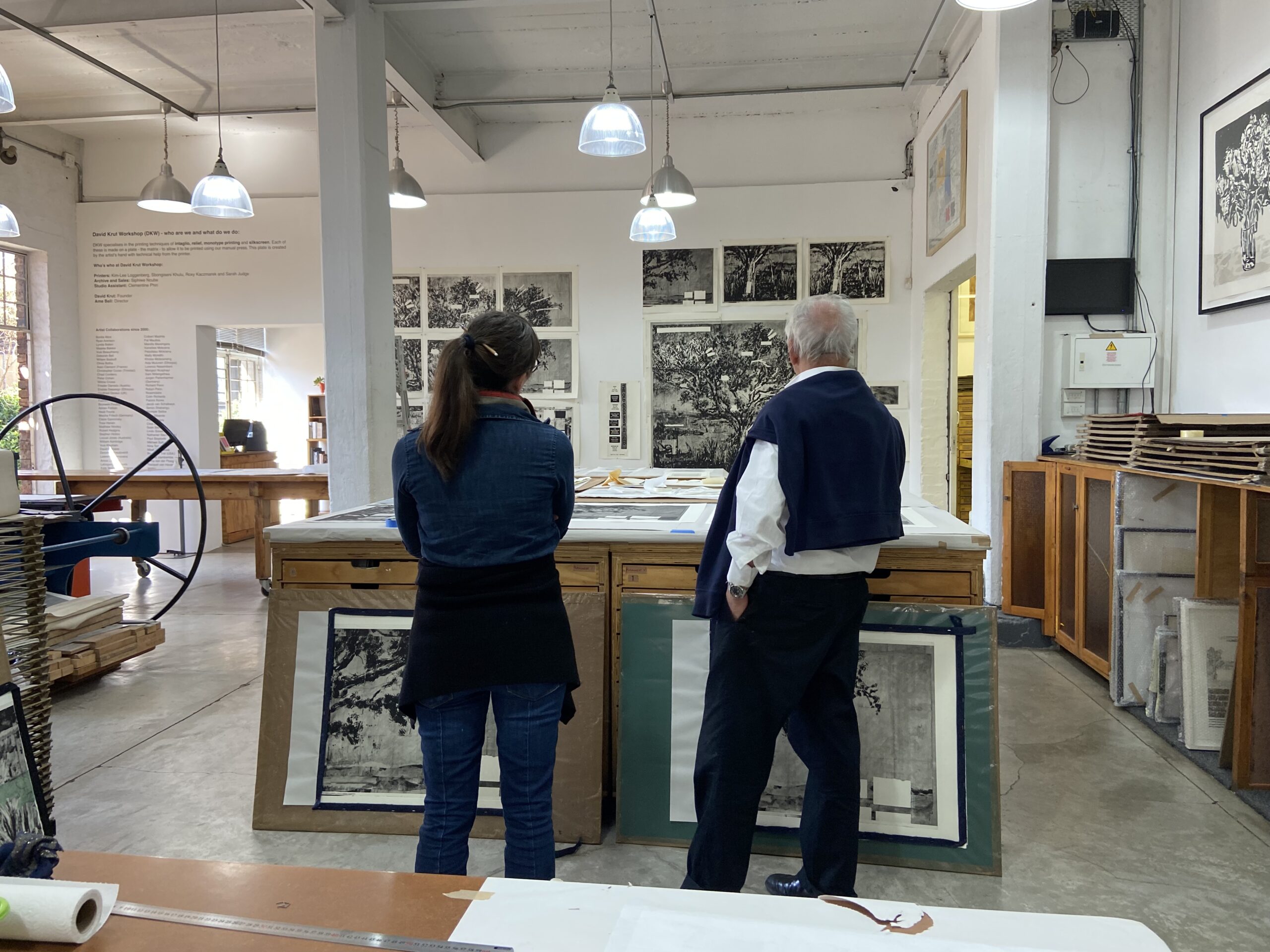
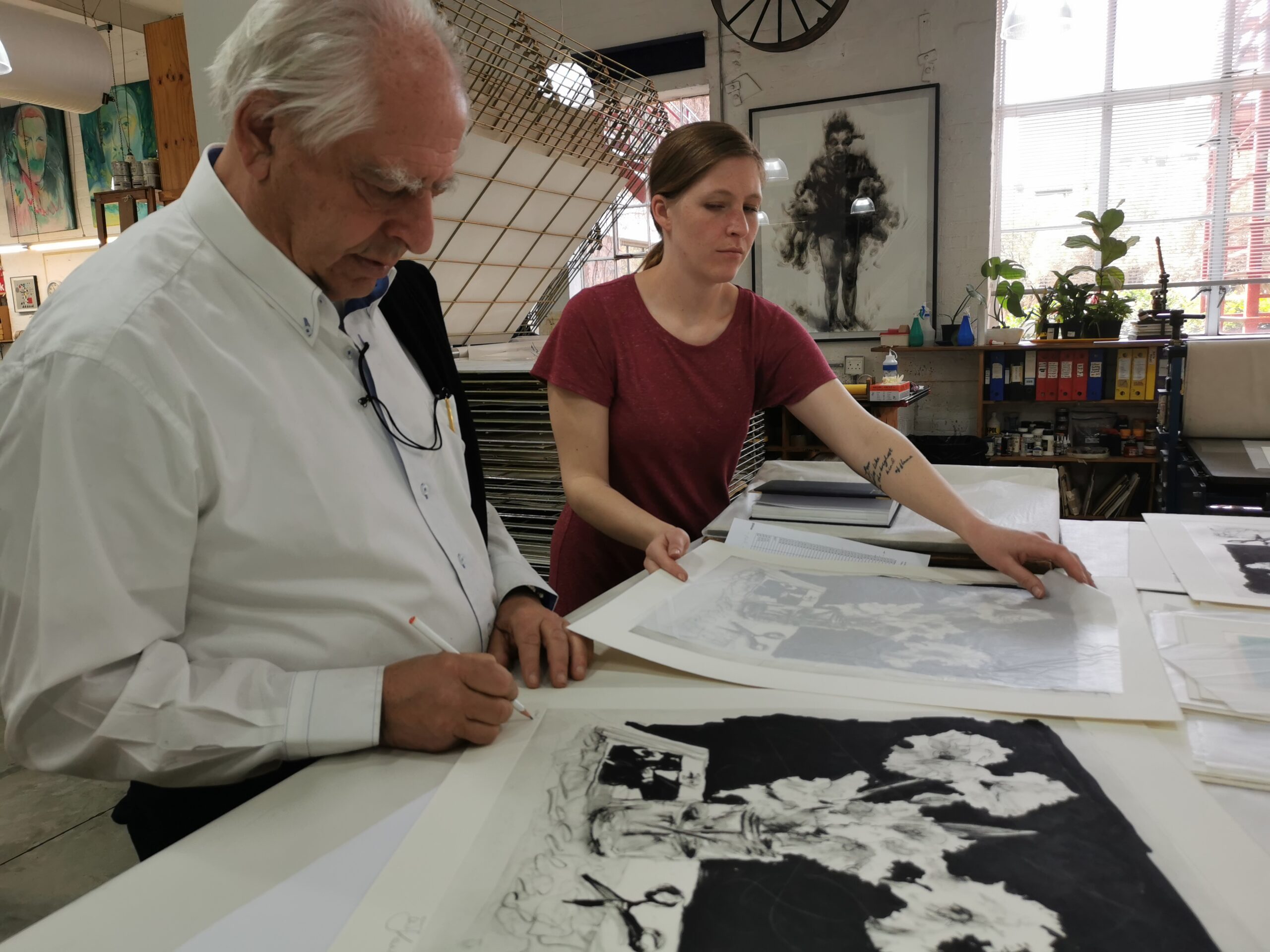
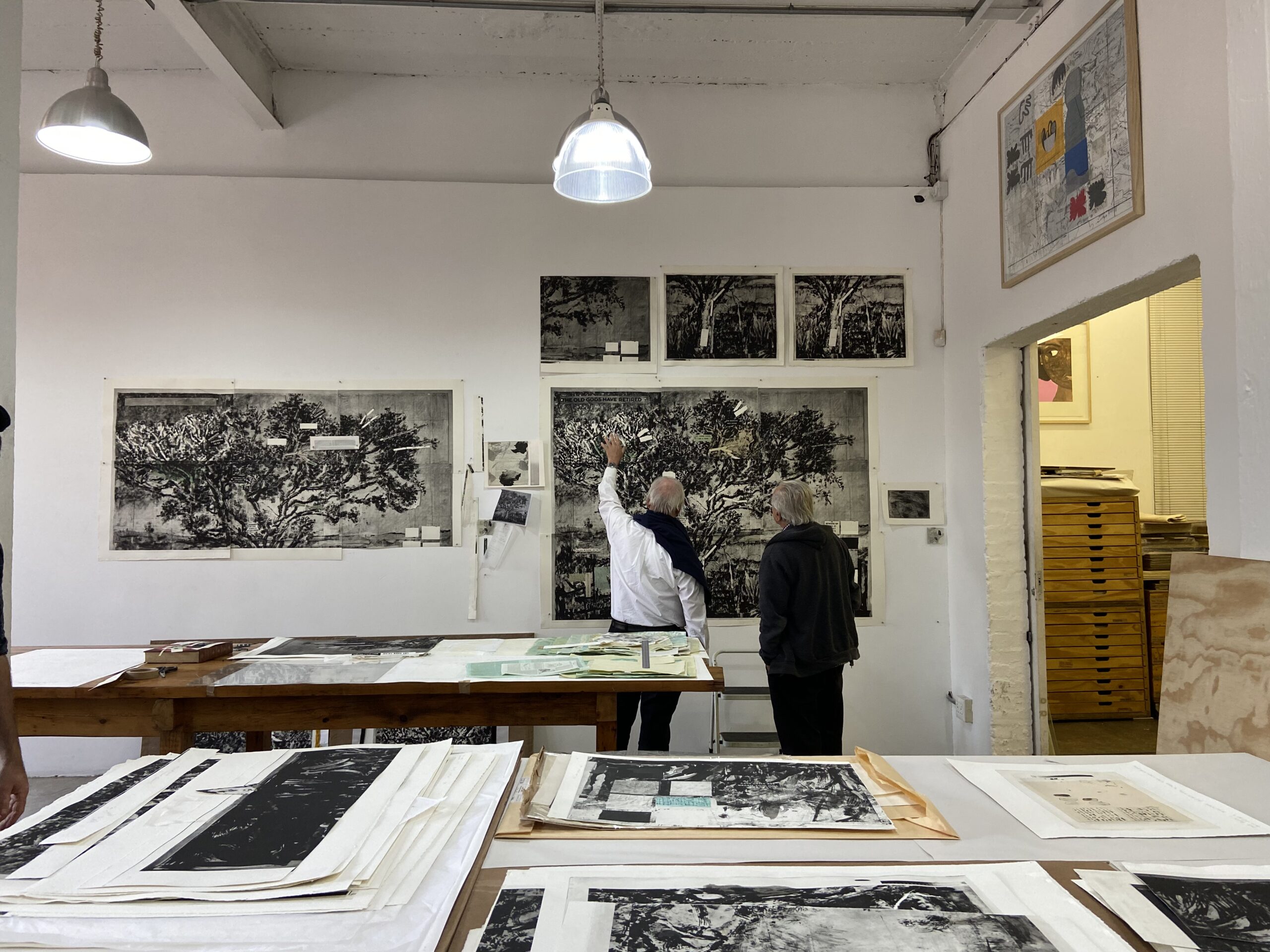
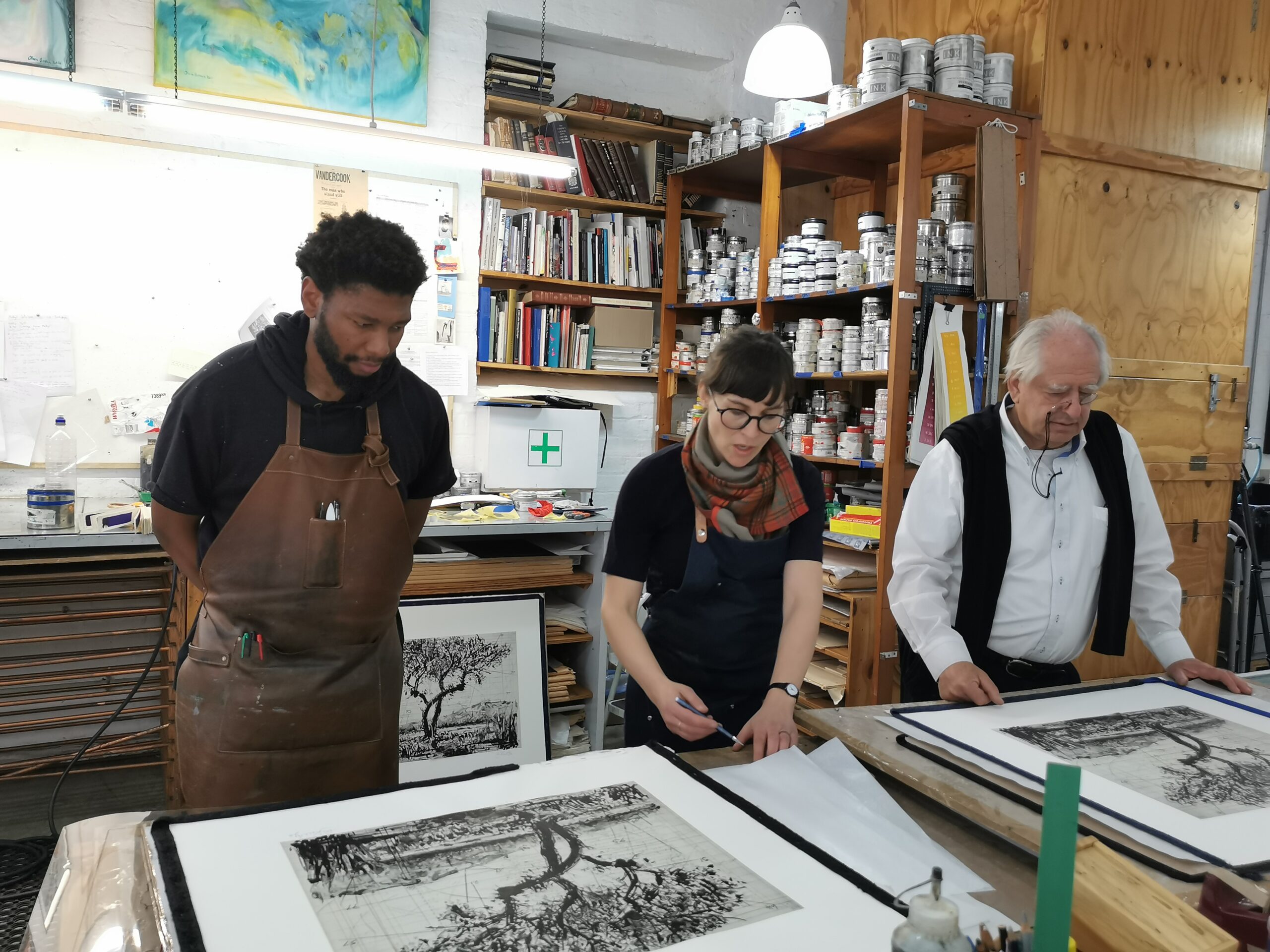
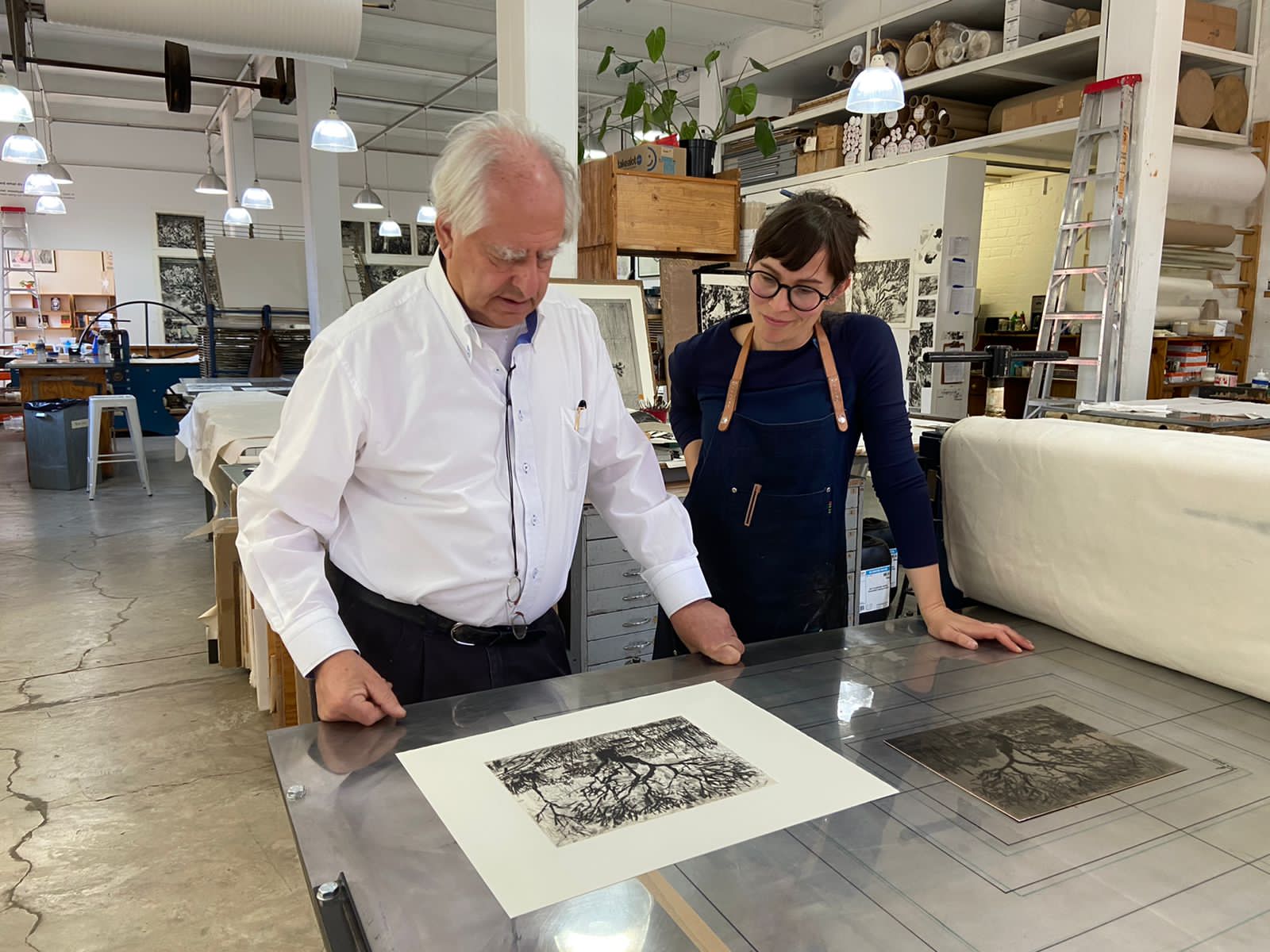
Ross and the DKW Team (Sbongiseni Khulu, Kim-Lee Loggenberg-Tim, Roxy Kaczmarek and Sarah Judge) jump into testing different elements of the photogravure image for Kentridge to see. Kentridge was working on a theatre production in his Arts on Main studio concurrently, allowing him to move between the DKW studio and his own studio to work. The team worked tirelessly to assemble different variations and test elements for Kentridge to be able to select and work with to resolve a final image.
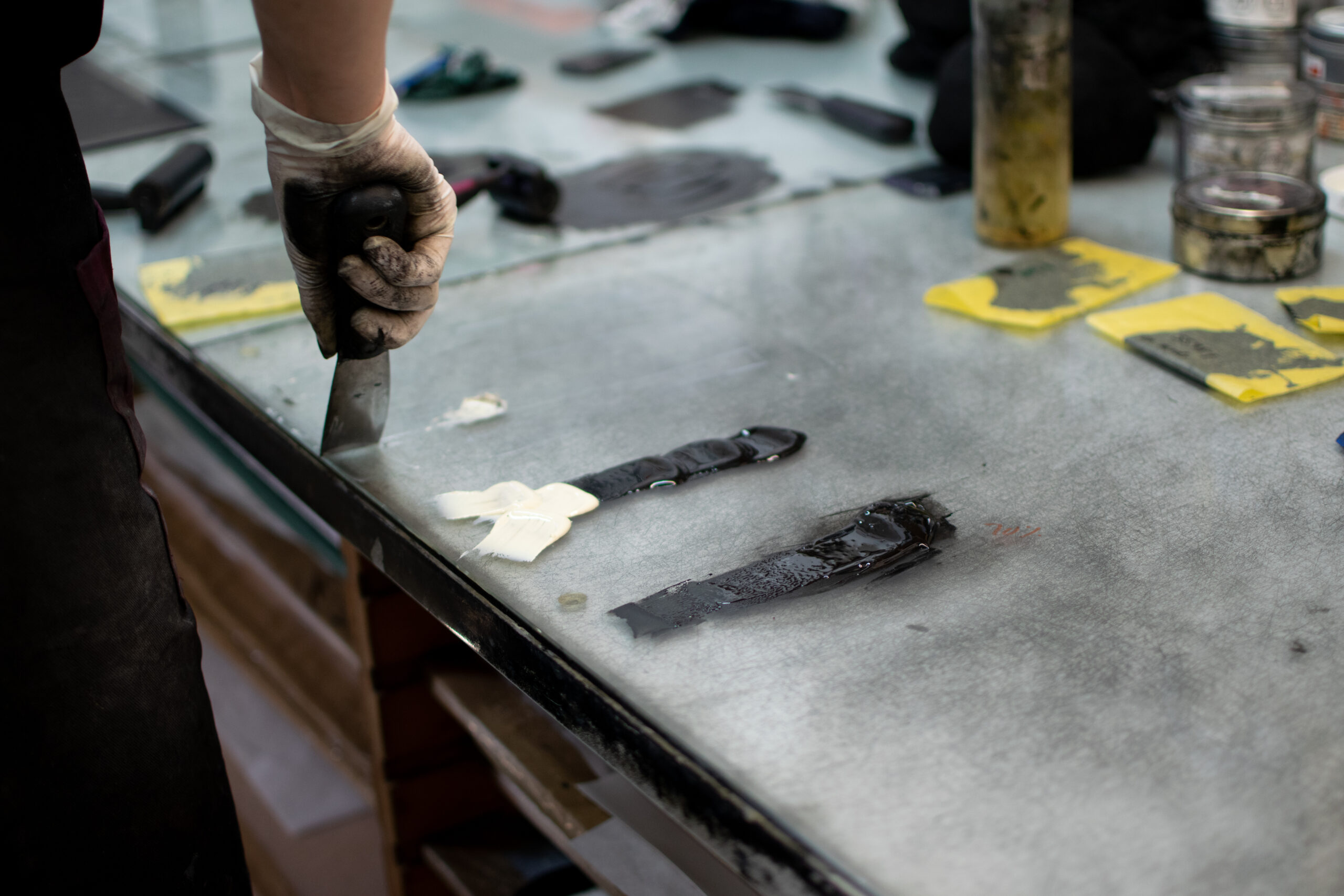
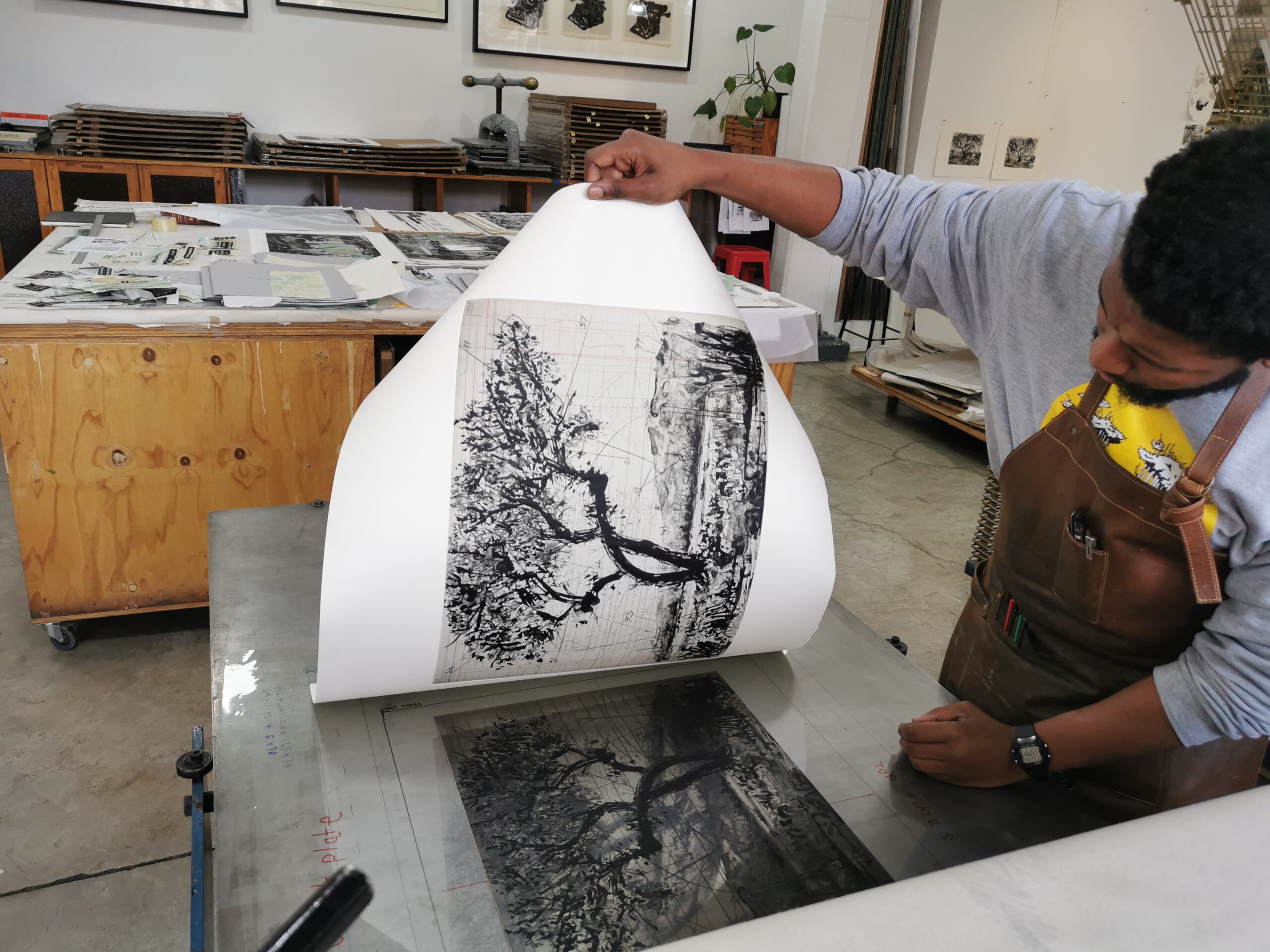
Khulu and Judge began proofing the large plates, testing different printing press pressures, black ink colour mixes, and saturations to reveal detail and ensure the correct blend into the neighbouring panels. Inks used were a custom blend of Portland cool black, Gamblin Bone Black, Charbonnel 55918 and 55985 and varying amounts of transparent base.
Ross and Loggenberg-Tim began working with Kentridge on etching additional elements into separate plates that would be overlaid on to the photogravure prints as a second run.
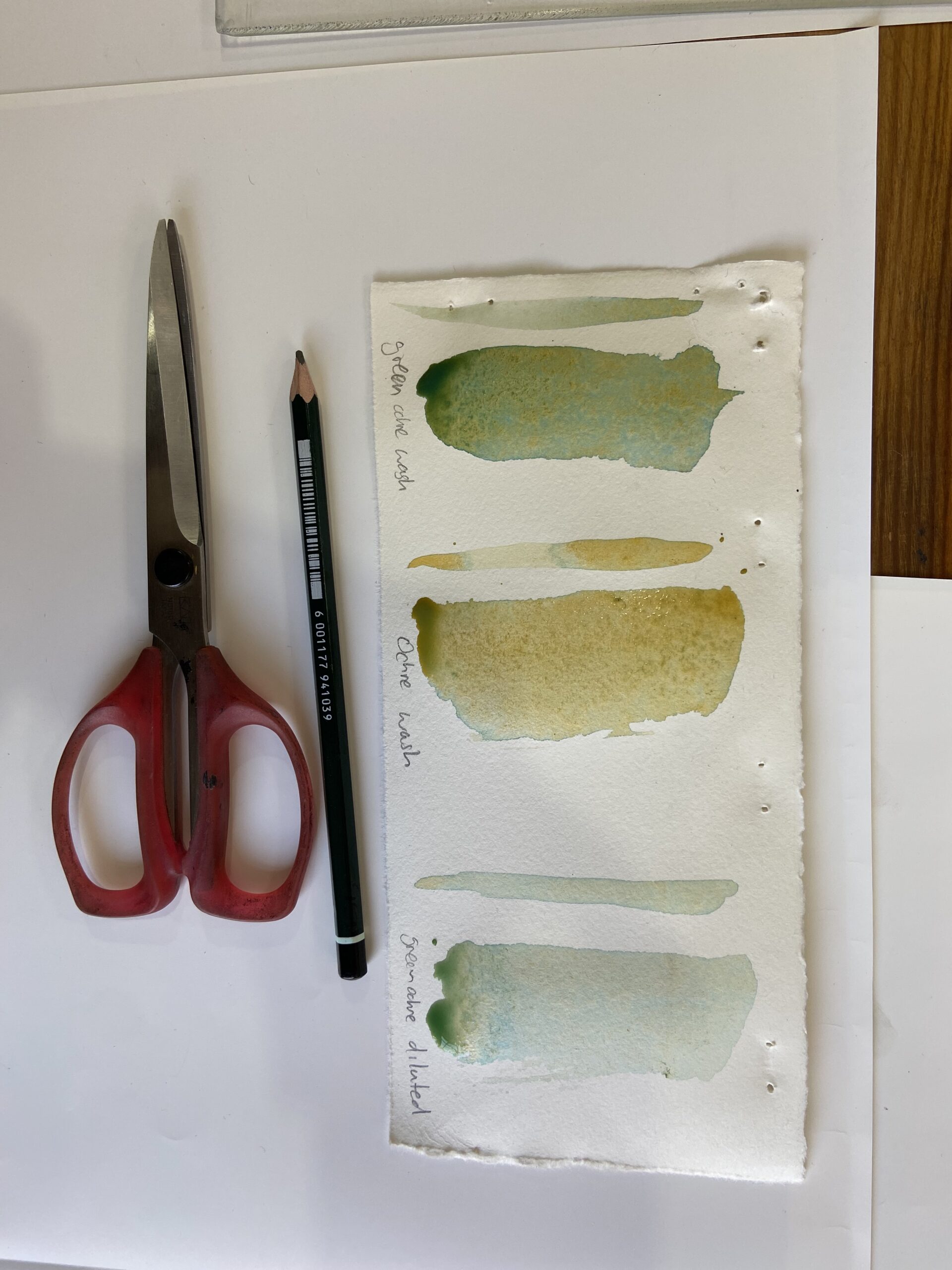
Kaczmarek was tasked with mixing and testing acrylic colour washes, variations of greens that reference maps of Rhodesia (now Zimbabwe). These mixes were used to paint dictionary sheets and other papers for chine collé and collage elements. Ross worked on assembling different combinations of printed papers with the various ink colours, text and other elements and options to show Kentridge. The variety of papers consisted of: Kitakata Natural 36gsm, Kitakata Green 36gsm, Arakaji Natural, Tosa Washi Surface Gampi, Hosho, Gampi Vellum, found ledger and papers from early 1900’s encyclopedia.
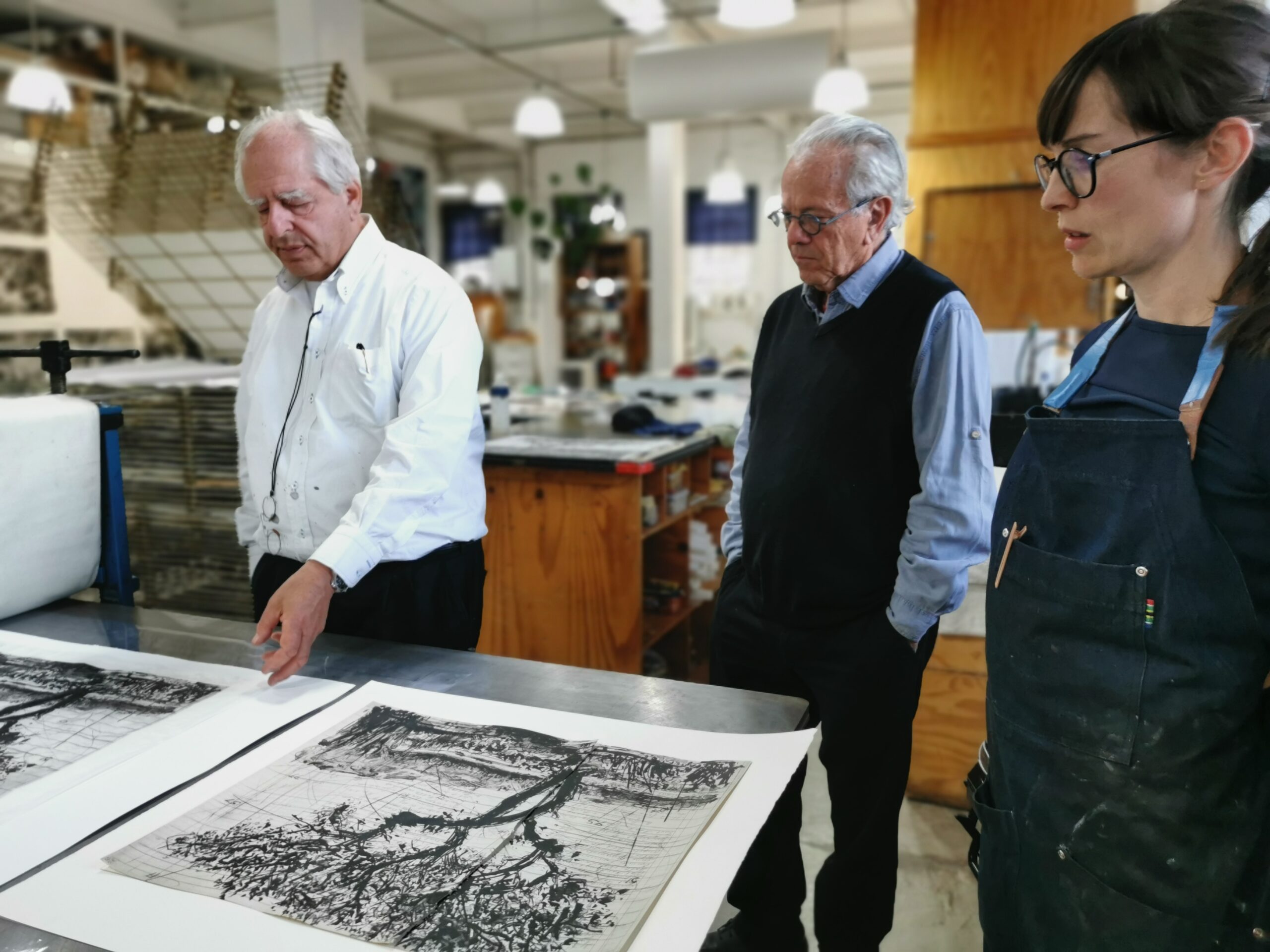
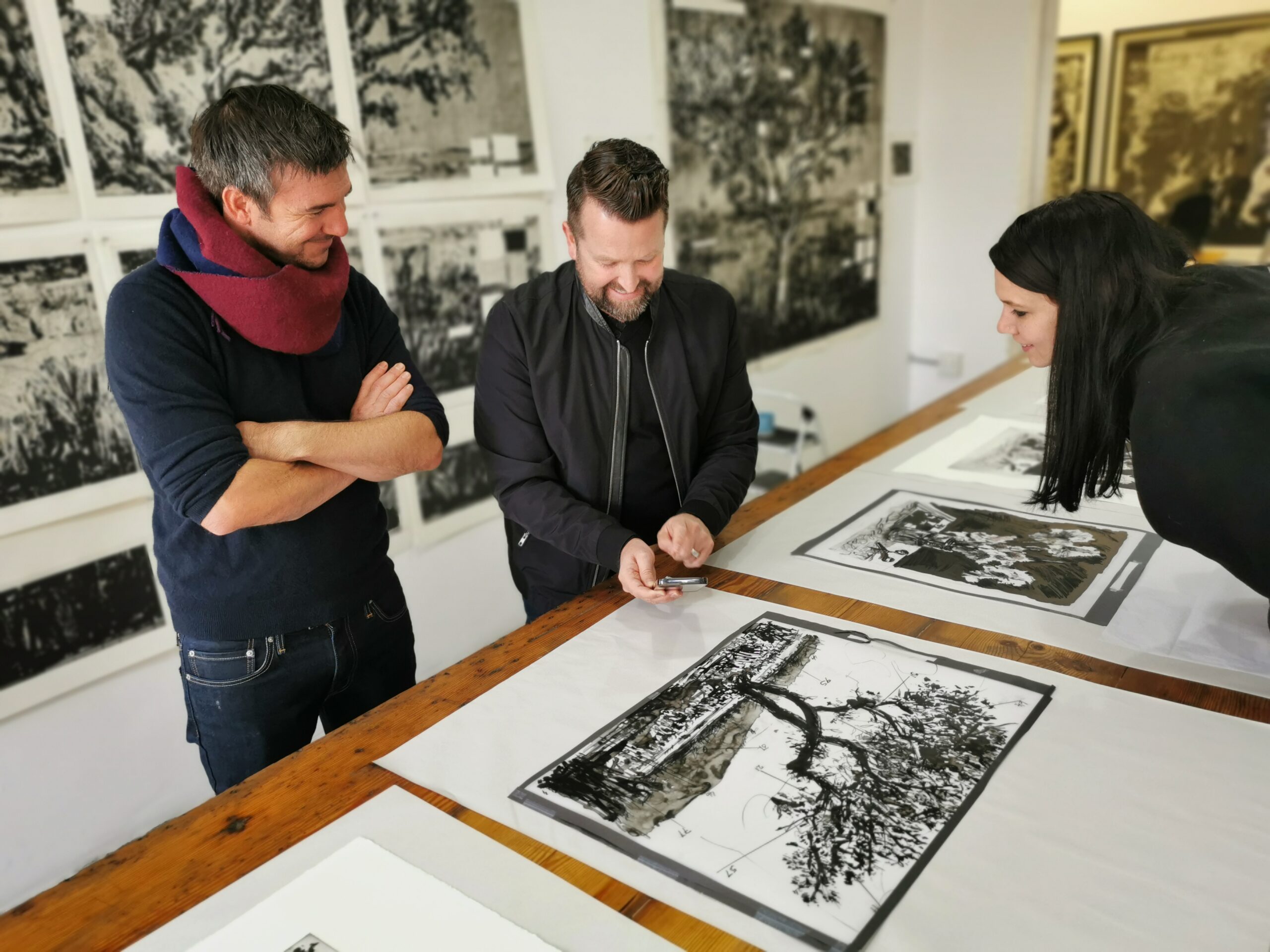
Kentridge and the team work to resolve the image




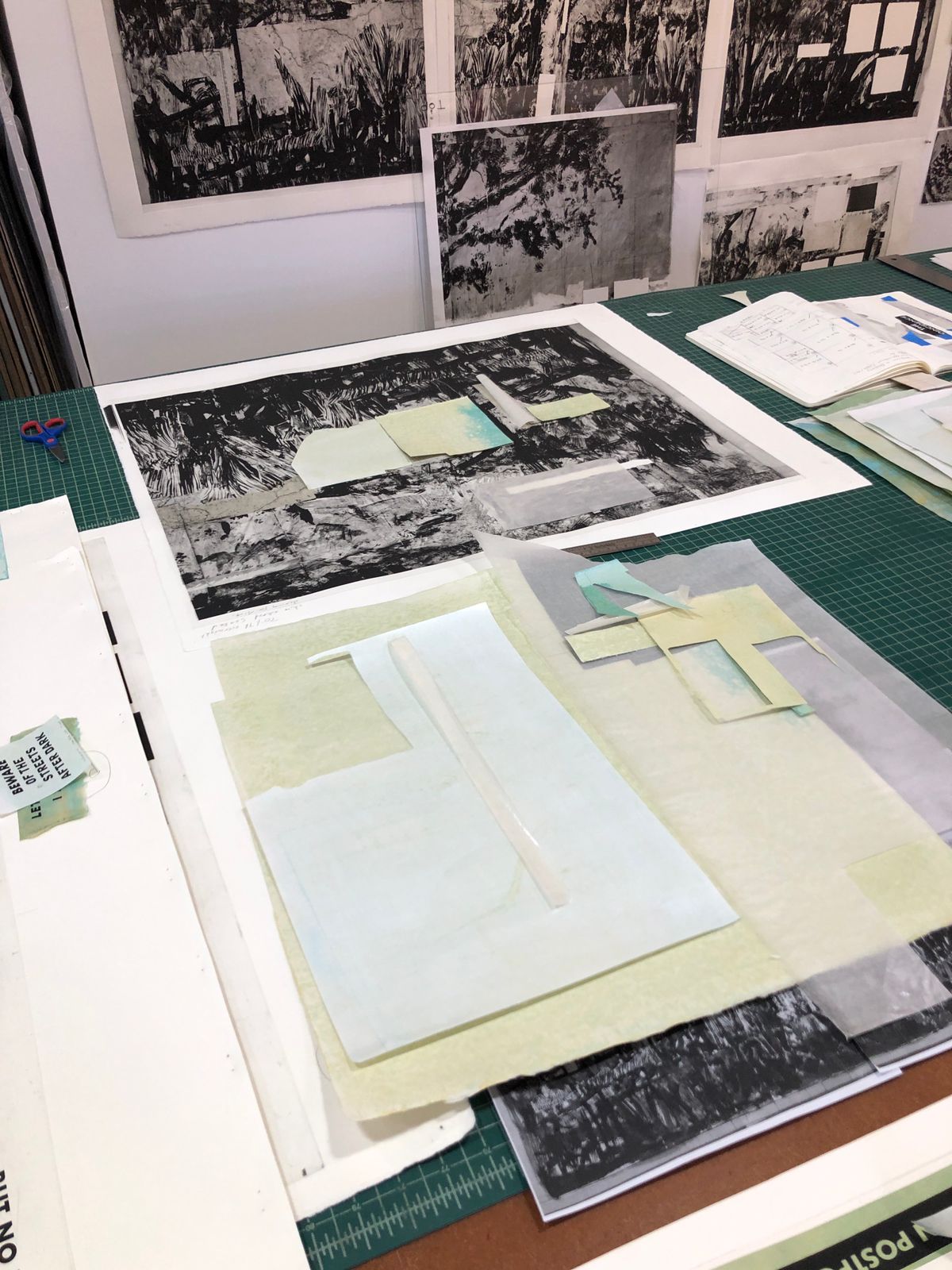
MAP FRAGMENTS
The map fragments, which feature greens and blues, depart in a gentle way from Kentridge’s habitual black and constructivist red, speak most directly to the overcoming of distance that was required by multiple collaborators in order to realise this work, and to the reconfiguration of relationships that necessarily occurs in such times of disruption. The team laid out various sheets of paper for Kentridge to hand colour ahead of the editioning process.
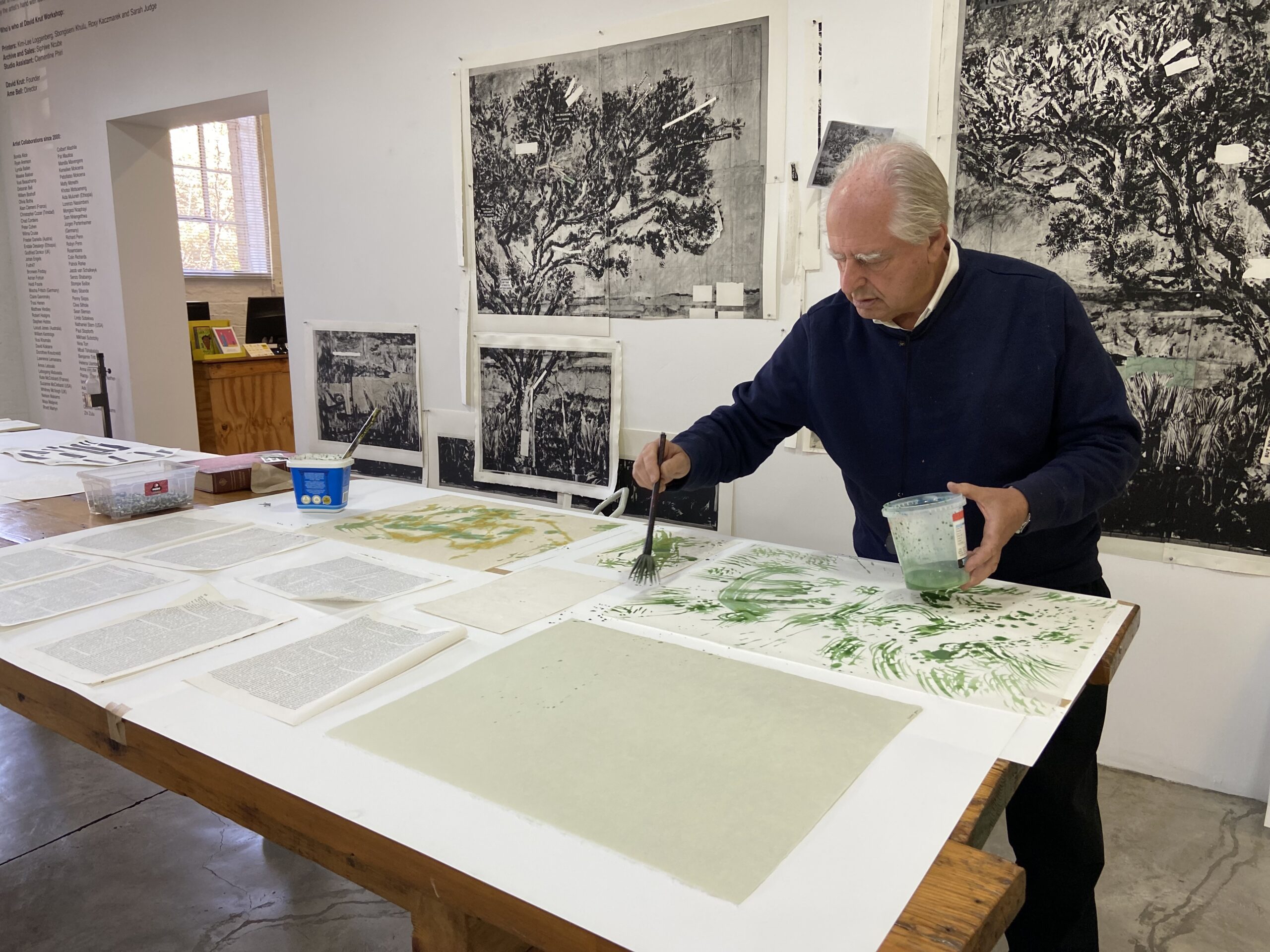


Editioning
Once a BAT had been signed off by Kentridge, Jillian Ross returned to Canada to continue working on other projects and the DKW team set about preparing to edition the large print. The editioning process shifts focus from experimentation and image resolution to pragmatic planning and systematic repetition. This logical approach structures creative chaos into an organized strategy for batch production and replication.
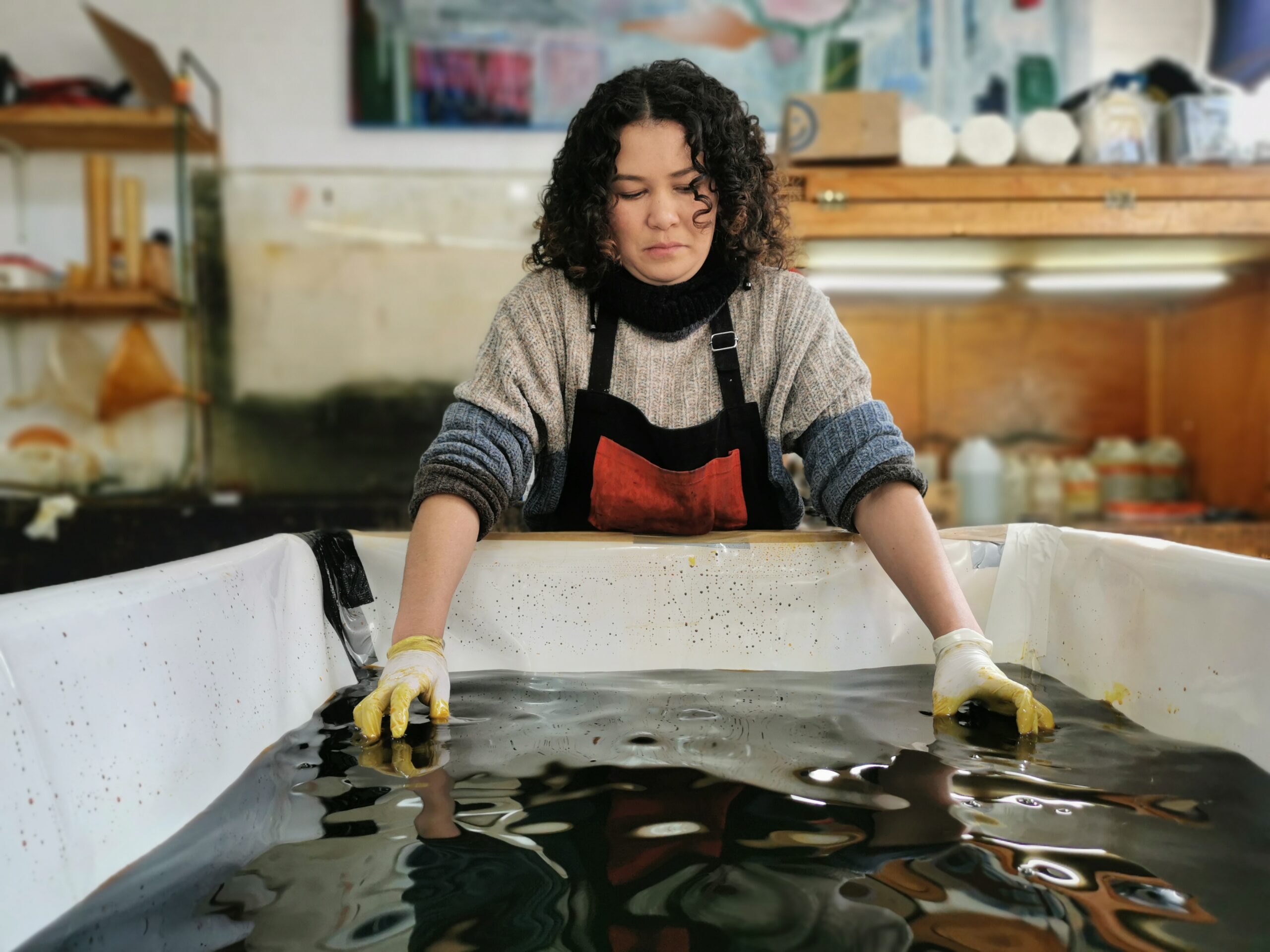
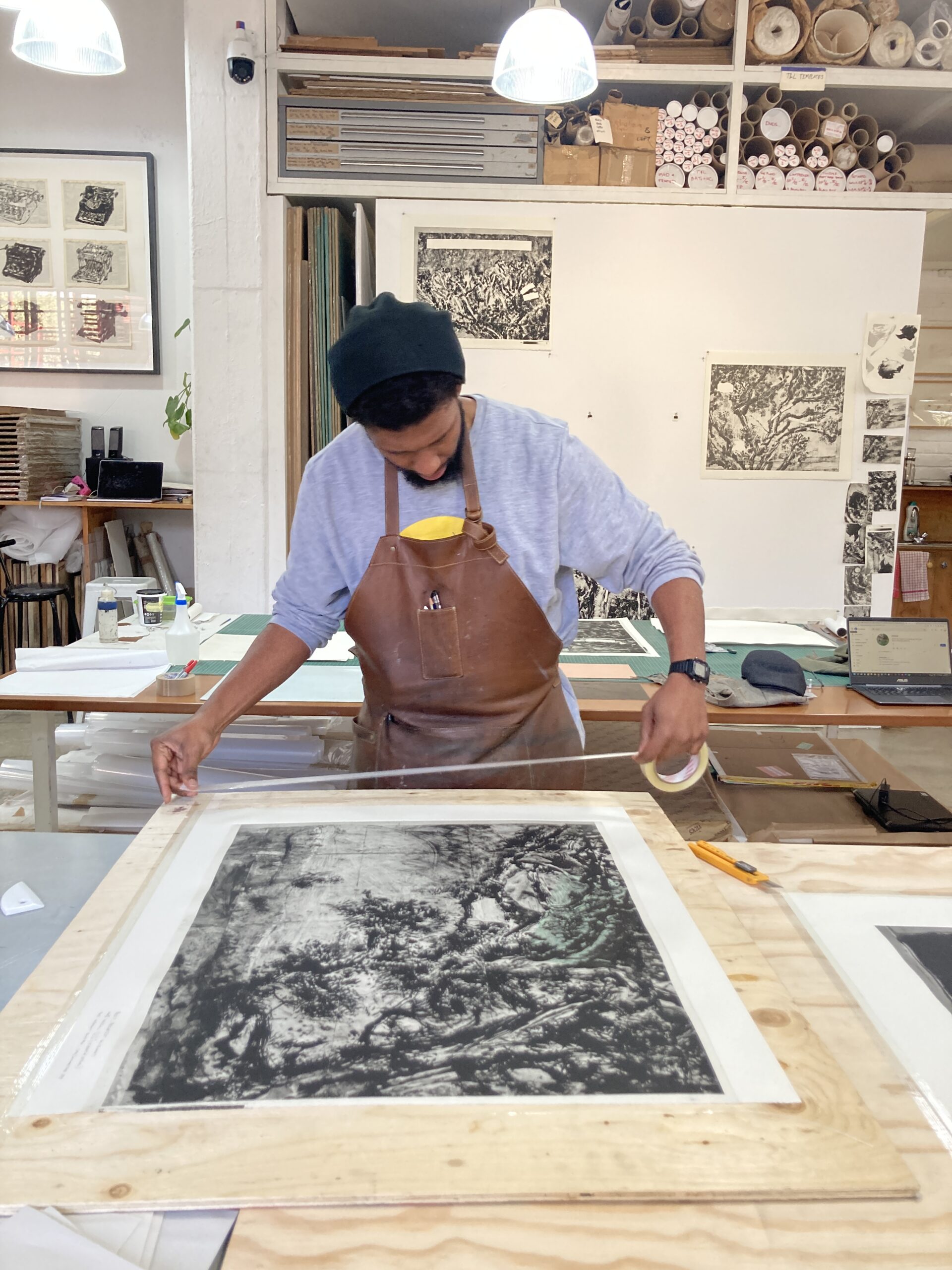
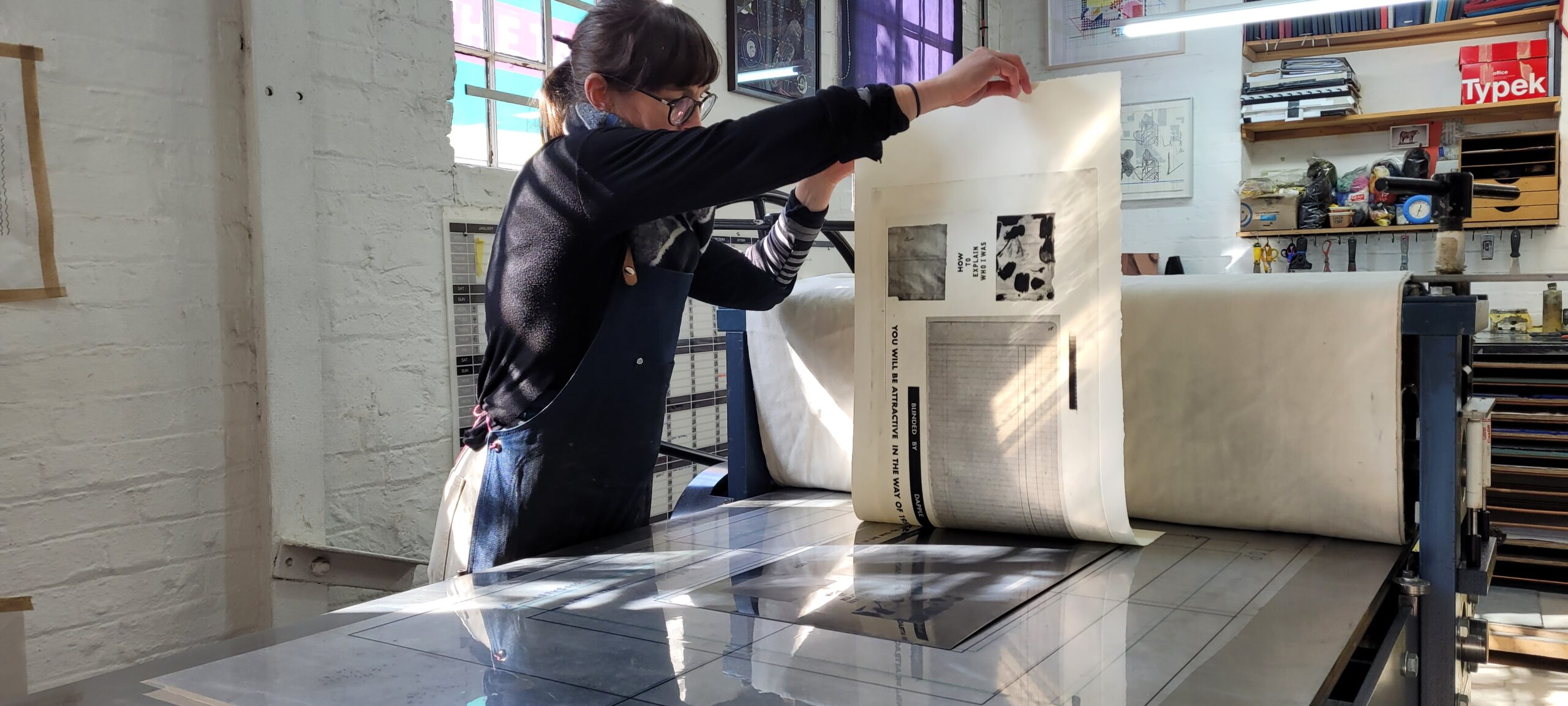
The large copper plates were reinforced with steel, then diligently have ink applied, excess ink removed, paper soaked for the correct amount of time and then run through the etching press. A single printer could produce roughly six full panels a day, a number that quickly multiplied as more printers joined the process. Soon, the studio was filled with towers of prints drying in stacks. Each print needed three days to dry before collage elements could be added, followed by another seven days before it could be removed from its stapled board and carefully cropped. Occasionally, the tension created by the collage elements required further problem-solving, adding another layer of complexity to the process.
The individual elements were prepared from the seven smaller plates, including the text, small chine collé pieces and collage elements. When Jesse Shepstone joined the team in 2023, he took on the meticulous task of counting, cutting, gluing and preparing the hundreds of small pieces of paper that would eventually be incorporated into the prints.
After drying and cropping the task of assembling the panels according to an acetate map was handed over to Sbongiseni Khulu who finalised the piece with hand drawn red registration marks. Each sheet of paper is carefully numbered and titled on the back. Finally, the bottom left panel is labelled with a dedicated print number, and William Kentridge signs the bottom right panel.
The David Krut Workshop completed the editioning process in January 2025, ending an extraordinary three-year journey from the work’s conception across multiple studios to the final proof pulled for an edition of 20 works plus proofs. The scale and complexity of The Old Gods Have Retired demanded extraordinary patience, precision and collaboration. Yet throughout this period, the workshop continued to produce numerous other projects, demonstrating not only the meticulous craftsmanship required to realise Kentridge’s monumental work, but also the adaptability, resourcefulness and commitment of the many hands behind its making.
Group photo:
- more hands were brought in: Nina Jacobson (intern), Clementine (assistant), Boemo Diale (Intern), Jesse Shepstone (intern).
- Title from Design Indaba article featuring the 2023 Kentridge exhibition at the David Krut Projects – https://www.designindaba.com/articles/creative-work/many-hands-light-work