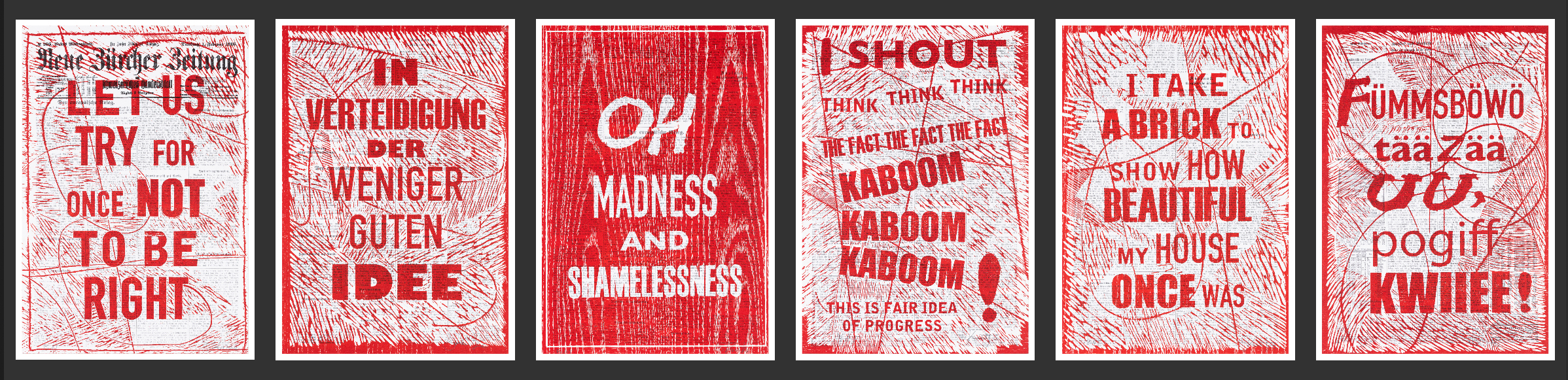
In 1916, at the height of the First World War, a group of artists gathered in Zurich to form the movement now known as Dada; a radical rejection of logic, nationalism, and the cultural systems that had led Europe into catastrophic conflict. More than a century later, South African artist William Kentridge revisits that moment in his woodcut portfolio, Headlines, a series that transforms historical newspaper pages into sites of visual protest and critical reflection. The prints mimic the visual structure of public declarations and the visual language of mass media through oversized typography, fragmented headlines and graphic immediacy visually reminiscent of street posters, protest banners and revolutionary pamphlets, which were major vehicles for wartime messaging.
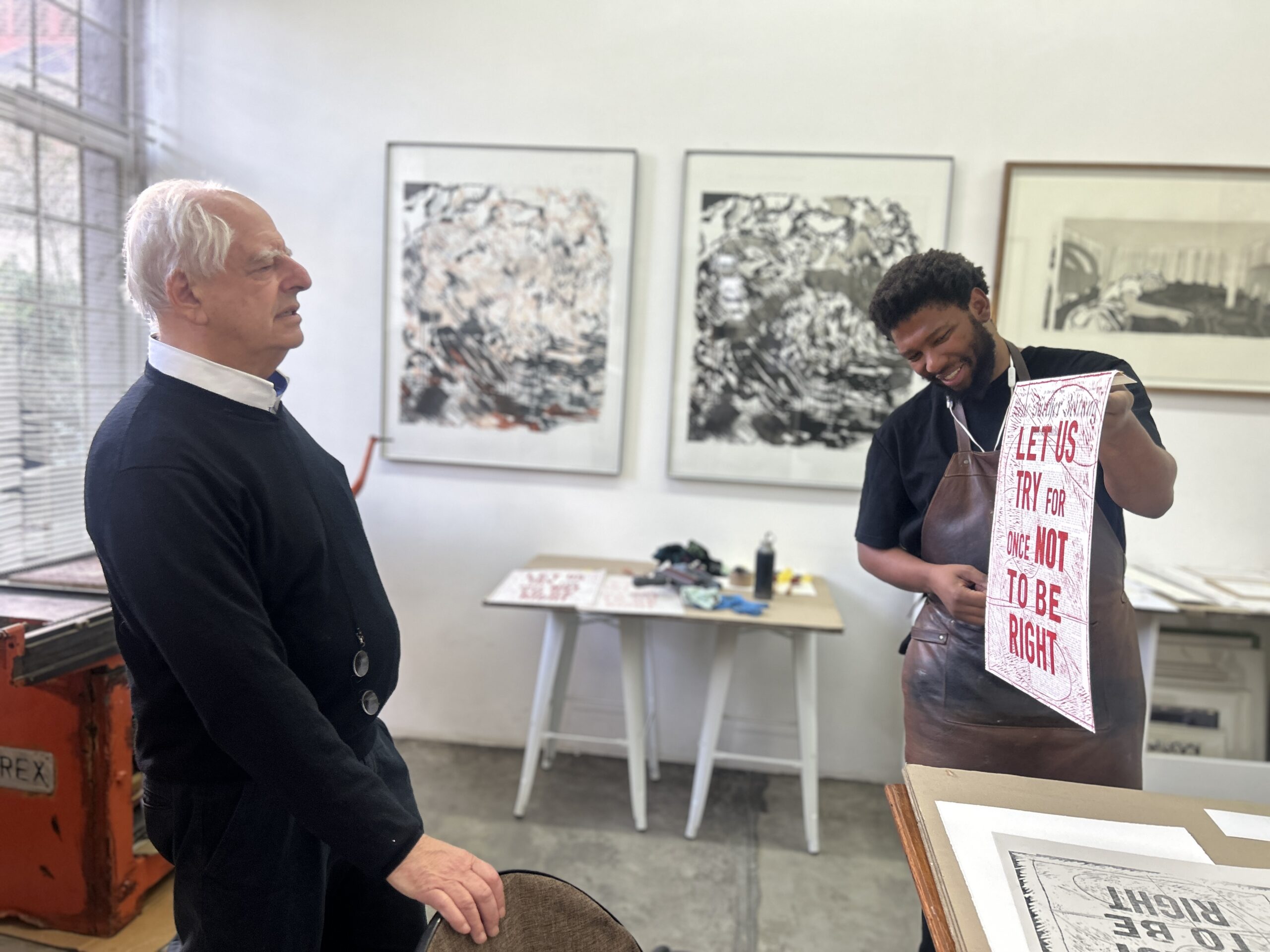
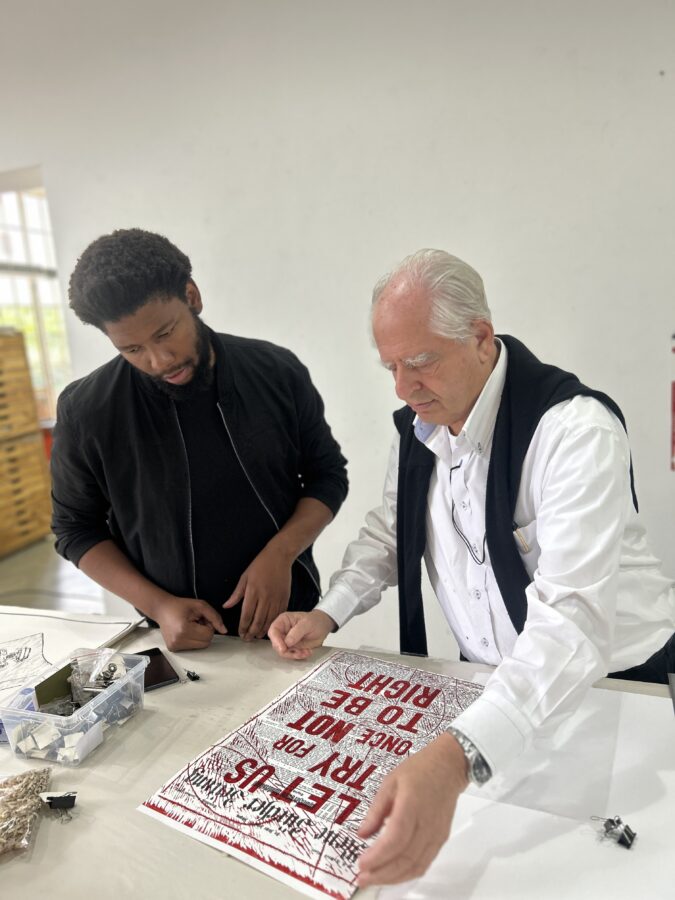
In 2025, William Kentridge developed the Headlines series through a multi-faceted collaboration between Master printer Sbongiseni Khulu of the David Krut Workshop in Johannesburg, Lightfarm Studios in Braamfontein, Johannesburg, the Swiss newspaper Neue Zürcher Zeitung (NZZ), and the Hamburg-based international art organization P-ART, which coordinated the exchange. Each print functions as an announcement shouted from the walls of a city, intersecting with the tradition of soapboxing, where speakers would stand atop crates in public squares to address crowds with political speeches. Thus the headline—the traditional voice of authority in journalism—becomes unstable, fragmented, and theatrical.
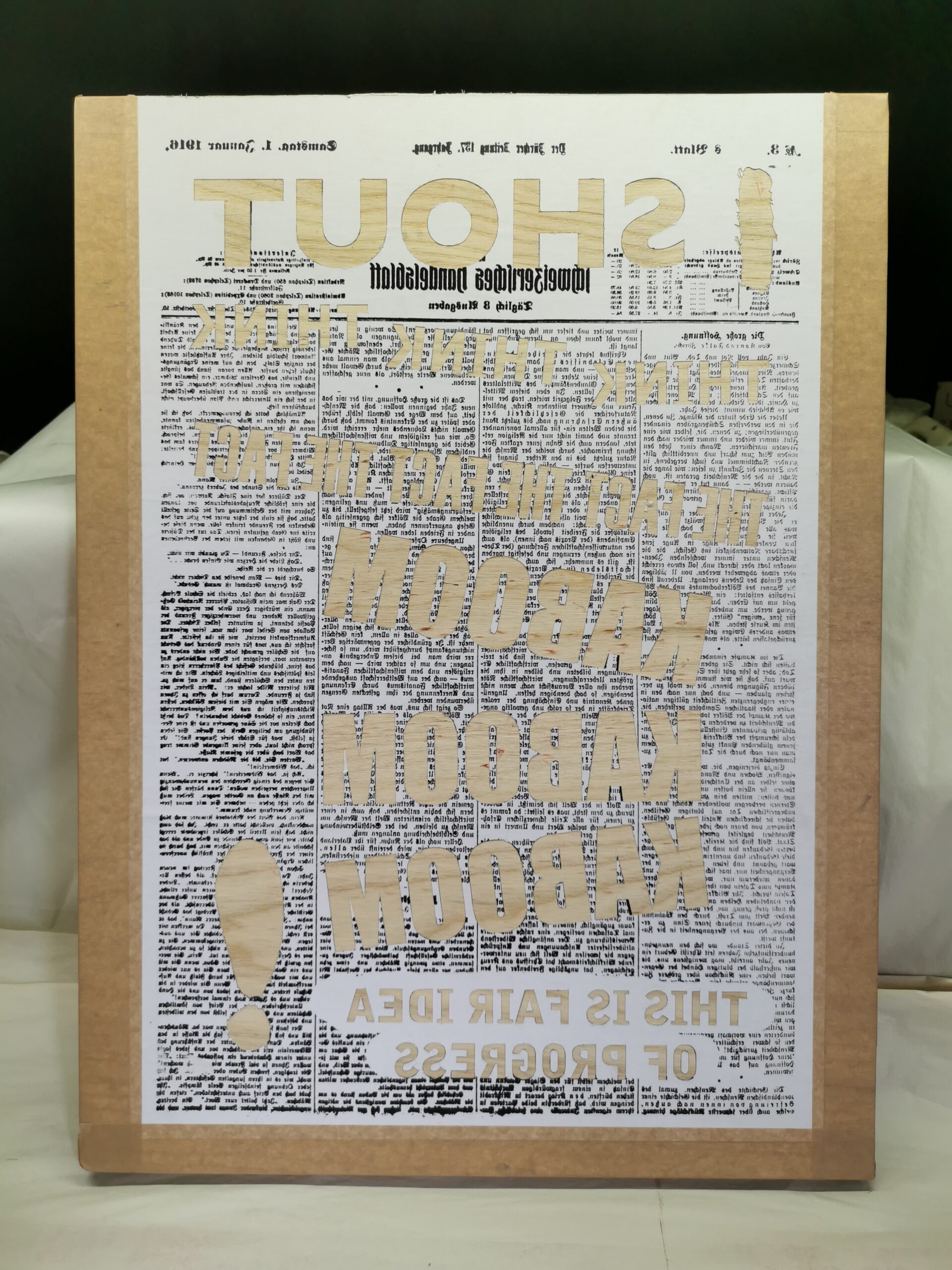
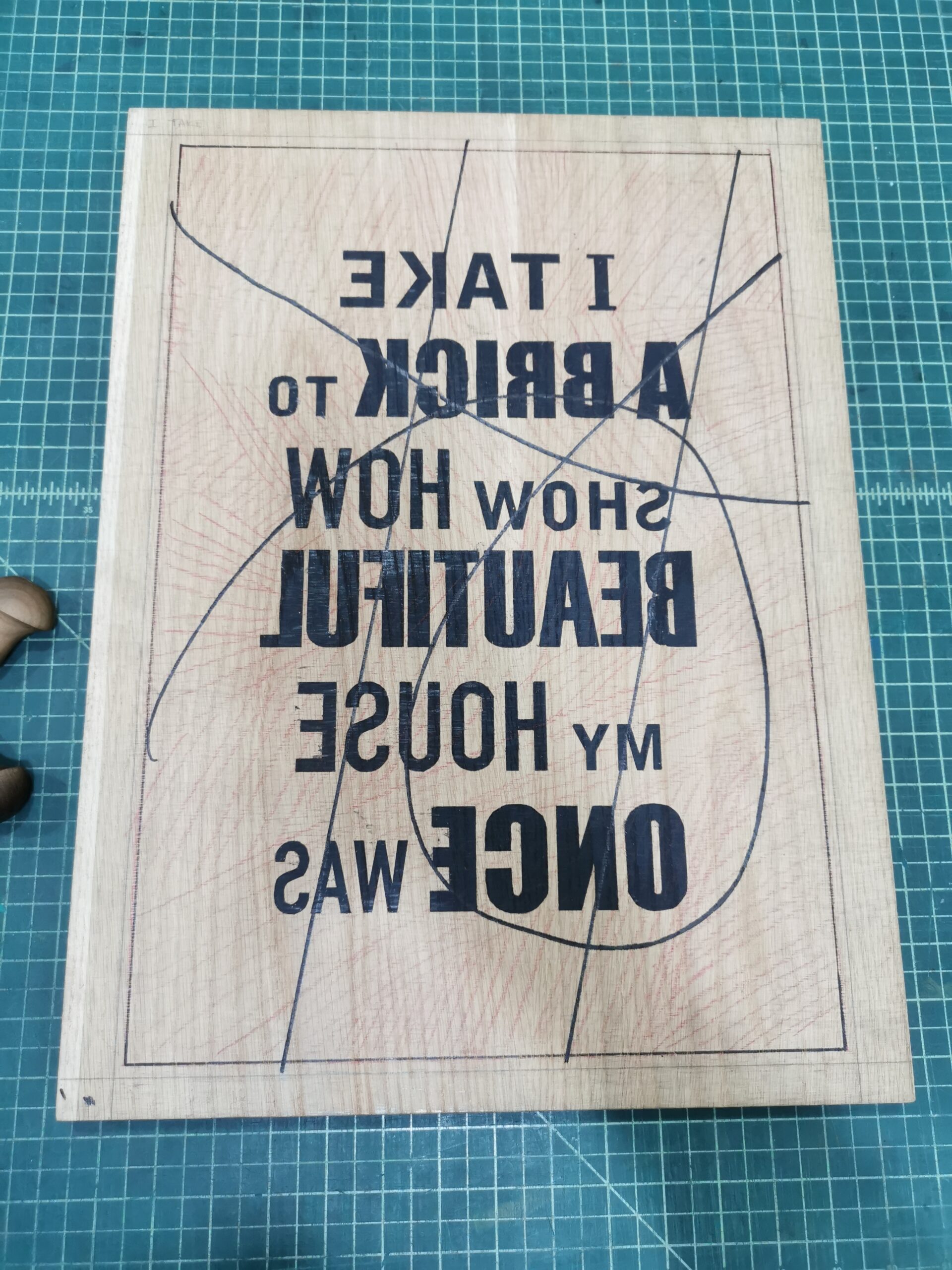
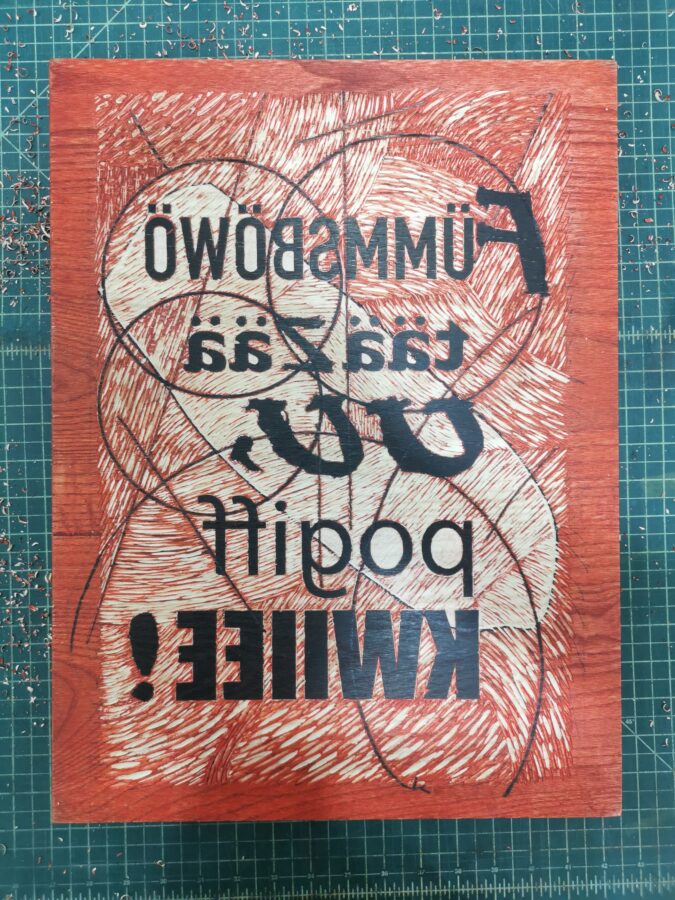
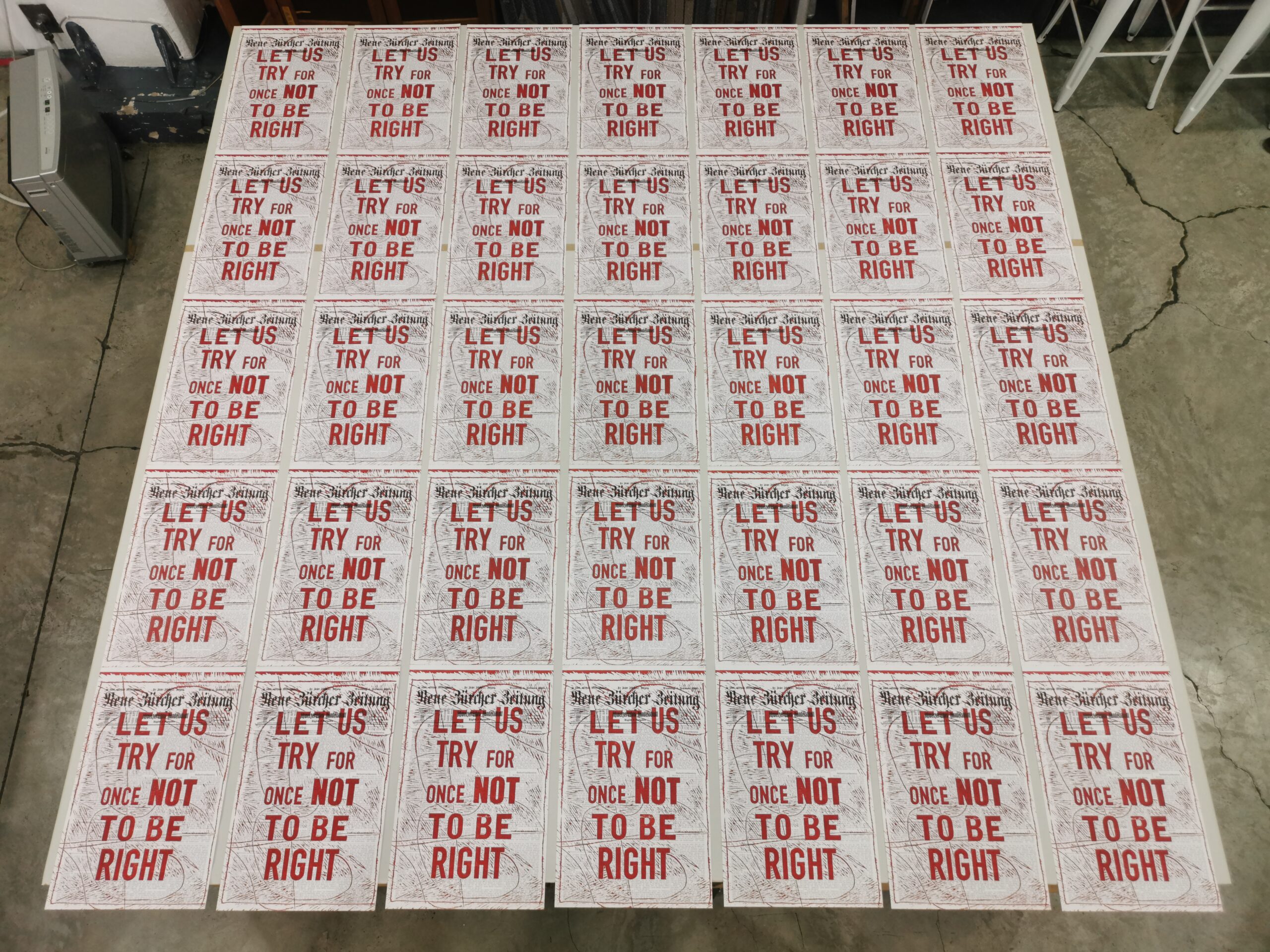
The Headlines series is comprised of six large-format, text-based woodcuts: Let Us Try For Once Not To Be Right, In Verteidigung der Weniger Guten Idee, Oh Madness and Shamelessness, I Take a Brick to Show How Beautiful My House Once Was, KABOOM KABOOM KABOOM!, Fümmsböwö tää zää. The text within the works draws from key avant-garde figures associated with Dada and its intellectual orbit, including the Dada manifesto by Tristan Tzara, the experimental sound poem Ursonate by Kurt Schwitters, and the literary excerpt “take a brick to show how beautiful my house once was” from a poem by Bertolt Brecht. During WWI newspapers were primary sources of information, propaganda and censorship shaped public opinion, headlines carried the emotional weight of the war, Kentridge’s prints recreate the chaotic textual environment of wartime media.
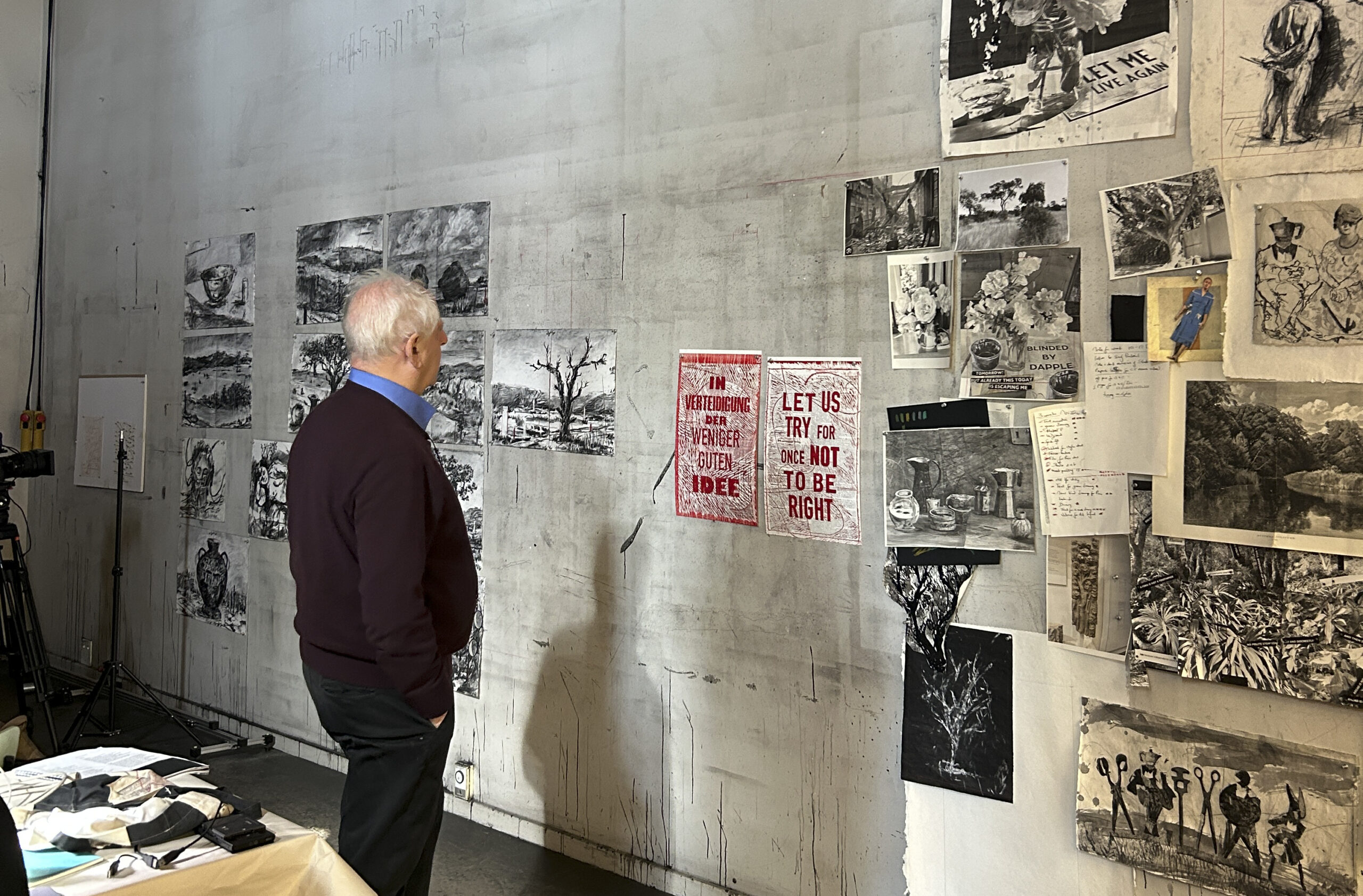
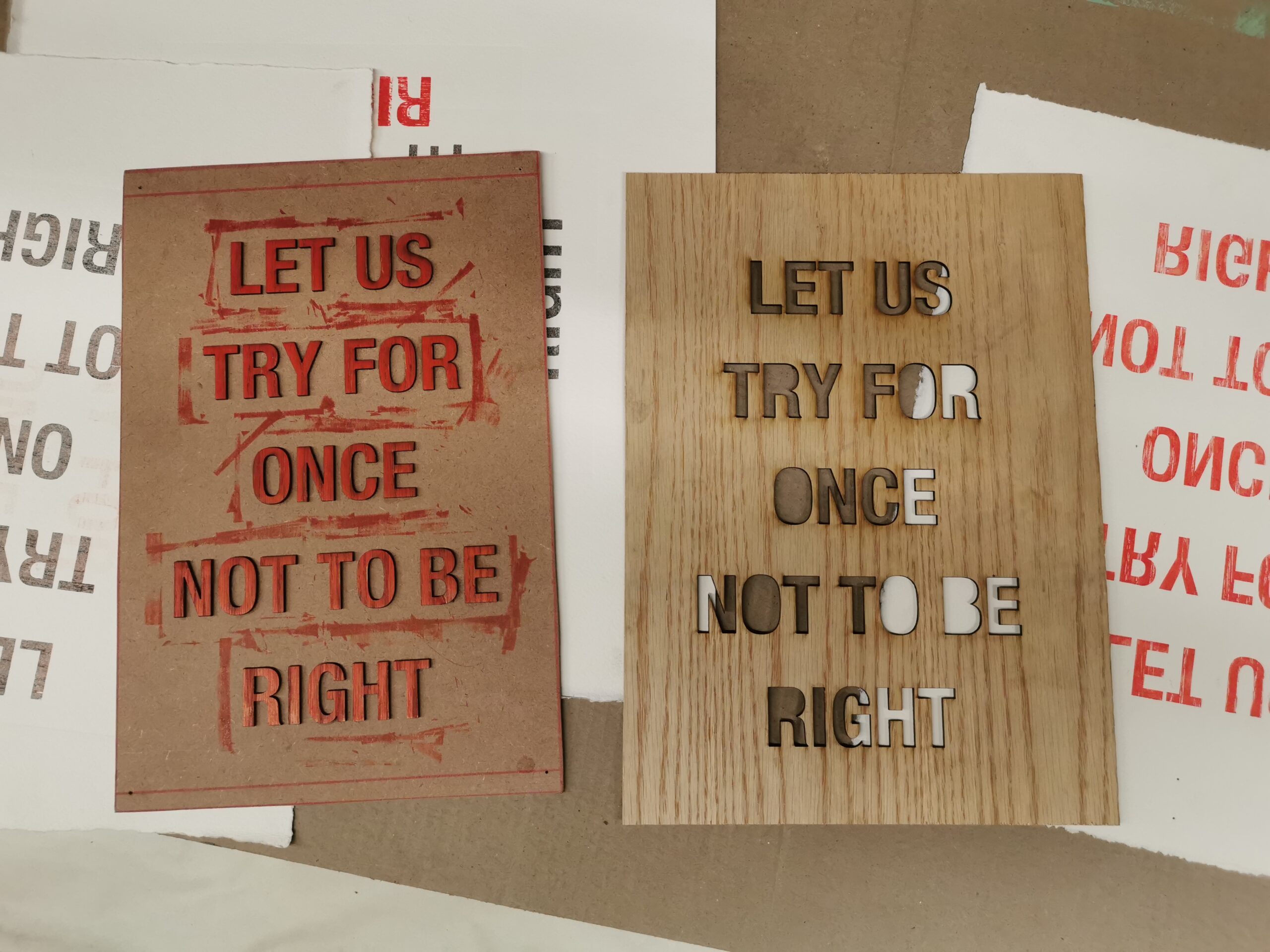
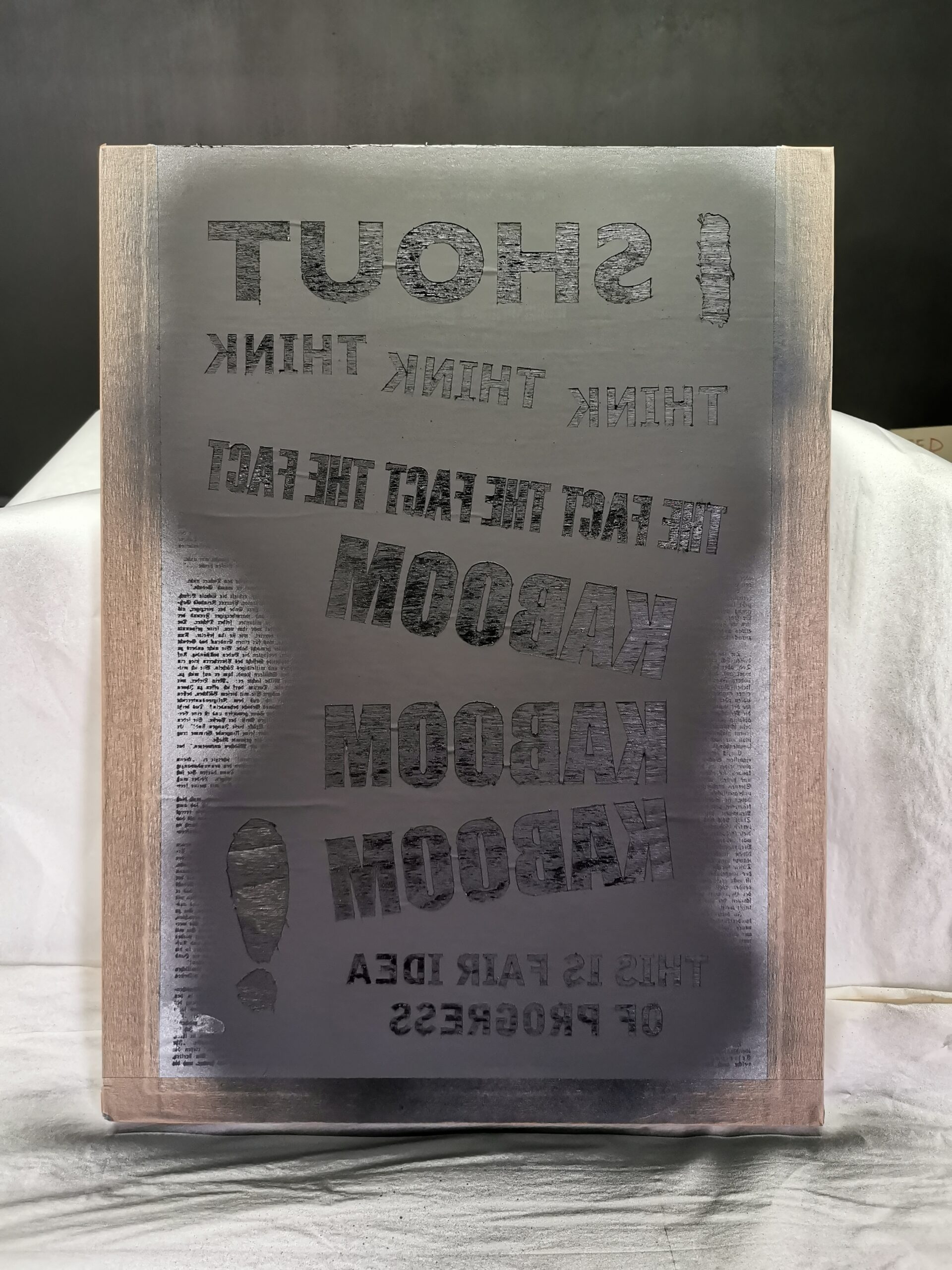
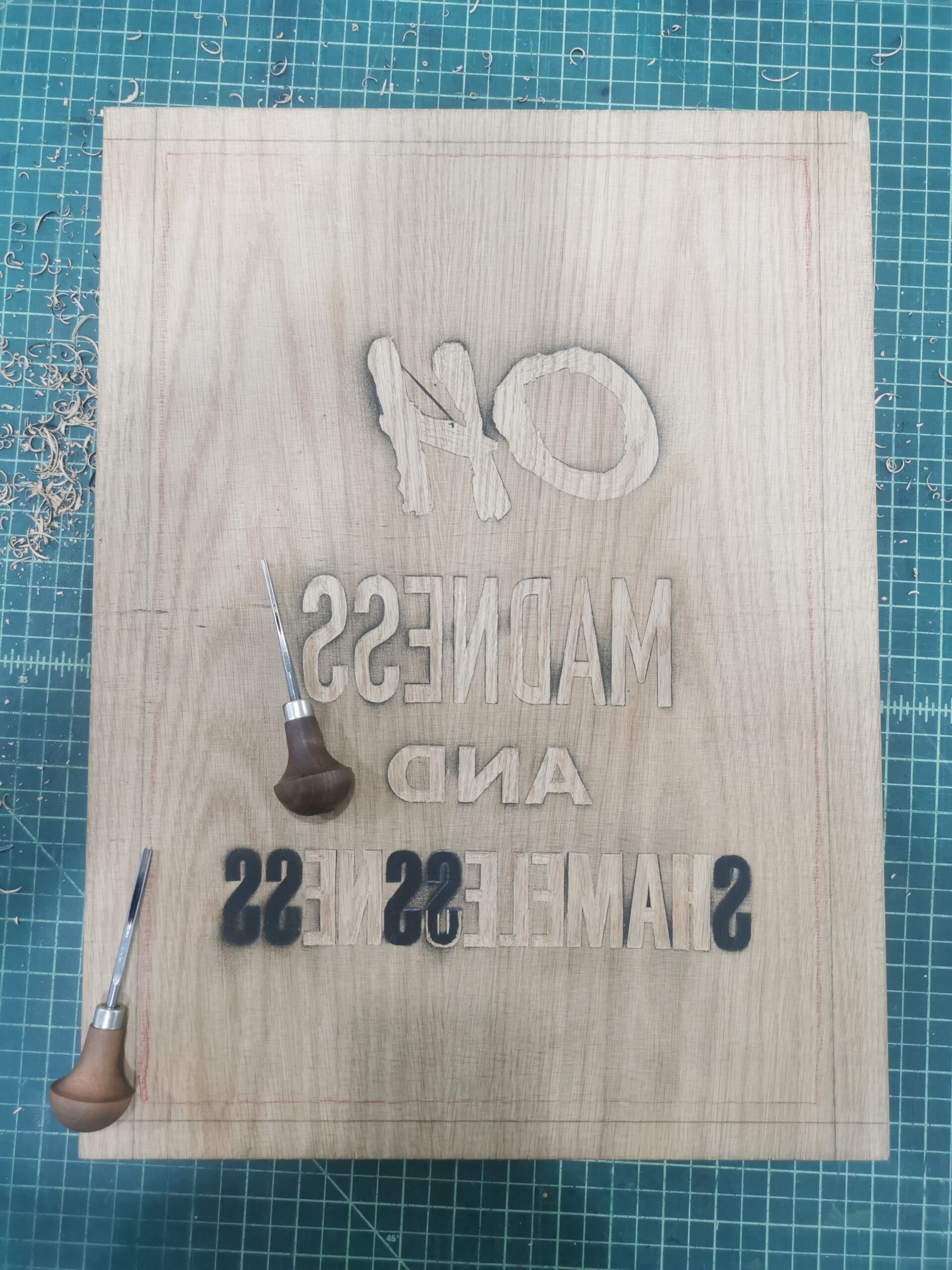
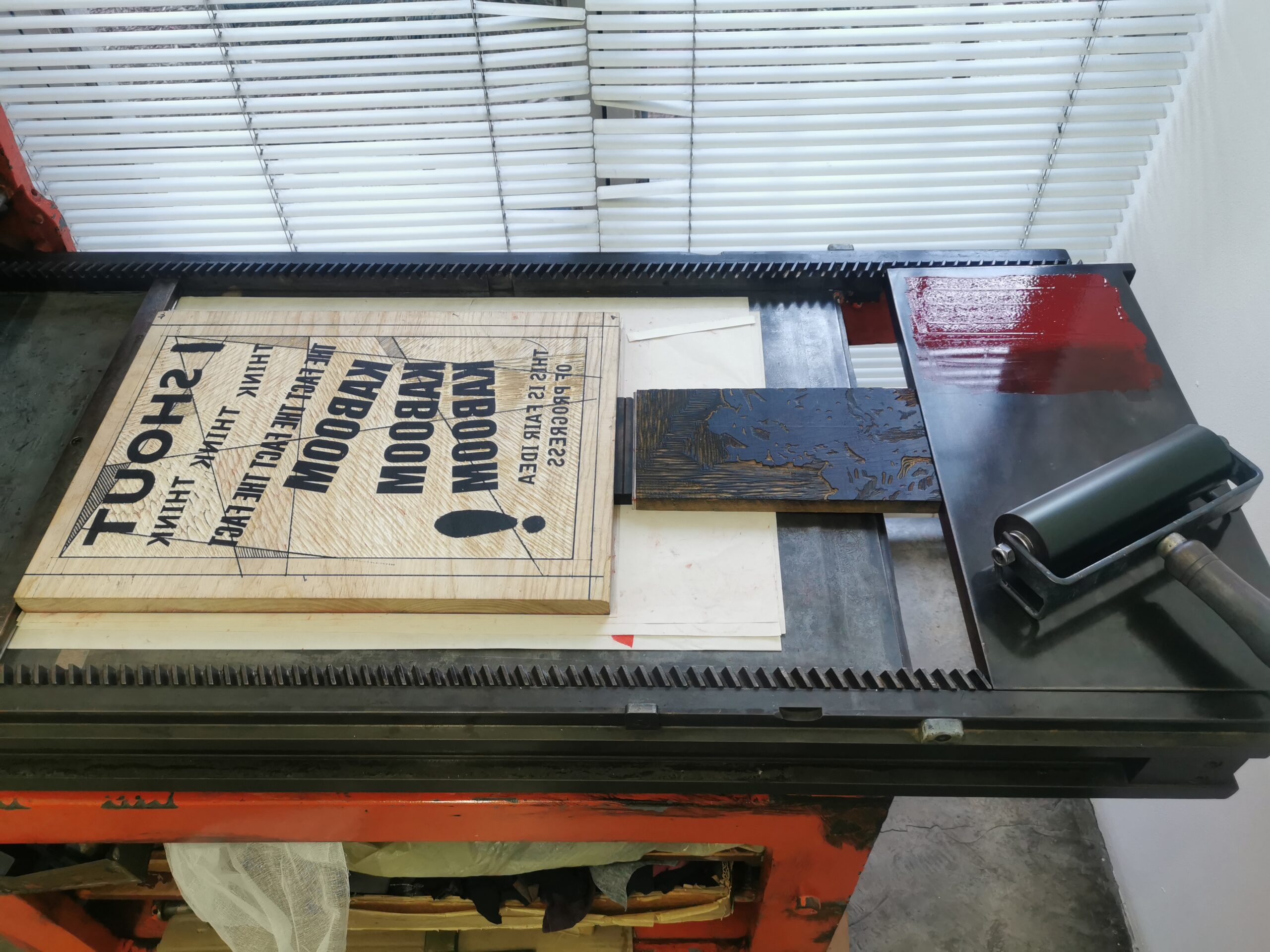
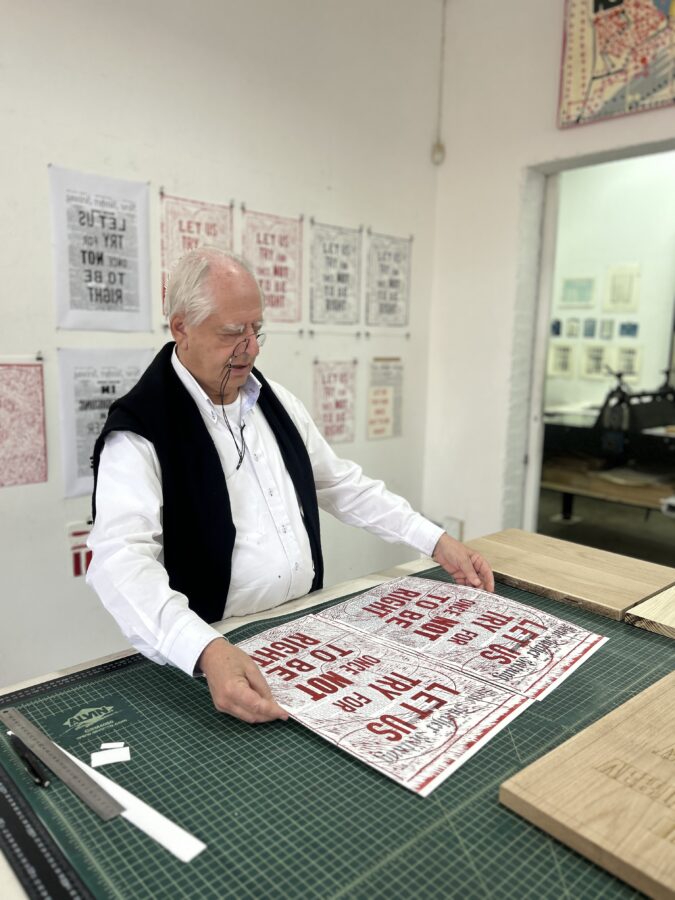
Printed over digital reproductions of a Neue Zürcher Zeitung (NZZ) newspaper dated 1 February 1916 provided by Lightfarm studios, the works anchor themselves to the very moment when Dada first emerged publicly at the Cabaret Voltaire in Zurich. Instead of preserving the authority of the newspaper pages, Kentridge fractures it. Large-scale red woodcut imagery and typographic fragments collide across the surface, interrupting the clarity of the printed news. All but one of the six woodcuts were fully hand-carved into woodblocks of white ash and oak. In Verteidigung der Weniger Guten Idee, which translates to “In defence of the less good idea” is the only woodblock to have laser-engraving around the text as well as hand-carving. This was done in order to give a comparative visual within the same piece in order to gauge which method best served the works. During which time Kentridge expressed a need for a crudity of marks, marks endemic to German expressionist woodcuts. This led to the rest of the woodcut series to be carved entirely by hand.
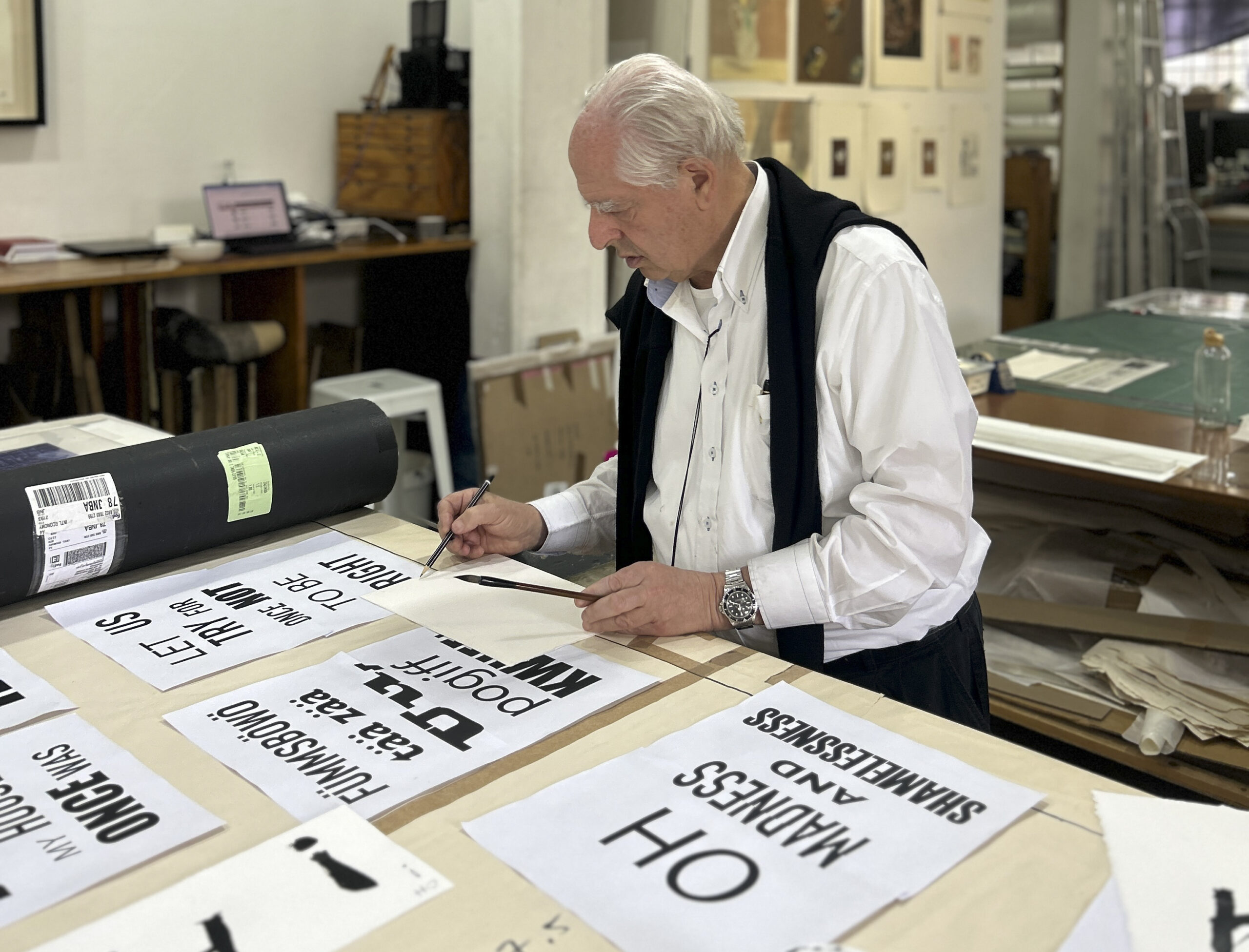
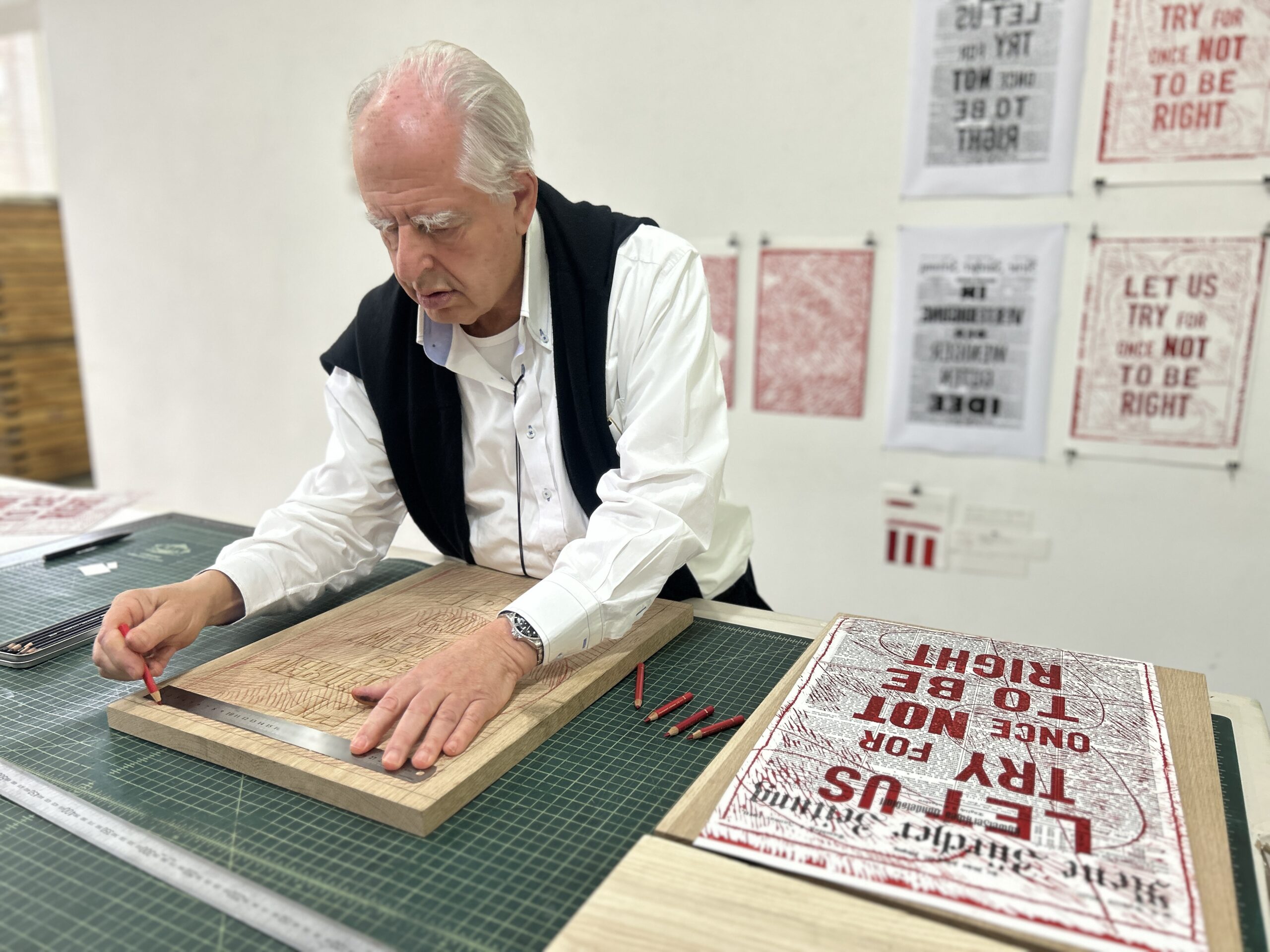
Through Headlines Kentridge channels the central strategy of Dada: to dismantle language itself in order to expose how power structures manufacture meaning. In utilizing Bertolt Brecht’s words “[I] Take a Brick to Show How Beautiful My House Once Was”, Kentridge uses them as a signifier of a past unencumbered by the tragedies of war, to remember the greater beauty that once was, even in the face of loss. In order to personify the actions behind that loss, the prints adopt an aggressive carving style, contrasted only by the clean and definitive lines of the bold text as well as the digital newspaper beneath the surface. This aligns with Dada’s central lesson in that irrationality can reveal truth when rational systems fail. By dismantling language, embracing paradox, and refusing coherent narratives, Dada exposed the instability beneath modern civilisation. By hand drawing onto the woodcuts before carving commenced, Kentridgefurthers his assertion over the historical newspaper pages to add suggestive guidelines for the carvers (Jesse Shepstone, Roxy Kaczmarek and Sbongiseni Khulu) to follow, as well as to imbue the work with his signature red pencil line from beginning to end. This action though subtle, embeds itself within the collective mind of the carvers to always see the works as the artist sees it, down to the very last remnants of the woodblock that remain uncarved, thus forming a seemingly fleeting boarder around the prints.
By means of revisiting the radical strategies of Dada through the tactile language of woodcut printmaking, Kentridge transforms the historical newspaper into a contemporary soapbox. Historically used for pamphlets, posters, and political broadsheets, woodcut printing carries a legacy of mass communication and agitation. Kentridge’s prints function in much the same way: as graphic proclamations. The headline format mimics public address, while the overlapping fragments of text echo the competing voices of a crowd. The historical reference to 1916 also points to the role newspapers played in shaping public understanding of the war. Headlines once carried the authority to define events, construct narratives, and mobilise national sentiment. As a result of fragmenting those headlines, Kentridge reveals the fragility of that authority and the mechanisms through which history is written. The prints invite viewers to reconsider the authority of the headline and to recognise the unstable relationship between language, power, and truth.
More than a historical reflection, Headlines is a reminder that in moments of political uncertainty, the most necessary act may be the Dadaist one: to challenge the systems that claim to speak with certainty.
“There’s no good solution. It’s better to understand that there are “less bad” solutions and there are multiple approaches”… “Let us try for once not to be right” this phrase stems from Tristan Tzara’s Dada Manifesto. About its usage in his work, Kentridge states: “Think of the times during which he wrote that: during the First World War, midst everybody’s certainty about what was the right thing to do, the politicians’ certainty that led instead to a complete calamity. If that’s what was being right means, then let’s try not to be right.”