Written by: Lungile Ngcobo
Collaborative printer: Kim-Lee Loggenberg-Tim
Nathaniel Sheppard III’s work doesn’t sit still. Images drift between painting, printmaking, collage, archive, and cultural critique. Fragments surface, disappear, and return altered. A face becomes a symbol. Text becomes texture. Meaning arrives slowly, layered through repetition, interruption, and reconstruction. An American-born visual artist and printmaker based in South Africa, Sheppard engages deeply with questions of identity, race, history, and representation through an intricate visual language built from fragments, archives, and print processes.
Born in Washington, D.C., in 1989, Sheppard grew up mainly in Chicago, initially studying architecture at the Southern California Institute of Architecture before relocating to Johannesburg to pursue Fine Arts at the University of the Witwatersrand. It was during this period that he developed a profound connection to printmaking, later refining his technical practice through his time at David Krut Projects, where he contributed to major collaborative editions, including assisting on William Kentridge’s Triumphs and Laments woodblock project. In 2016, Sheppard co-founded Danger Gevaar Ingozi(DGI) Studio alongside Anaz Mia, Sbongiseni Khulu, and Chad Cordeiro, further developing a collaborative and experimental approach to printmaking while mastering his technical and material understanding of print.
This relationship to both David Krut Projects and DGI Studio has now evolved into a 2026 collaboration with David Krut Workshop, where Sheppard’s visually fragmented language is translated into a body of technically ambitious unique prints
Printmaking has long existed as a tool of political autonomy and cultural circulation particularly within South African histories of protest, resistance, and self-representation. Nathaniel’s work consciously draws from this lineage. Having observed how print historically enabled communities to control their own narratives from struggle posters and banners to independent publishing Nathaniel approaches printmaking not simply as technique, but as a form of image politics.
His practice interrogates how Black identity has been constructed through systems of visual repetition: ethnographic imagery, advertising, cinema, colonial illustration, and racial caricature. Rather than rejecting these inherited systems outright, he enters dialogue with them sampling, disrupting, and reconstructing their visual language.
There is a deliberate tension in this process: beauty and discomfort, familiarity and instability, recognition and distortion.
Nathaniel’s works do not offer singular readings. Instead, they invite viewers into an act of assembly.
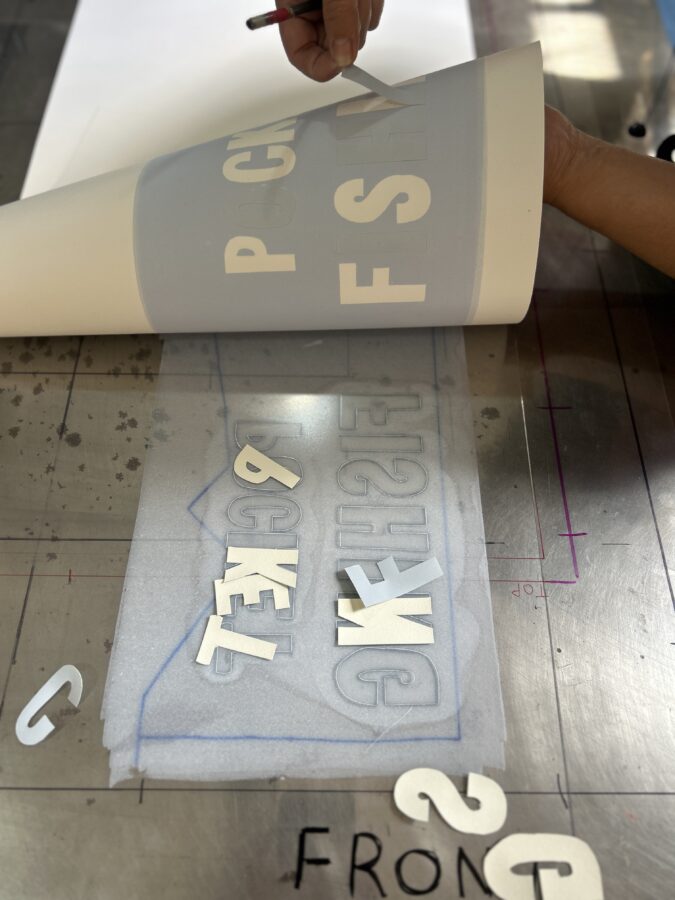
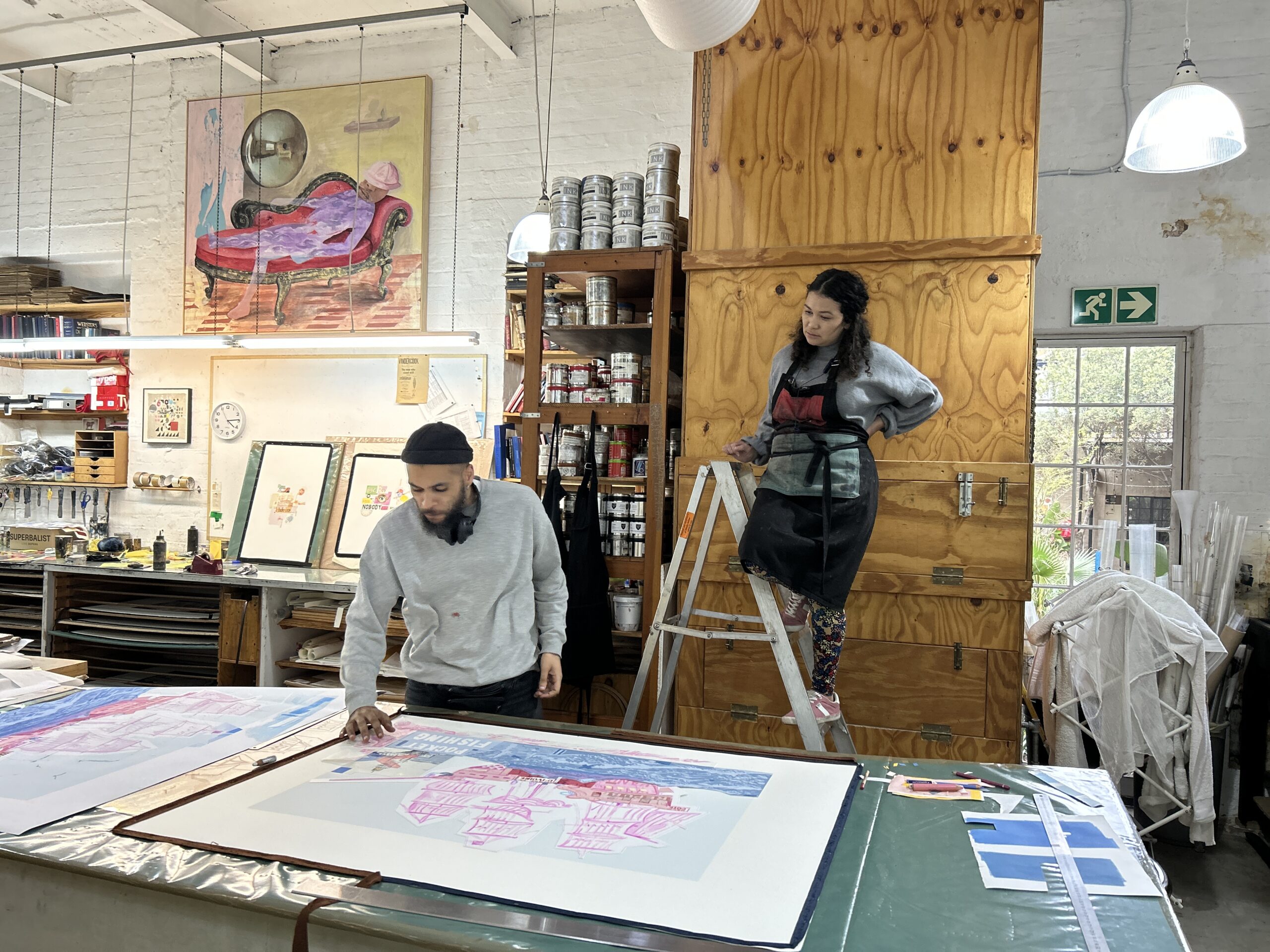
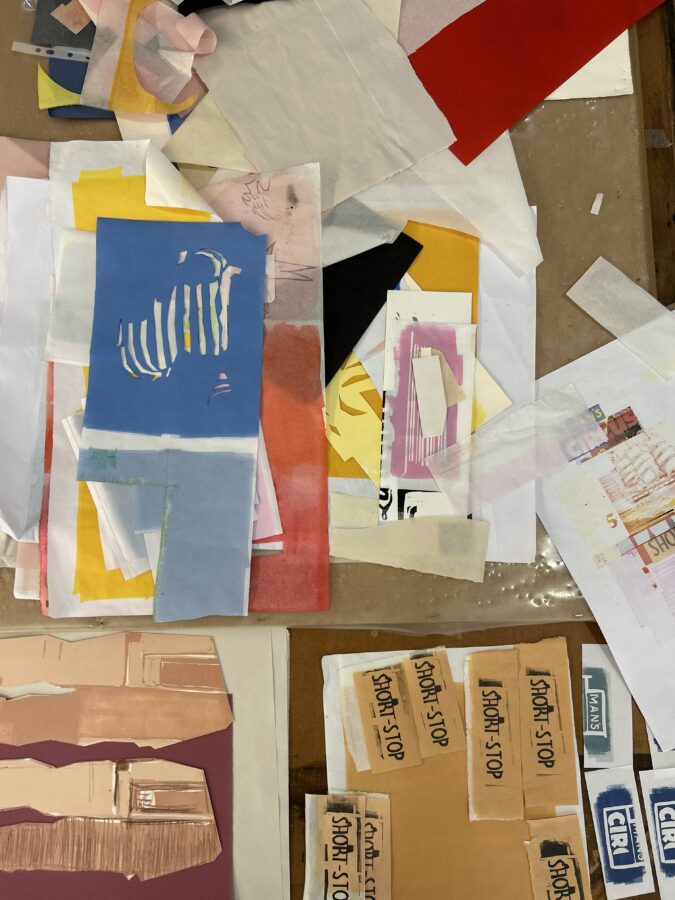
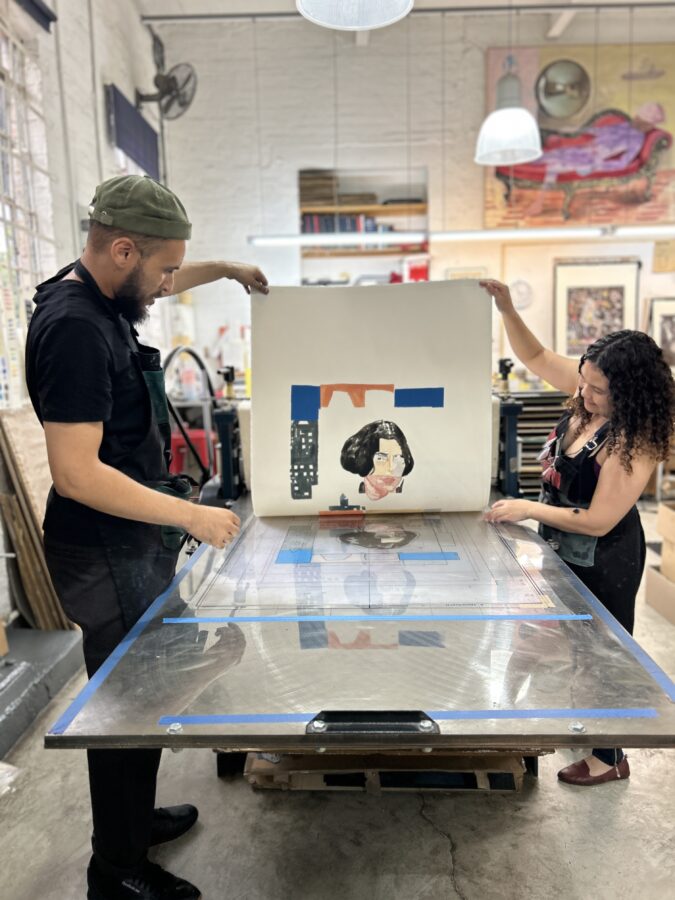
Working in collaboration with master printer Kim-Lee Loggenberg-Tim at David Krut Workshop, Sheppard’s 2026 body of work explores the expanded possibilities of printmaking through a combination of oil and watercolour monotype, linocut, pronto lithography, chine collé, handwork, collage, reductive processes and layered paper interventions.
The physical structure of these prints mirrors the conceptual complexity of Nathaniel’s thinking. Delicate Japanese papers sit alongside heavier archival stock. Soft watercolour monotypes interrupt graphic linocut forms. Collaged elements create shifts in surface depth, while hand interventions maintain immediacy and spontaneity.
The workshop process becomes essential to this language not simply as production, but as collaboration, experimentation, and problem-solving.
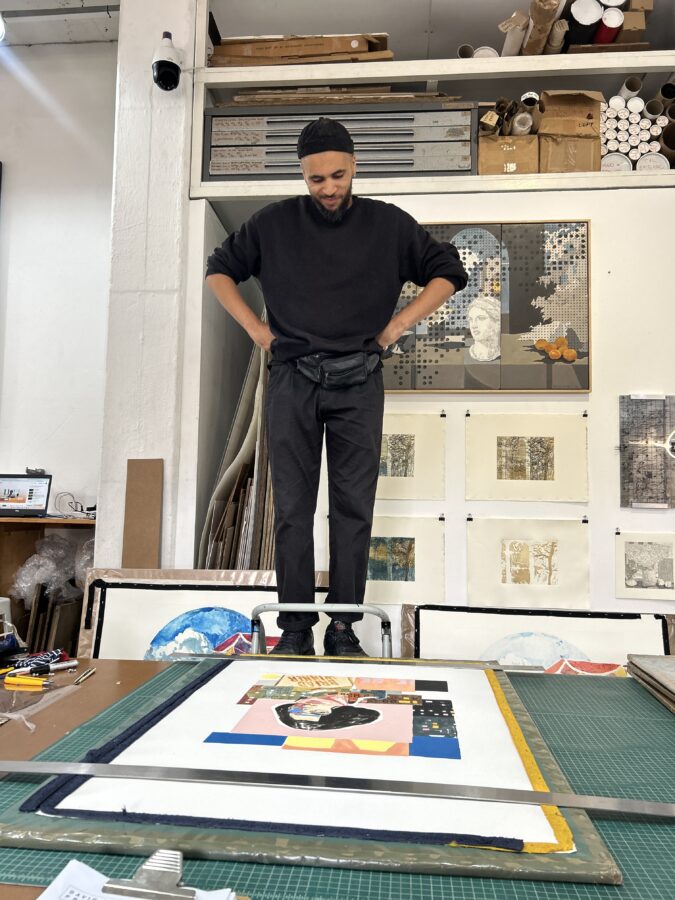
This body reflects the experimental and highly collaborative nature of workshop printmaking where process, technical dialogue, and material discovery become integral to the final image. Each piece feels assembled rather than merely composed and meaning is being negotiated in real time.
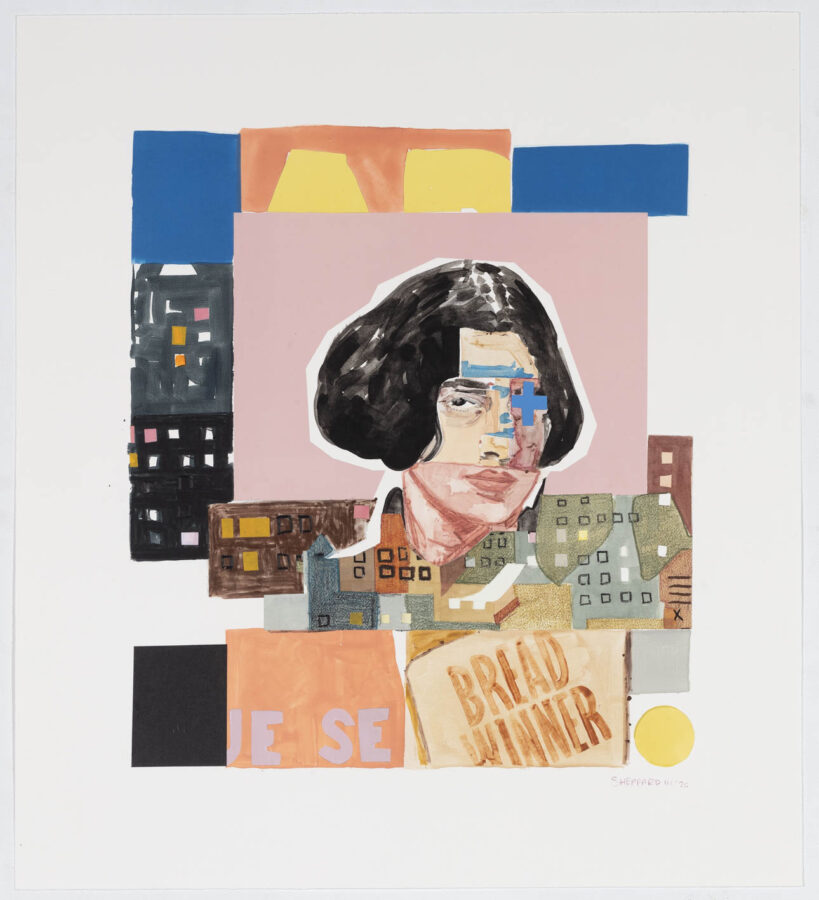
Works such as Bread Winner explore identity through portraiture and performance. Emerging from an engagement with collage as a performative and iterative process, the work is constructed through fragmented imagery before being recreated in print through the combination of oil- and water-based monotype, chine collé, and handwork.
Shifting between public imagery and intimate roles, the androgynous figure resists fixed definitions of gender and identity, instead staging identity as something performed and continually negotiated through personal and social interactions rather than stable or fixed
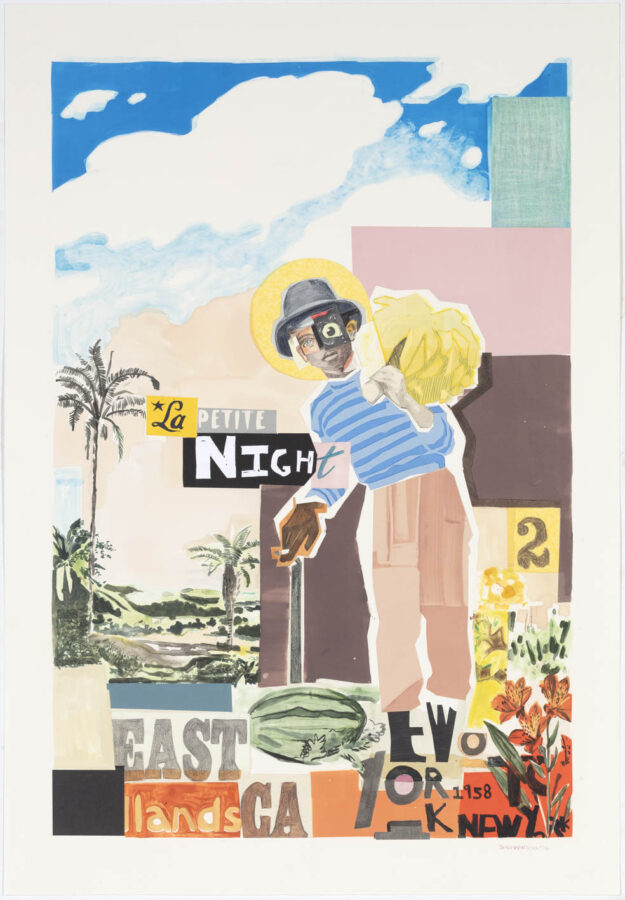
In La Petit Night, Sheppard continues this inquiry through racial identity, examining how inherited imagery and visual stereotypes shape social perception.
Meanwhile, works such as Man’s Circus, Polyphemus, and Pocket Fishing extend this visual language through increasingly complex layering of monotype, linocut and pronto-lithography print techniques. The various printed elements are unified through intricate handwork, collectively showcasing both Loggenberg-Tim’s technical range and Sheppard’s material fluency.
At the heart of Nathaniel’s practice is a powerful act of reclamation.
His work asks:
Who gets to define identity?
Who controls representation?
And what happens when historically oppressive image systems are taken apart and rebuilt by the very subjects they once sought to contain?
Through this collaboration with David Krut Workshop, Nathaniel Sheppard III continues to expand the possibilities of contemporary printmaking not simply as a medium, but as a site of resistance, memory, and radical reconstruction.
Left: Sheppard III, 2026, Breadwinner, Oil and Watercolour monotype with collage and handwork.
Right: Sheppard III, 2026, La petite night, Oil and Watercolour monotype with collage and handwork.