The Subtle Art of Curating
When one plus one equals three
I recently had the opportunity to assist our Director, Amé Bell, in the development of two concurrent exhibitions presenting works from recent collaborations produced at the David Krut Workshop. These exhibitions opened at the David Krut Gallery in Johannesburg this past February.
While my role was largely practical, measuring, observing, hammering nails, and installing works, I found myself increasingly aware that I was witnessing something far more complex than the physical assembly of an exhibition. Through her curatorial process, Amé transformed what was initially a neutral, almost vacuous gallery space into something layered, intentional, and resonant.
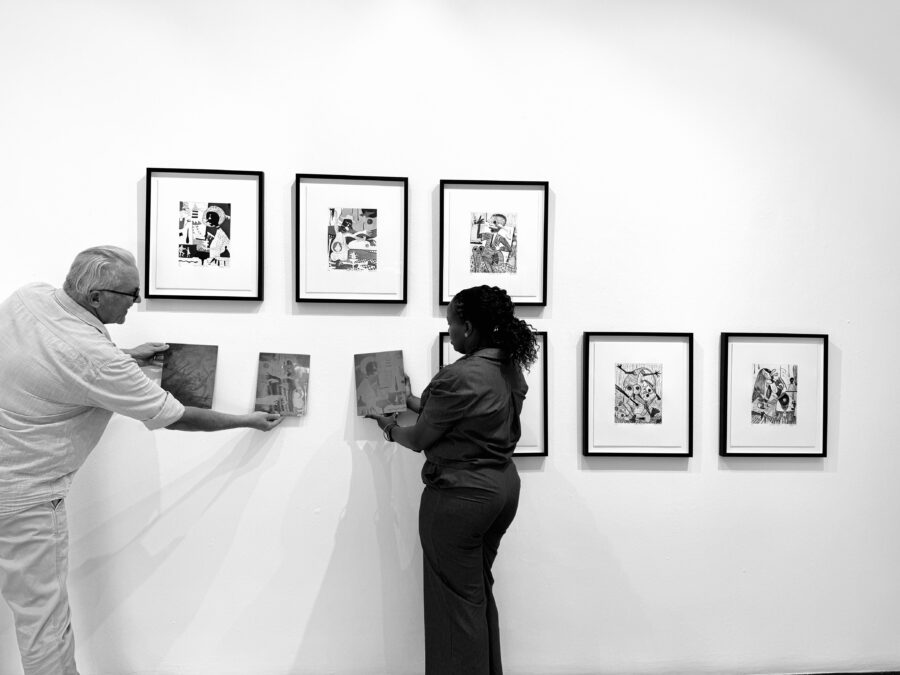
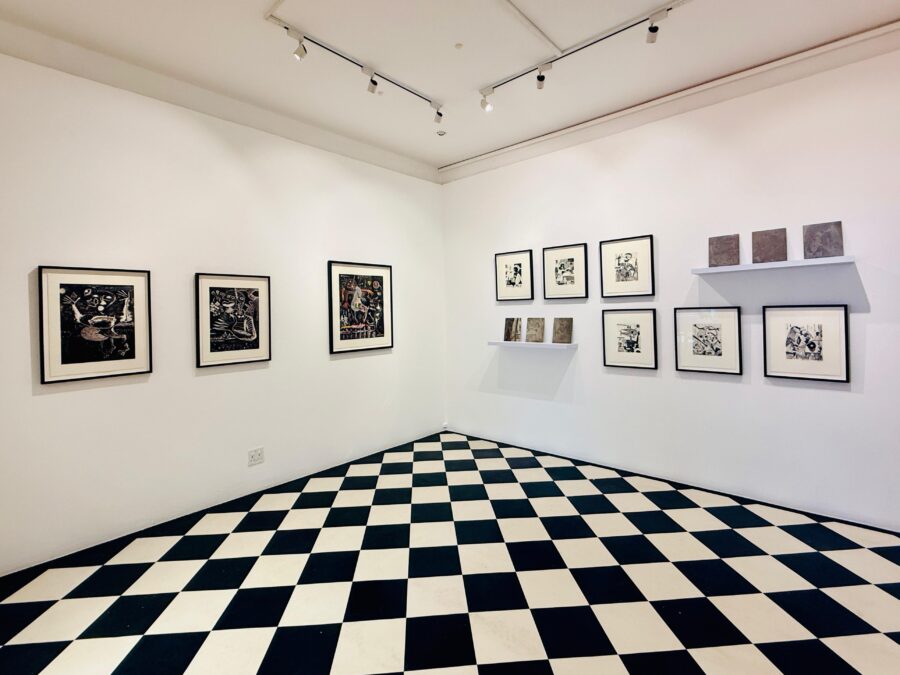
The gallery became more than a container; it became a platform for meaning. Through the careful grouping and sequencing of works, narratives began to emerge—quietly but decisively guiding how the viewer might encounter and interpret each piece. Space itself became an active element: moments of pause, breathing room between works, and subtle shifts in rhythm all contributed to a kind of visual language.
It made me reconsider that often casually used term: curating. As Eilean Hooper-Greenhill notes, “meaning is not inherent in objects but constructed through display.” This insight underscores the critical role of exhibition-making; not simply as arrangement, but as interpretation. The curator does not just select works; they shape the conditions under which meaning is produced.
Visitors encountering Blessing Ngobeni’s Untitled Excursion Series in the Checkerboard Gallery, alongside Phumulani Ntuli’s Wish List in the larger 151 space, were drawn not only into individual artworks but into the broader narratives of each artist’s practice. This, perhaps, is the true measure of a successful exhibition: when viewers move beyond looking to a deeper engagement with context, intention, and story.
And yet, as I hammered in another nail, I kept returning to a question: what is that elusive moment when one plus one equals three? When the whole becomes greater than the sum of its parts? In searching for an answer, I came across a definition of curating as “translating a thematic vision into a physical experience, blending creative storytelling, spatial design, and logistical planning.”
While accurate, this description still feels insufficient to capture the full complexity of the process. Reflecting on the months leading up to the exhibitions, I realised that what I witnessed in the gallery was only the final expression of a much longer journey; one shaped by research, collaboration, printmaking, selection, negotiation, and problem-solving. These often-invisible layers are what ultimately cohere into a seamless experience for the viewer.
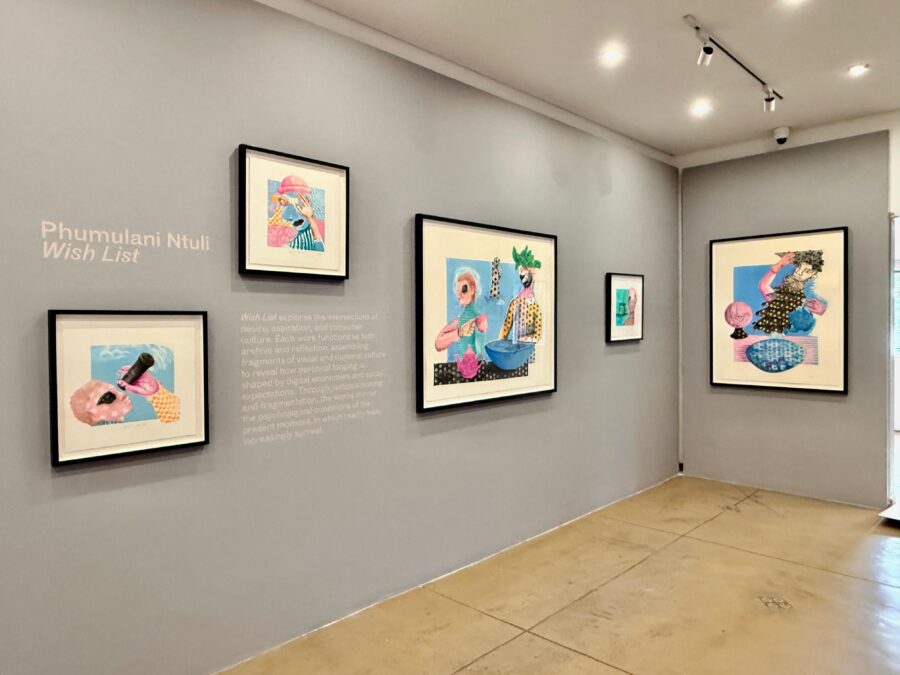

A curated exhibition is never neutral; it is a choreography of meaning. Through placement, proximity, and even omission, the curator subtly rewrites what each work can say. The exhibition itself becomes a medium: a sequence of experiences that unfolds in space and time. Understanding this has given me a renewed respect for curation and for the role of the curator.
Figures like Amé Bell are not only organisers or facilitators; they are storytellers, interpreters, and educators. They mediate between artist and audience, translating artistic, historical, and social contexts into forms that invite engagement and understanding. They are collaborators working closely with artists, makers, and institutions, and stewards, ensuring that artistic visions are both honoured and meaningfully communicated.
So, in appreciation of this intricate and often misunderstood or misinterpreted practice, I find myself more than happy to continue playing my small part—measuring walls, holding levels, and driving in nails—knowing that even these modest actions contribute, in some way, to that quiet moment where one plus one becomes three.
Marque van der Walt