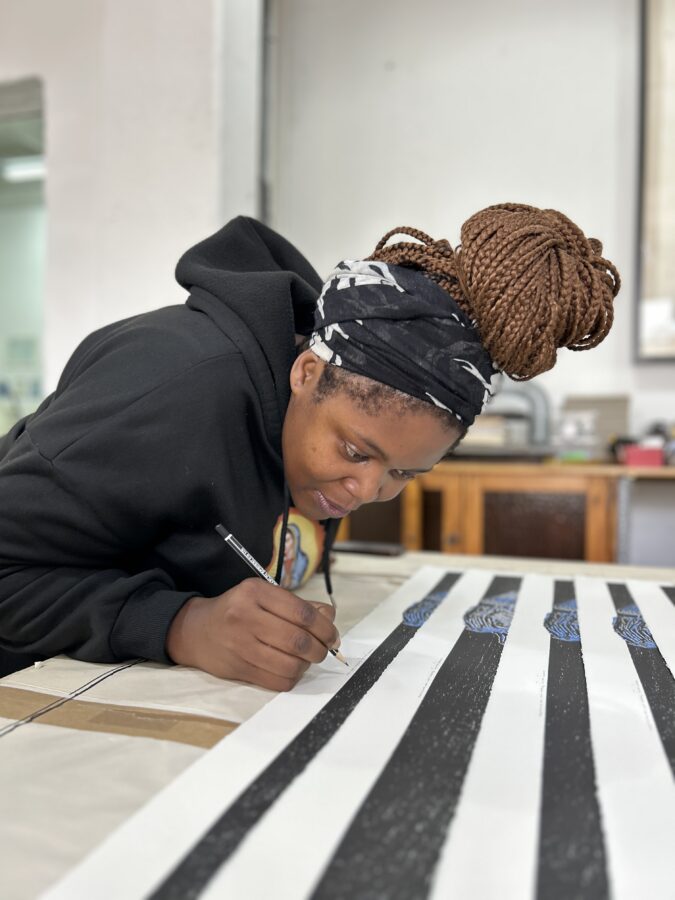
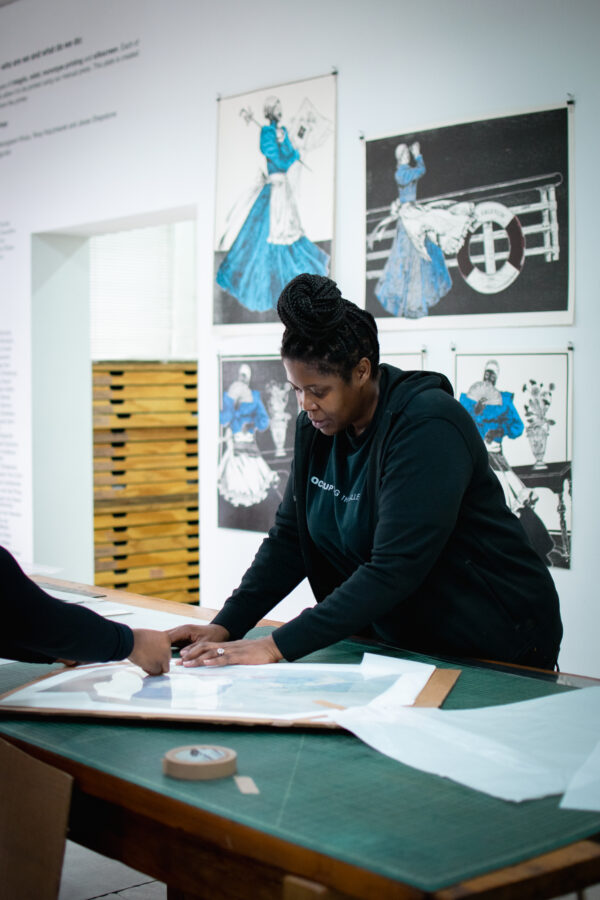
Mary Sibande signing the "Leisurely Sailing: Sophie with her binoculars" print
Sbongiseni and Mary signing prints.
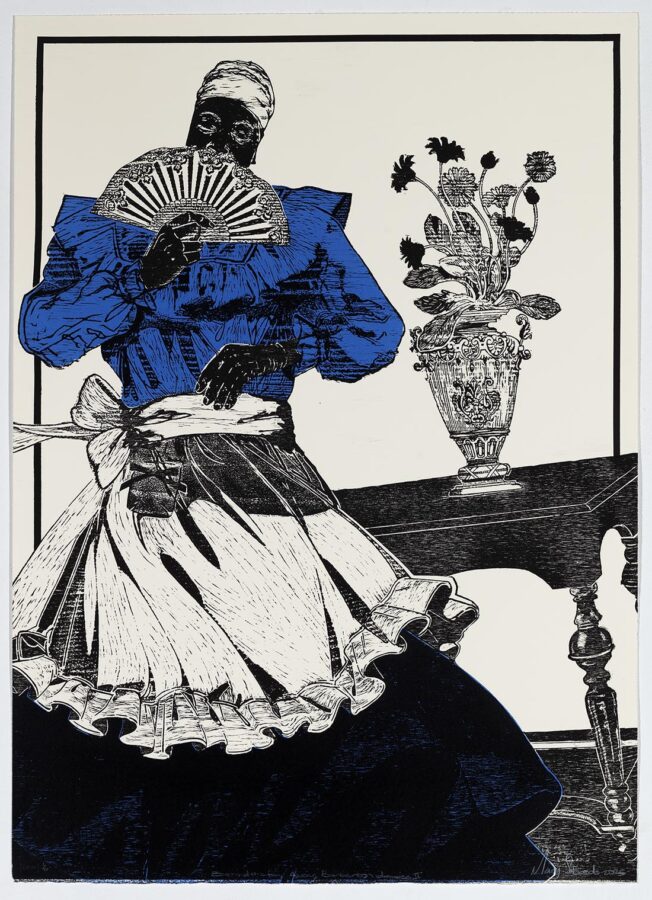
In Mary Sibande’s latest collaboration with the David Krut Workshop (DKW), the artist continues to expand the visual universe of her alter ego, Sophie, through a series of prints that are as politically charged as they are visually arresting.The series consists of four intricately carved woodblocks, introducing Sibande’s icon use of blue through linocut and monotype.
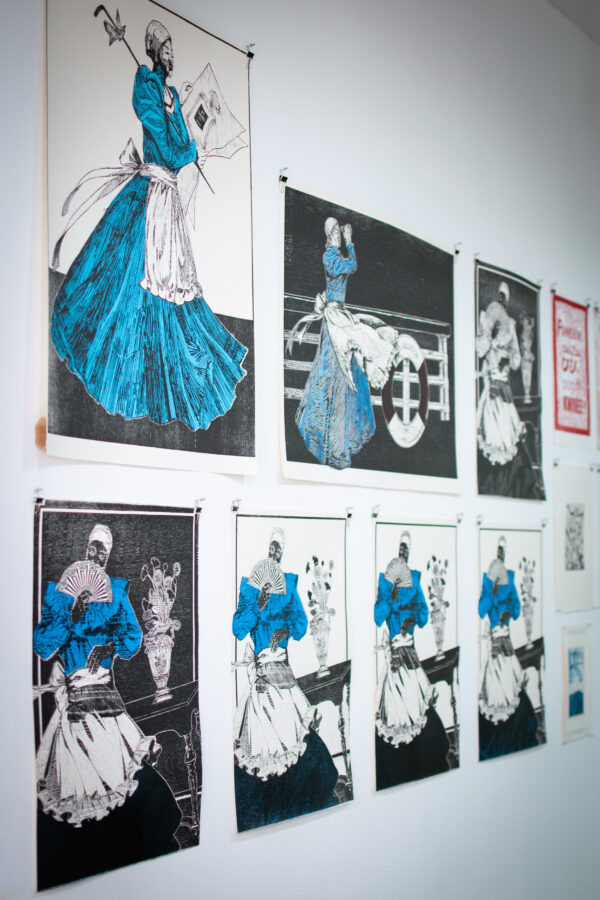
The different state and trial proofs of Sibande's editions.
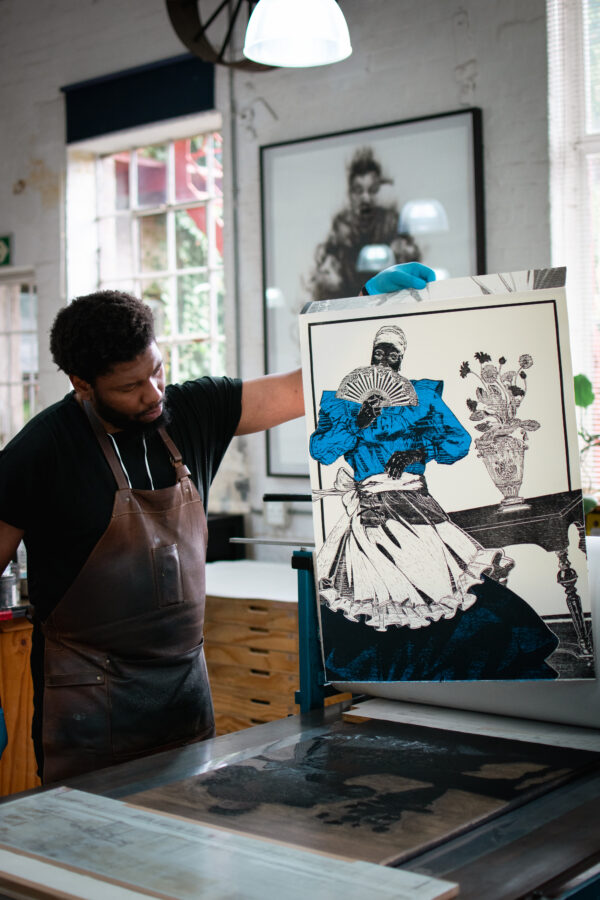
Sbongiseni Khulu revealing the woodcut layer of Sibande's latest edition.
Ten years after Sophie retreated into self-imposed exile, she returns to undertake a journey of leisure. Inspired by On Kawara’s “I GOT UP” series, Sibande imagines Sophie sending visual letters from her journey. These aren’t just updates; they’re declarations of autonomy. Sophie is no longer waiting for permission. She’s documenting her joy, her rest, and her resistance.
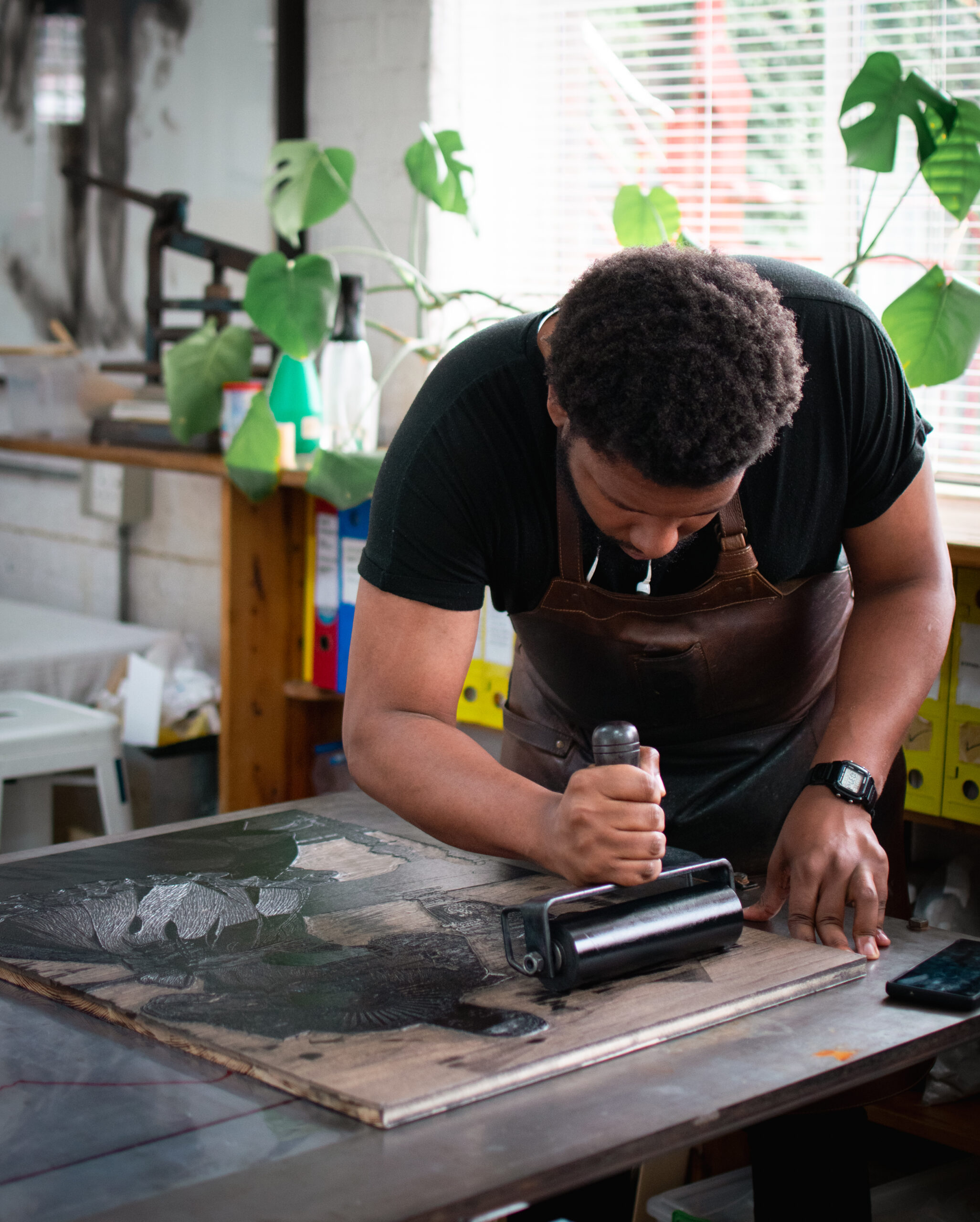
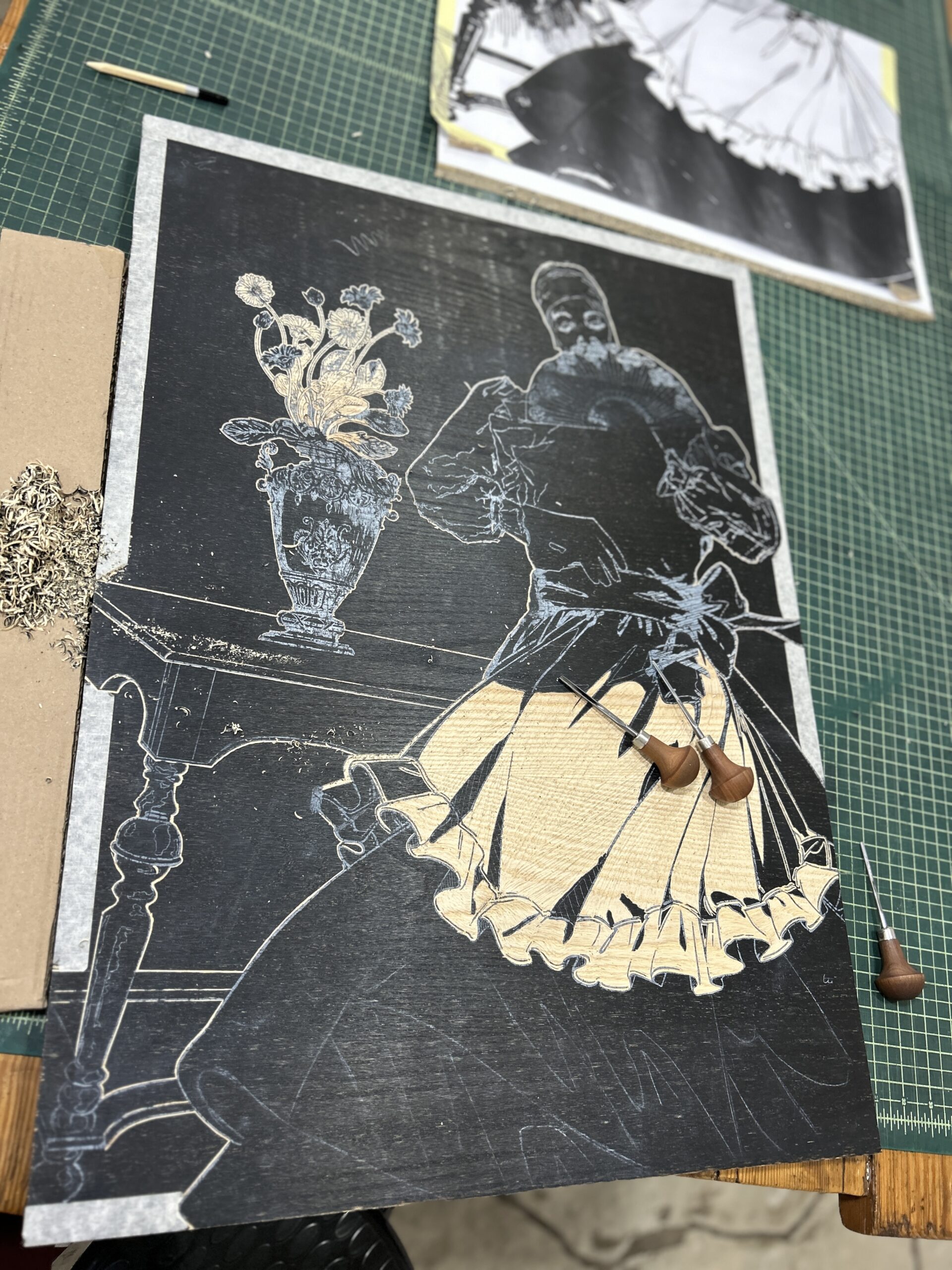
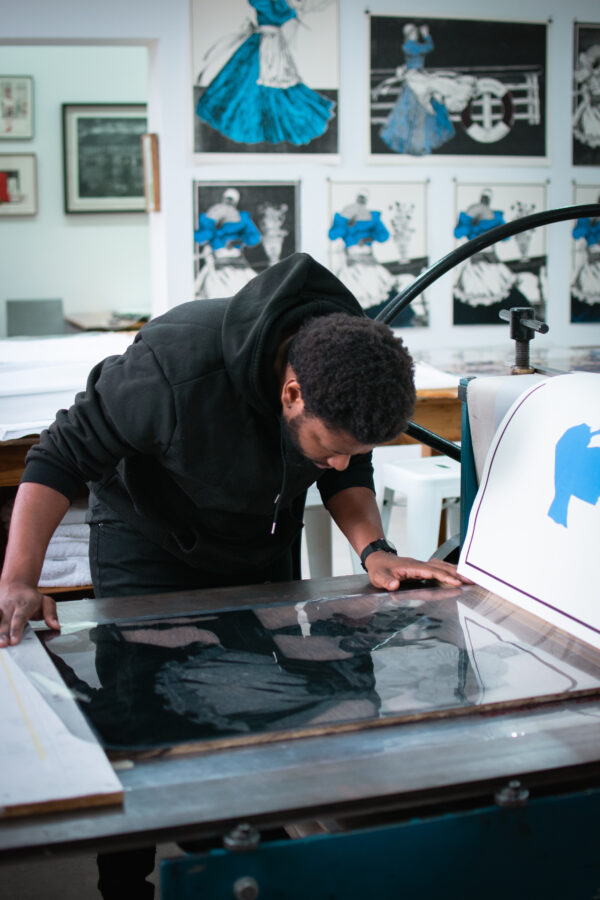
Created in collaboration with DKW printmaker Sbongiseni Khulu, these woodblocks are the result of meticulous carving, layering, and experimentation. Each mark is intentional, each colour a conversation. The prints were produced over several months, with Sibande and Khulu exploring collage, multicoloured papers, monotype and relief overlays to bring Sophie’s world to life.
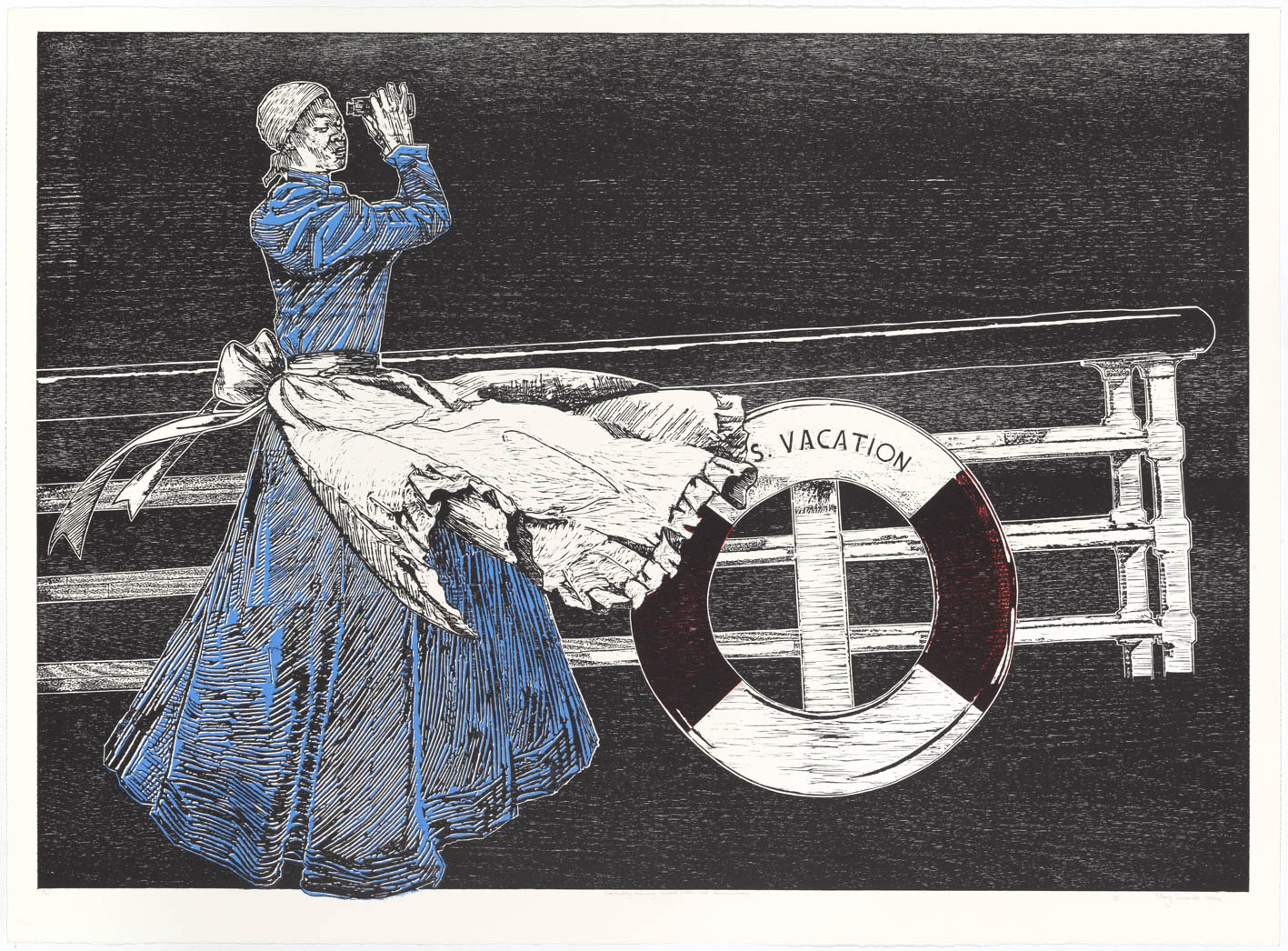
The first work in the series, Leisurely Reading: Sophie and Her Newspaper 2024) marks the beginning of the journey, with Sibande depicting Sophie engaging in leisurely activities that were once forbidden to domestic workers. Inthe second image tilted Leisurely Sailing: Sophie with her Binoculars, Sophie is no longer confined to domestic spaces.
Khulu inking up the woodblock in preparation for printing.
The woodblock in early stages of carving.
Sophie Sets Sail:
In Leisurely Sailing: Sophie with her Binoculars, Sophie is on a cruise ship, scanning the horizon, claiming the sea as her own. The binoculars aren’t just tools of observation; they’re instruments of foresight for imagining futures beyond history’s limits. The print pulses with motion and possibility, rendered in Sibande’s signature blues and layered with hand carved oil-based linocut textures that shimmer like waves. Sibande describes this piece as Sophie’s vacation, as such the artwork captures Sophie mid voyage as all around her woodgrain signifies the night sky and vastness of the ocean floor beneath her whilst her apron blows in the wind, marking a coincidental reference to American singer-songwriter Bob Dylan’s famous 1962 protest song “Blowin’ in the wind” …
Yes, and how many years must a mountain exist Before it is washed to the sea? Yes, and how many years can some people exist Before they’re allowed to be free? Yes, and how many times can a man turn his head And pretend that he just doesn’t see?
The answer, my friend, is blowin’ in the wind The answer is blowin’ in the wind …
Sibande, M, Leisurely sailing... 2025, Edition of 20, Linocut and Woodcut, Somerset soft white, 76.5 x 105cm.
Mary working on her Leisurely Sailing print.
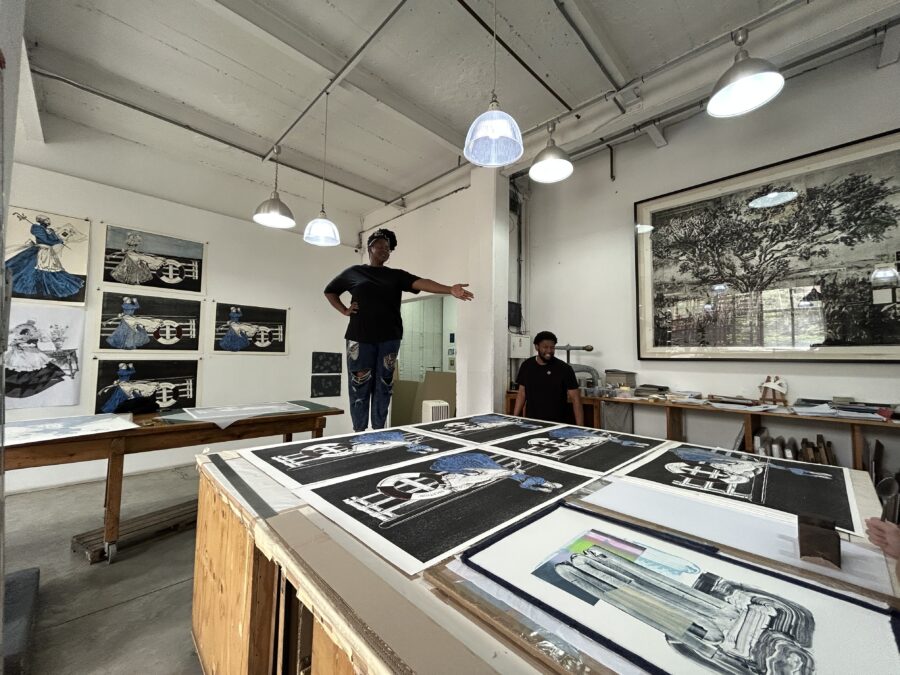
Mary and Sbongiseni curating prints of the Leisurely Sailing edition
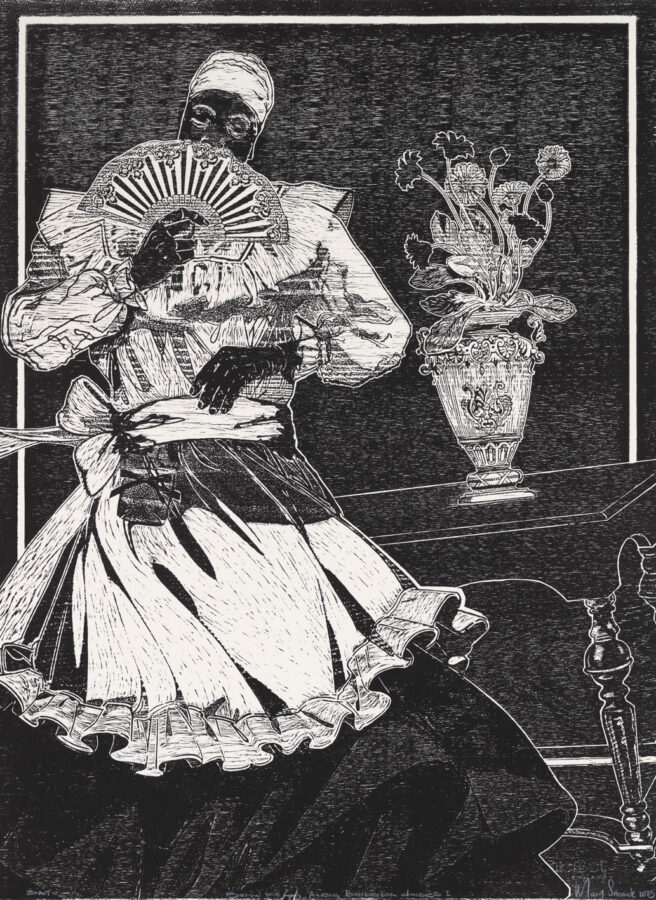
The third and fourth images in the series Behind the Fan,Among Barberton Daisies I & II, Sophie reclines in a field of South African wildflowers, partially hidden behind a fan, a gesture that evokes both mystery and defiance. The daisies bloom around her, unapologetically vibrant, echoing her presence and persistence. These prints feel like whispered declarations: “I am here. I am resting. I am free.”
The Barberton daisies, native to the Mpumalanga town of Barberton, hold particular significance in Sibande’s work. The flower also known as the Gerbera jamesonii is South Africa’s national flower of resilience. It originates from the same landscape that shaped Sibande’s maternal lineage. Born in Barberton in 1982, Sibande often draws upon the histories of Black women in her family – women who lived, worked, and dreamed in this mining town marked by both colonial extraction and quiet endurance.
By surrounding Sophie with Barberton daisies, Sibande brings her narrative full circle, returning to the soil of her ancestors, yet transforming it into a site of rest and reclamation. The daisies become more than floral motifs; they are emblems of growth and renewal, thriving despite harsh conditions. Just as Barberton’s hills carry stories of labour and survival, these blooms carry Sophie’s assertion of beauty and self-determination.
Sibande, 2025, Behind The Fan, Among Barberton Daisies I, woodcut.
Sibande, 2025, Behind The Fan, Among Barberton Daisies II, Woodcut.
In Sibande’s hands, leisure is never just leisure, it’s a reclamation, a rewriting, a refusal. Sophie’s leisurely acts of playing tennis, resting among blossoms on a bench Referencing Peter Magubane’s image of a domestic worker sitting on a bench marked “Only Blacks,” while the child she is caretaking sits on a bench opposite marked “Only Europeans.”,and sailing are loaded with historical weight. These are activities once denied to Black women, especially those in domestic service. By placing Sophie in these scenes, Sibande isn’t just imagining a better world; she’s asserting that Black women belong in it joyfully, fully, and without restraint.
Sibande’s practice spans sculpture, textiles, photography, and now printmaking. Across these media, she constructs counter-histories that challenge dominant narratives of post-apartheid South Africa. Sophie, dressed in hybrid garments that blend domestic worker uniforms with Victorian regalia, becomes a living archive of resistance. She is not just a character; she is a chorus of voices, a lineage of women who dared to dream beyond their circumstances.
Mary packing prints in the workshop
Images by: Elisa Wahl
Sbongiseni Khulu using an acetate to correctly register the paper in relation to the block.