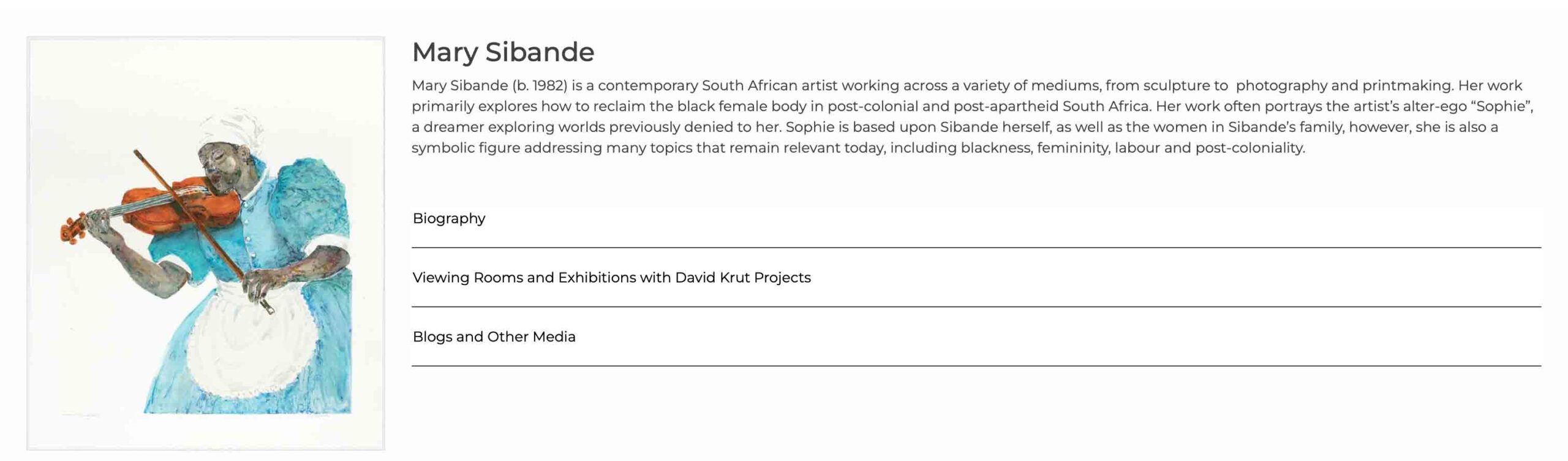
Mary Sibande has been producing monotypes for a series titled “A View Through the Peephole”. These mark a shift toward a new softness: an imagined space of leisure articulated through painterly marks and gestures created through the monotype process. The series consists of eight watercolour monotypes and their ghosts, continuing Sibande’s iconic use of blue. The prints started after Sibande showed the printers her preparatory ink drawings, and monotype seemed the natural progression for the medium, extending her painterly process into print.
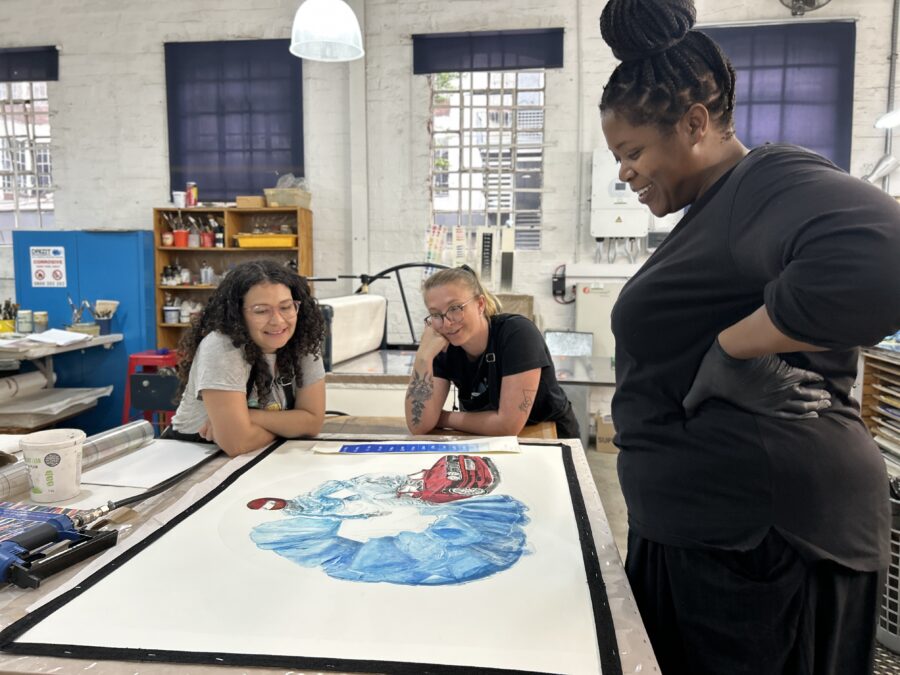
During the production of the monotype series, Mary began conversations with printers Roxy Kaczmarek and Kim-Lee Loggenberg-Tim about the next steps in her printmaking journey, Mary was eager to explore a new image through etching. The printers suggested specific etching techniques in an effort to translate her painterly washes into an edition format.
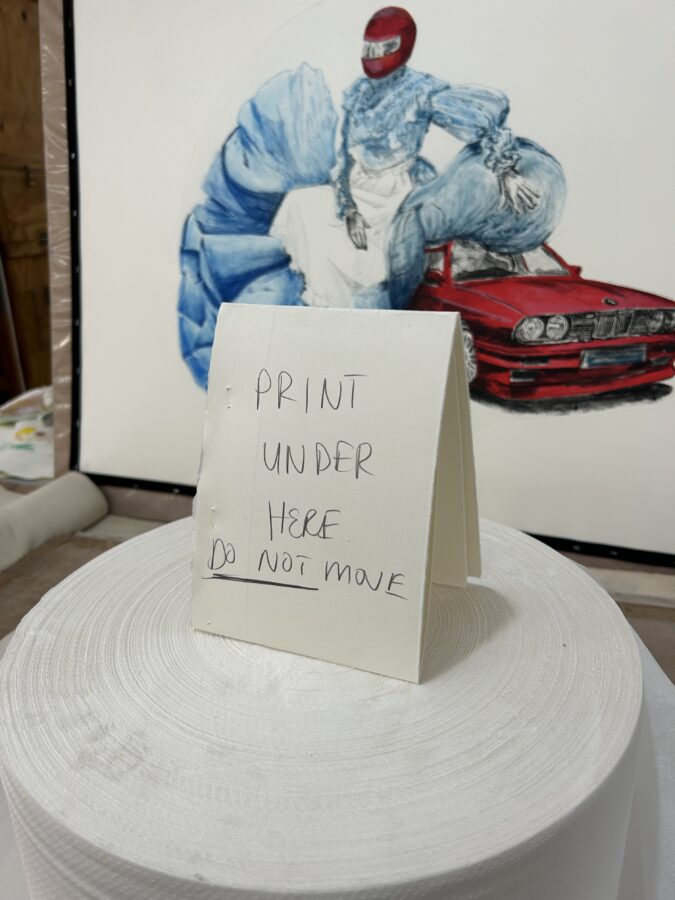
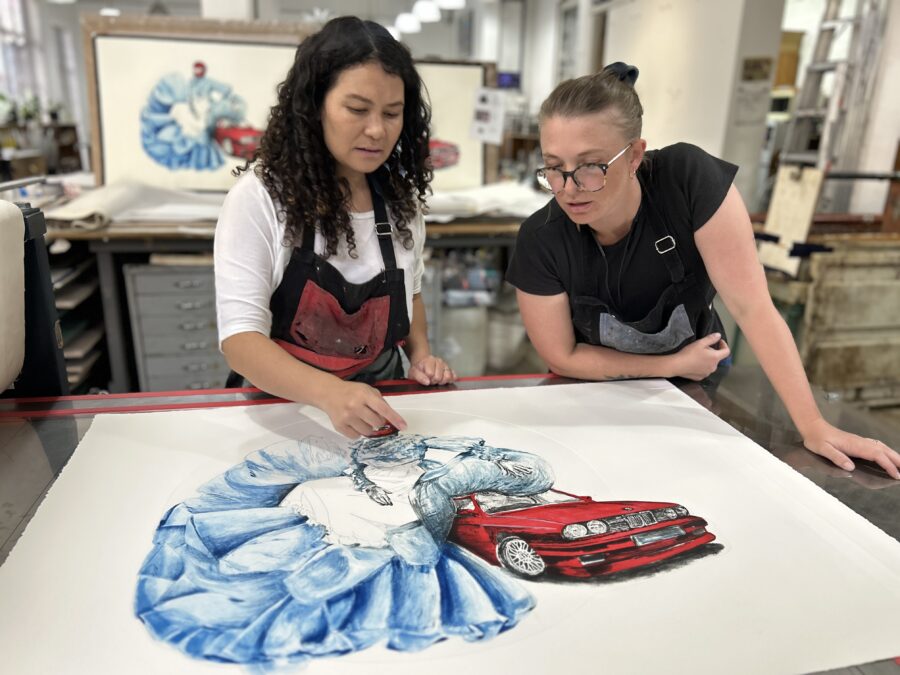
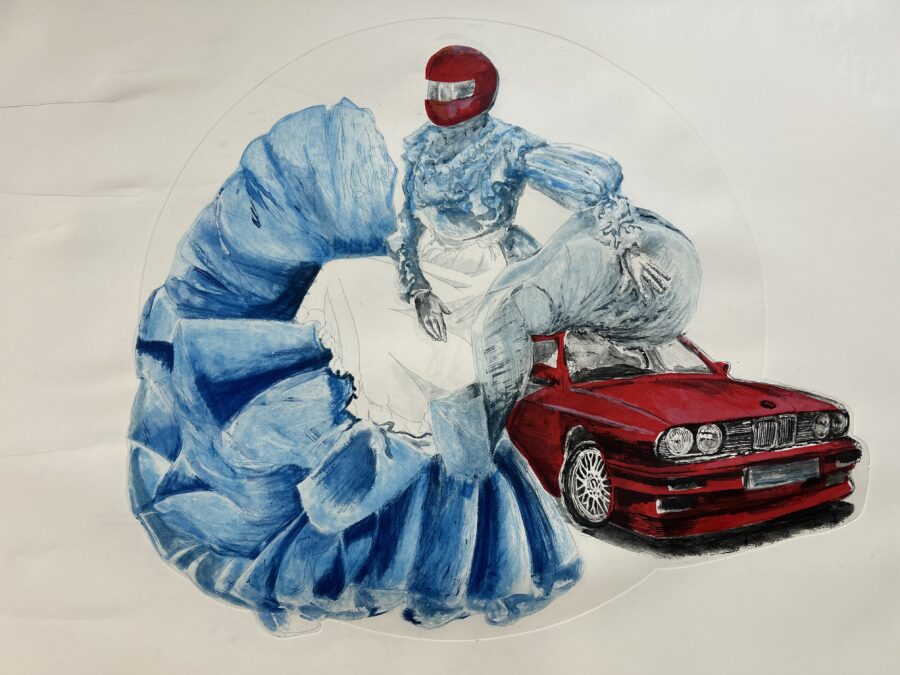
The image Mary chose references one of her paintings and features Sophie captured in a filmic, dream-like moment, skirts billowing, astride a racing red Gusheshe — the South African nickname for the BMW E30 325i / 325iS. The Gusheshe is a cornerstone of South African township and street culture, heavily tied to local motorsport and spinning, a form of car-handling that involves drifting and performing high-speed donuts. The name may originate from a mispronunciation of shesha, isiZulu for “fast” or “quickly”, and it is also the title of a breakthrough 2013 hip-hop single by Cassper Nyovest featuring Okmalumkoolkat. In recent years, BMW South Africa has paid homage to the car’s legacy through limited releases such as the BMW 330is Edition and the BMW 325iS Homage editions.
The term “Gusheshe Queen” refers to the culture of women driving, spinning, or owning the iconic BMW E30 — a celebrated title for female car enthusiasts and spinners in South Africa’s motorsport scene who embrace this revered street-racing and spinning legend. On the track, the E30 was campaigned successfully by legendary drivers like Tony Viana, cementing the “win on Saturday, sell on Monday” mentality among South African enthusiasts. Its straight-six exhaust note and rear-wheel-drive dynamics made it the perfect car for spinning, earning it its affectionate nickname and a cult status in local hip-hop and township culture equivalent to that of the American Mustang Shelby.
The etching plate was cut into a circular format to continue the motif established in the monotype series:
“As the maker, I position the viewer to observe Sophie engaged in leisurely activities, but that gaze is mediated and restricted through a peephole. The peephole becomes a device of control and distance; it limits what can be seen while heightening a sense of curiosity and intrusion. It suggests secrecy, surveillance, and a quiet violation of privacy, placing the viewer in an uneasy position between passive observer and active voyeur.”
“In these works, I show Sophie doing things she was once denied as a Black woman during apartheid — resting, dreaming, finding joy in the everyday. She refuses the boundaries that institutions once used to restrict Black people’s access to freedom and leisure. Here, she claims space for joy, for rest, for imagination. And that, in itself, is a radical act: to simply be.”
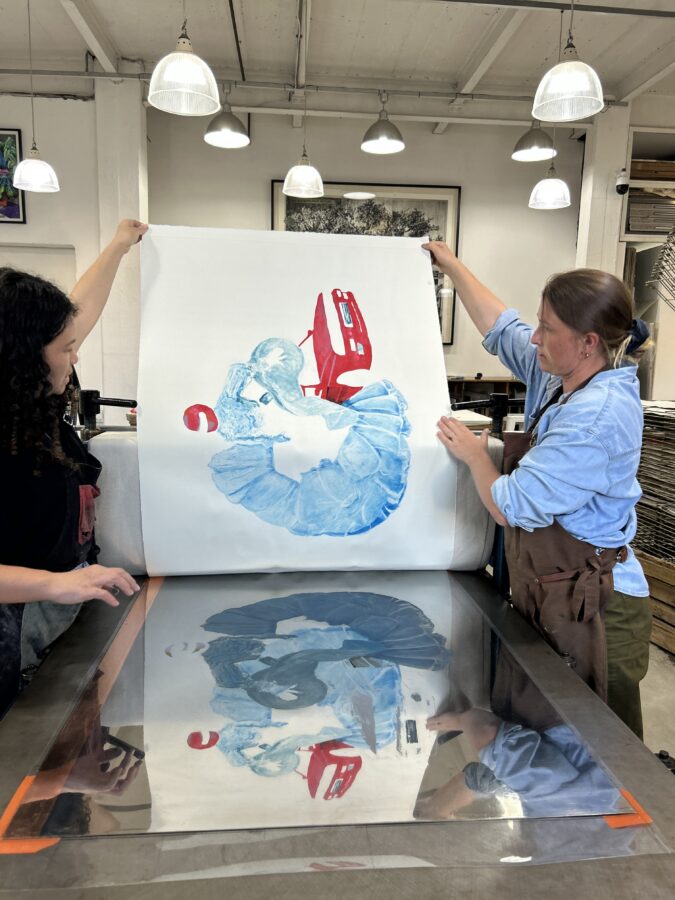
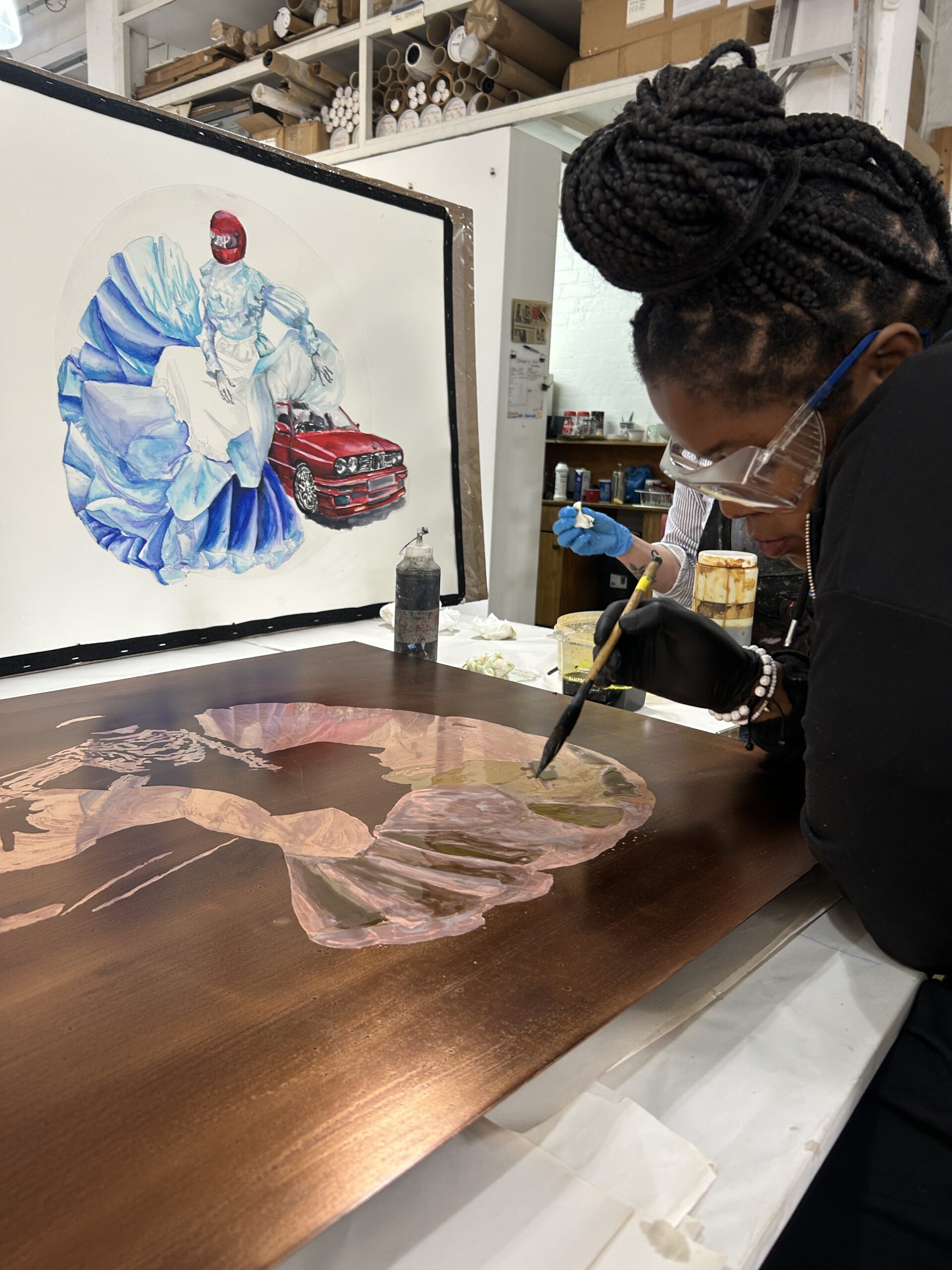
The project is Mary’s first etching with the David Krut Workshop. With guidance from the printers, she was keen to explore a range of techniques, expanding her printmaking repertoire. To achieve a full spectrum of colours and blues, they used two plates inked à la poupée — a French printmaking term meaning “with the doll”, referring to the bundle of cloth (or tampon) used to hand-wipe different coloured inks onto a single plate, allowing several colours to print at once in a single pass.
She began the process with a line etch to establish the framework of the image. The printers then introduced her to spit bite — an aquatint technique in which acid is painted onto the resin-grounded plate in droplets and splashes, creating soft, watery, painterly washes rather than uniform tones. After bringing in soft wash-like tones with aquatint, Mary moved on to drypoint to pull the whole image together. Her expertise as a sculptor really shone here, as she sculpted the copper plates on a micro level: she roulletted dramatic dark folds into the skirts and brought out highlights with burnishing.
The print will launch at the Print Miami Art Fair in the USA in December 2026, and…
https://davidkrutprojects.com/80652/a-view-through-the-peephole