Written by Marque van der Walt
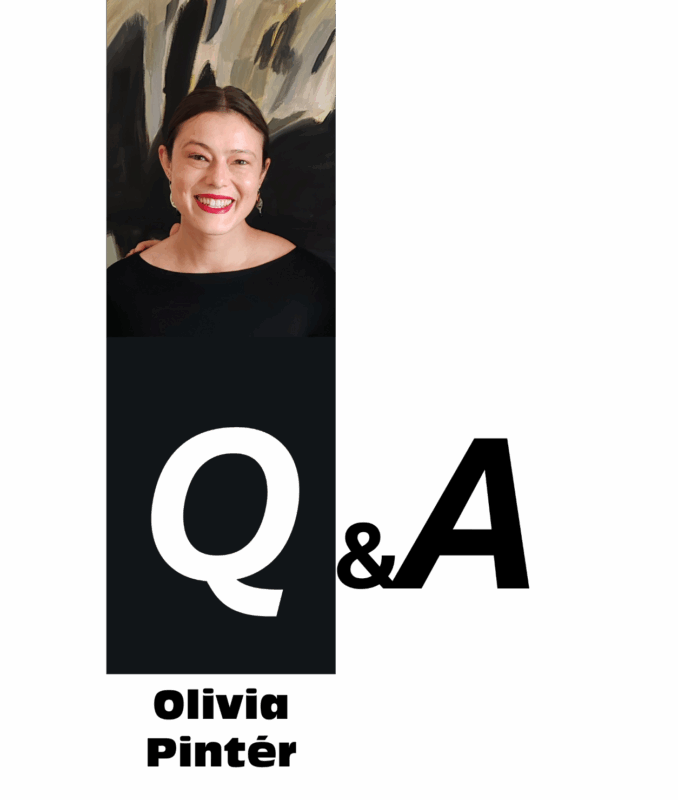
Emerging South African artist Olivia Pintér graciously took the time to answer a few of our questions. Thoughtful and considered in her responses, she offered a rare and insightful glimpse into her artistic practice.
With an uncompromising commitment to letting affective gestures guide her
abstraction, Pintér treats these gestures – whether conscious or unconscious, overt or subtle – as data points in the construction of her images.
Equally unwavering in her approach to interpretation, she offers viewers multiple points of entry into her abstractions, inviting them to engage deeply and, ideally, find enrichment in the experience.
How do you start your creative process?
I always draw my creative inspiration from real life; inspiration seldom comes to me in the studio. I intimately observe lived moments, allowing myself to ruminate over them and finding specificities that stick. Only then, do I take my inspiration into the studio.
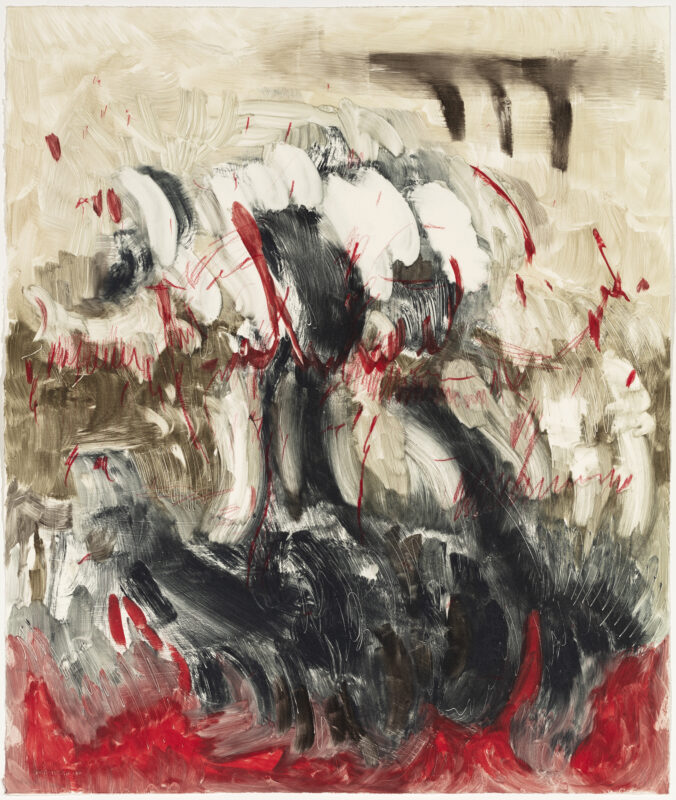
For example, I recently made a body of work at the David Krut Workshop after I was fascinated by the smog that clung to the city. On my way in every morning, I became more and more interested in the shape of the smog hanging over the city. I became mesmerised by how the smog diffused light, held colour and shape as a solid yet ephemeral form. This inspired my monotypes – emulating the shape and intricacies of the smog..
From this initial observational impulse, other marks and thoughts began to take shape. I lean into this, allowing impulses in the making process to guide, bounce, repel and inform one another.
What inspires your work?
Even though there’s no specific identity politic to my work, it’s strongly informed by personal experience. I’m inspired by many things including the action of traveling in and through Johannesburg, also literature, film and music with specific conversations and moments of storytelling as well as certain environmental observations. These ‘affective gestures’ are the data points which I translate into the marks to create my images.
The moments that inspire me most are held and rooted by the city of Johannesburg. The city almost always informs my work in some way or another. I am less concerned with personal moments of affectation being evident to the viewer. For me, it is about the gestural and emotive nature of my art practice holding these affective nodes in a temporal, abstracted manner.
How would you define your artistic style?
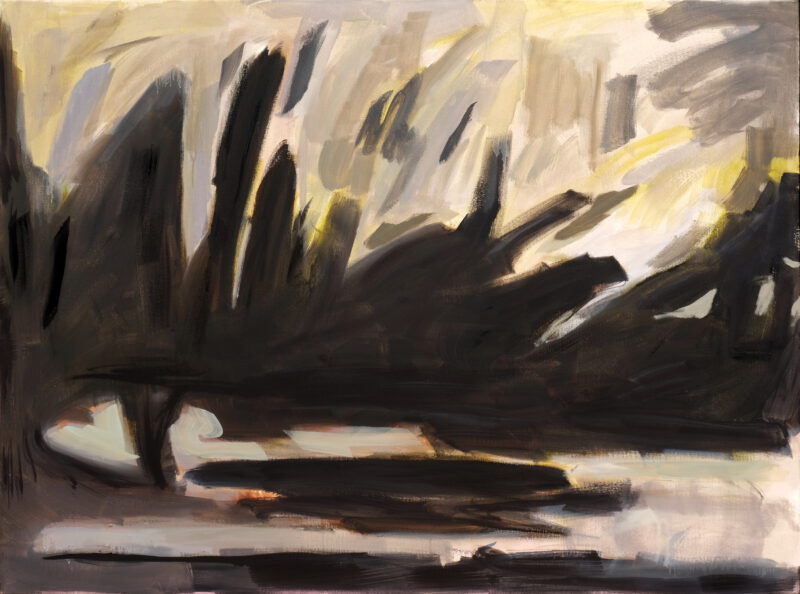
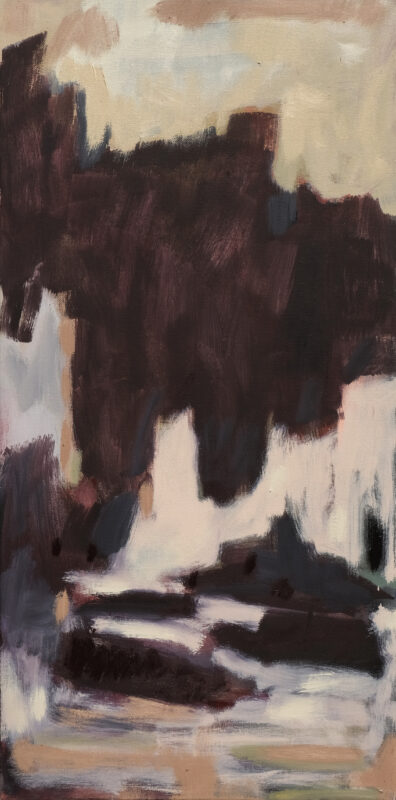
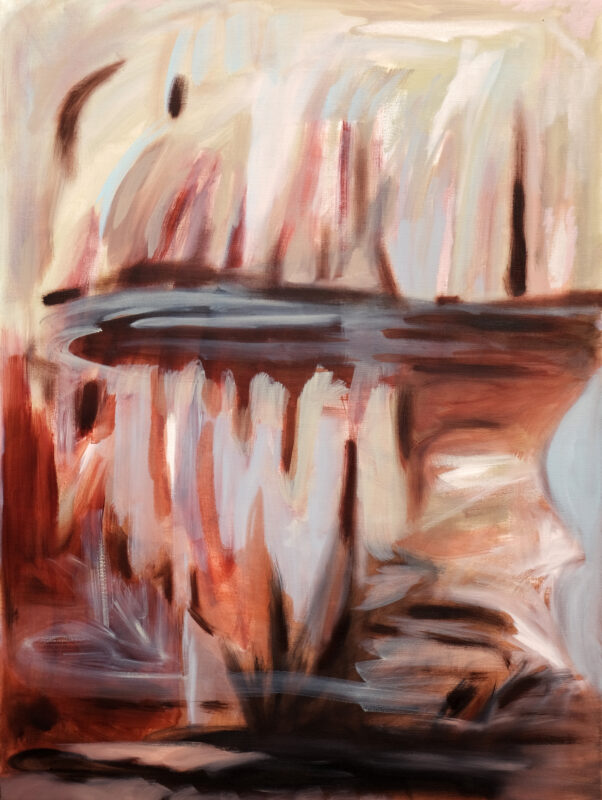
My work is decisively abstract with gesture as a prominent characteristic, often translating into an image with a landscape lurking somewhere in the composition.
I work with colour intuitively; sometimes the work is held within a loud colour palette and at other times, it is much quieter.
In what ways do you think art can impact society?
Art offers perspective and extends our thinking into other worlds – it allows us to enter a space of knowledge and social connection in very tactile ways.
Today, our lived reality is so focussed on our own experiences that our worlds can become narrow. Even though they are necessary nodes of connection, the screens that we interact with are flat, smooth and soulless.
I’ve recently been thinking of the beauty of creations that feel tactile, carrying the presence of the person who made them. I think it’s becoming increasingly more important to engage the intricacies of the not smooth, at-the-hand, information offered by art and the artist.
What do you hope to communicate through your art?
While I’d like for the considerations of my work to be enjoyed by the viewer, the intentions and desires of my work isn’t really relevant to what I want to communicate.
The art of abstraction offers multiple points of entry: each being unique to the viewer. I can only hope that what the viewer understands at these points of entry is enriching.

What makes you happy as an artist?
For me, it’s important to find harmony between my life and my work; engaging with others creatively, intellectually and socially while taking care of the more mundane aspects of daily living is an art in itself.
As far as my work is concerned, I’m truly happy when it reached a kind of flow state. Early on, creating a work can feel awkward and clumsy. Until a specific point where something sticks and the work becomes easier.
Once I’m over the initial self-conscious phase of the process, it can feel like the practice begins to sustain itself, marks produce marks and ideas produce more ideas. This is when I start taking myself less seriously and where I start to experiment.
Who is your favourite artist?
I think you’d agree that it is not possible to have only one favourite artist!
My interest in abstraction naturally draws me to abstract expressionists like Joan Mitchell and Mark Rothko, Mitchell’s loud expansive surfaces and Rothko’s immersive fields. Moshekwa Langa’s and Serge Alain Nitegeka’s work represent many of my visual interests, especially Langa’s use of text and Nitegeka’s graphic forms.
On a figurative level, I am drawn to Marlene Dumas, Mamma Andersson, Michael Armitage and Blake Daniels. Even though I don’t work with figuration, I look to figurative painters not only for compositional insight but also because I’m conscious of how sensitive the artist must be when rendering the body. I often think about how such sensitivity can be applied in abstraction and in landscape.
What mediums/processes have you worked in and which of these are the most expressive for you?
I’m drawn to processes that leave space for uncertain outcomes to emerge, allowing elements of chance to push and pull an image into or out of itself.
Materiality is an important part of my practice, I enjoy discovering how the manipulation of materials can produce certain marks in the construction of an image, becoming carriers of information. Typically, I enjoy working with oil painting and drawing with ink, charcoal and graphite.
I recently enjoyed a new and stimulating opportunity of producing oil monotypes under the skilled guidance of David Krut Workshop’s Roxy Kaczmarek.
Who has been the biggest influence on your artistic development.
In my artistic practice, I’m deeply inspired by and grateful for Professor David Andrew’s guidance.
His sharp eye and decisive, demanding attitude challenged me to push myself and my work in ways I’d never have done on my own; he encouraged me to trust my instincts and to work in the middle ground between confidence and scepticism. By constantly encouraging me to ‘keep working’, ‘go bigger’ and ‘experiment’ he had an enormous influence on my formative years as an artist.

Biography
Olivia Pintér (b. 2000) is a Johannesburg based painter working primarily in abstraction. She first came to work with abstraction after spending time painting landscapes, particularly gold mining tailings dams in and around Johannesburg, and through the constant repetition of these paintings, she found them becoming more abstract. This began to interest her in terms of trying to contribute “something that was that was representational but in a way that wasn’t giving the viewer a direct entry point into what I was making”. Her practice also makes use of writing, and through it she explores the relationship between text and image, focusing on how these two modalities may marry, extend, and limit each other.