Alain Clément (b. 1941) is an artist known for his abstract yet figurative compositions, often exploring the female form through lithe lines and stark color contrasts.He was born in 1941 in Neuilly-sur-Seine, France, and now lives and works in Paris and Nîmes. Clément began painting at the age of twenty and developed his career as a largely self-taught artist, cultivating a distinct visual language rooted in rhythm, movement, and the interplay of color and form.
In the 1990s, he constructed pictorial space through strokes, bands, and ribbon-like forms, creating compositions marked by dynamic color divisions and gestures filled with energy. His use of vivid hues infused the works with a lively, almost musical quality. From the 2000s onward, Clément shifted toward a more restrained palette and continuous curved ribbons, producing simplified yet design-oriented structures. Although abstract, these forms evoke distilled shapes found in nature and the human figure, rendered with clarity and lightness. What appears as formal simplicity unfolds into a spatial depth that plays a central role in his work.
Clément’s practice spans painting, sculpture, drawing, and printmaking, and his works are held in major public collections, including the Musée d’Art Moderne de la Ville de Paris and the Centre Pompidou’s Musée national d’Art moderne.
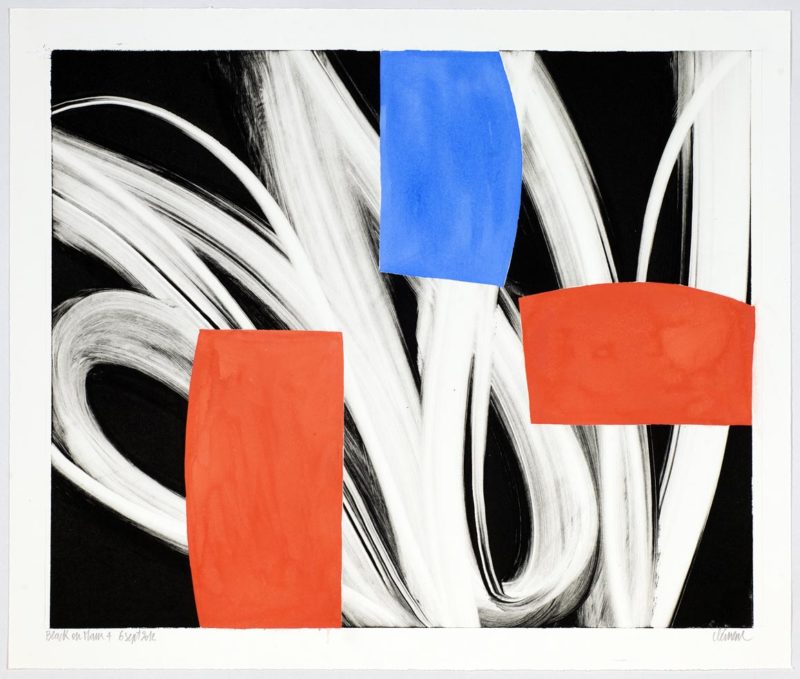
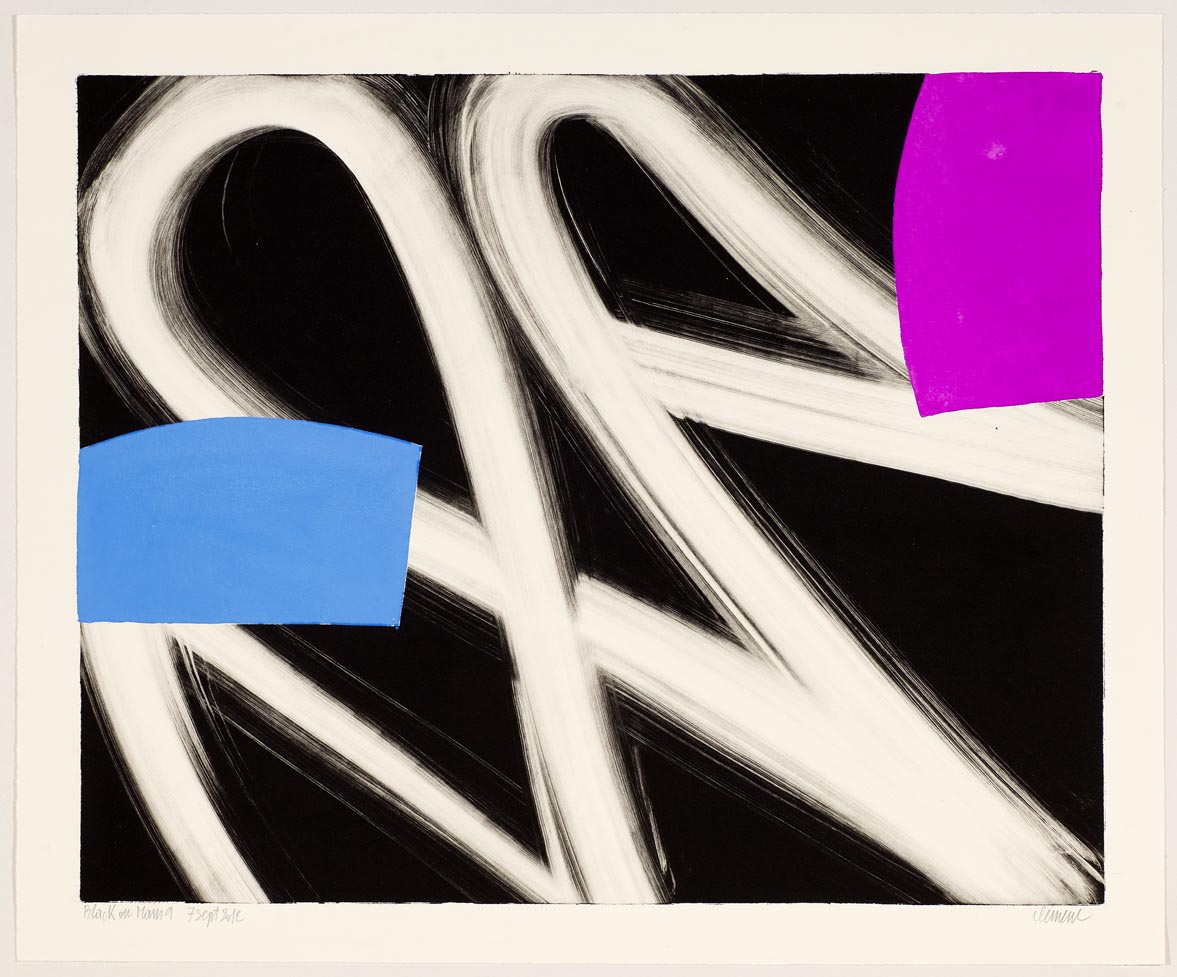
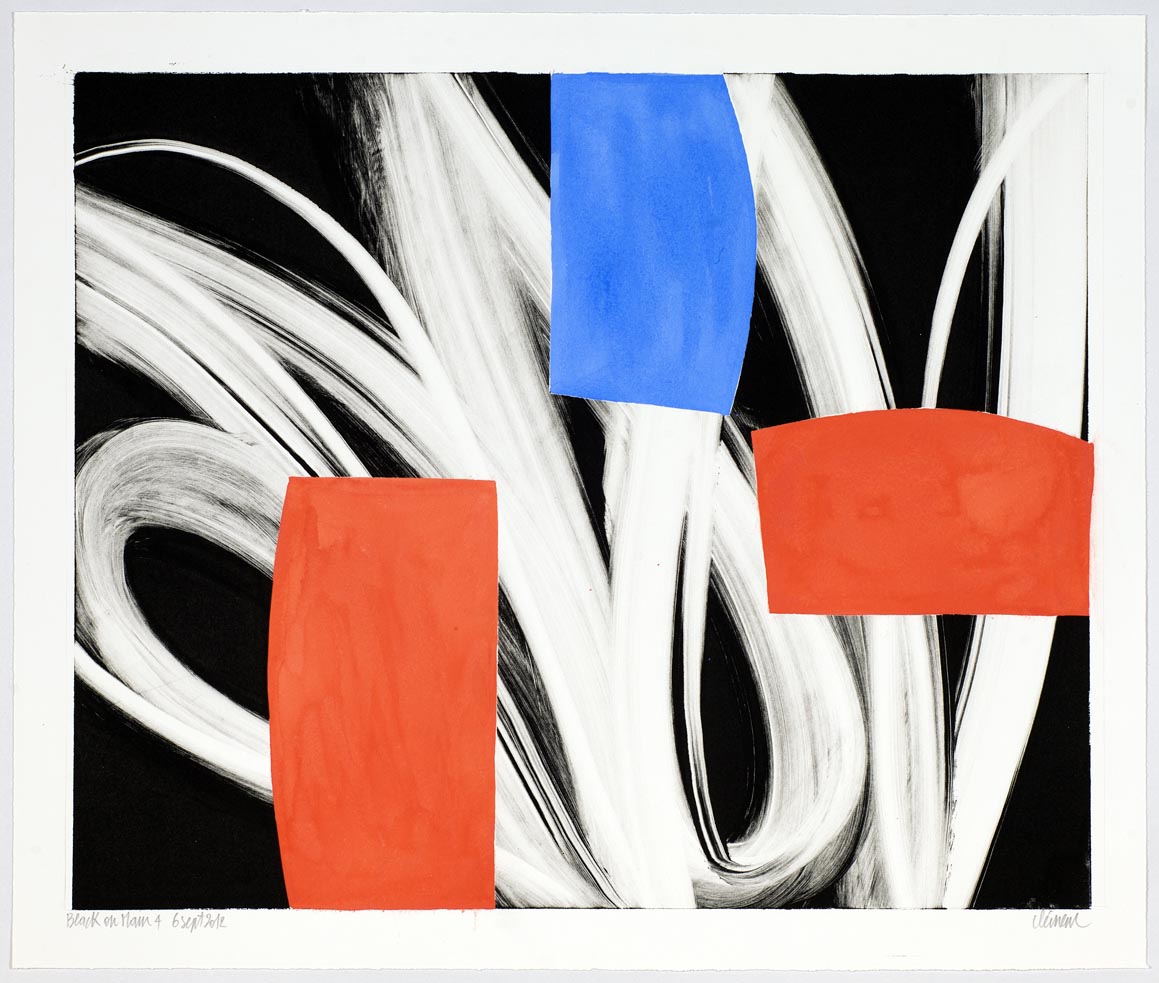
In 2012, Alain Clément visited South Africa as a resident of the NIROX residency programme. During his stay, he worked on a series of prints at the David Krut Print Workshop (DKW). He worked in gouache and monotype, adding pencil or pencil crayon. Each work contains a layer of black ink, after or before which colour has been hand-painted. Each colour is its own progression, the plate leaving a ghost each time it went through the press and the prints are numbered in sequence in each of the 3 variations - yellow, orange and black. Each except for the first print also has a grey and black layer – a ghost from the previous plate and the new layer.