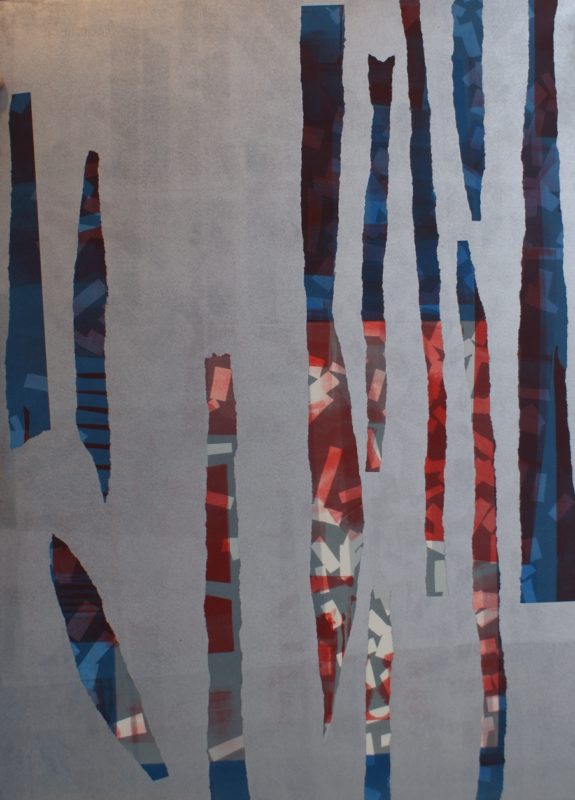
Vulindlela Nyoni
Vulindlela Nyoni (b. 1976) is a South Africa-based Zimbabwean artist and educator. His main interests lie in the politics of representation and self-representation as exploration of personal narrative through print media.
Vulindlela Nyoni (b. 1976) was born in Chilimanzi, Zimbabwe and attained a Bachelor of Arts in the Fine Arts from the then University of Natal in 1998 and a Masters in Fine Arts from the now University of KwaZulu-Natal in 2006. His Masters thesis was entitled “Representations of ‘other’ in selected South African artworks: Re-membering the black male body”. He lectures at the Nelson Mandela University’s Department of Visual Arts in the Faculty of Humanities. His Doctoral thesis was entitled ‘Diaspora in Dialogue: An Ontology of Diasporic Subjectivity in the Work of Three Artists Living In-Between South Africa and Zimbabwe’. Prior to joining Nelson Mandela University, he served as Senior lecturer in Printmaking at the Department of Visual Art at the University of Stellenbosch and before that he held the position of Director at the Centre for Visual Art, University of KwaZulu Natal. Apart from being a practicing artist, Nyoni also lectures in Printmaking, Drawing, and Visual Studies. His main interests lie in race, diaspora studies, gender and queer studies, the visual politics of representation, and the importance of art in change agency and transformation. Nyoni has served as a national and regional selector for the Sanlam Portrait Award, Absa Atelier and Sasol New Signatures competition, the Standard Bank National Arts Festival Artistic Committee, as well as serving on a variety of advisory boards. He has shown his own work widely on a national and international level and continues to expand his international profile as artist, educator and curator. He continues to make his own work at any opportunity he has.
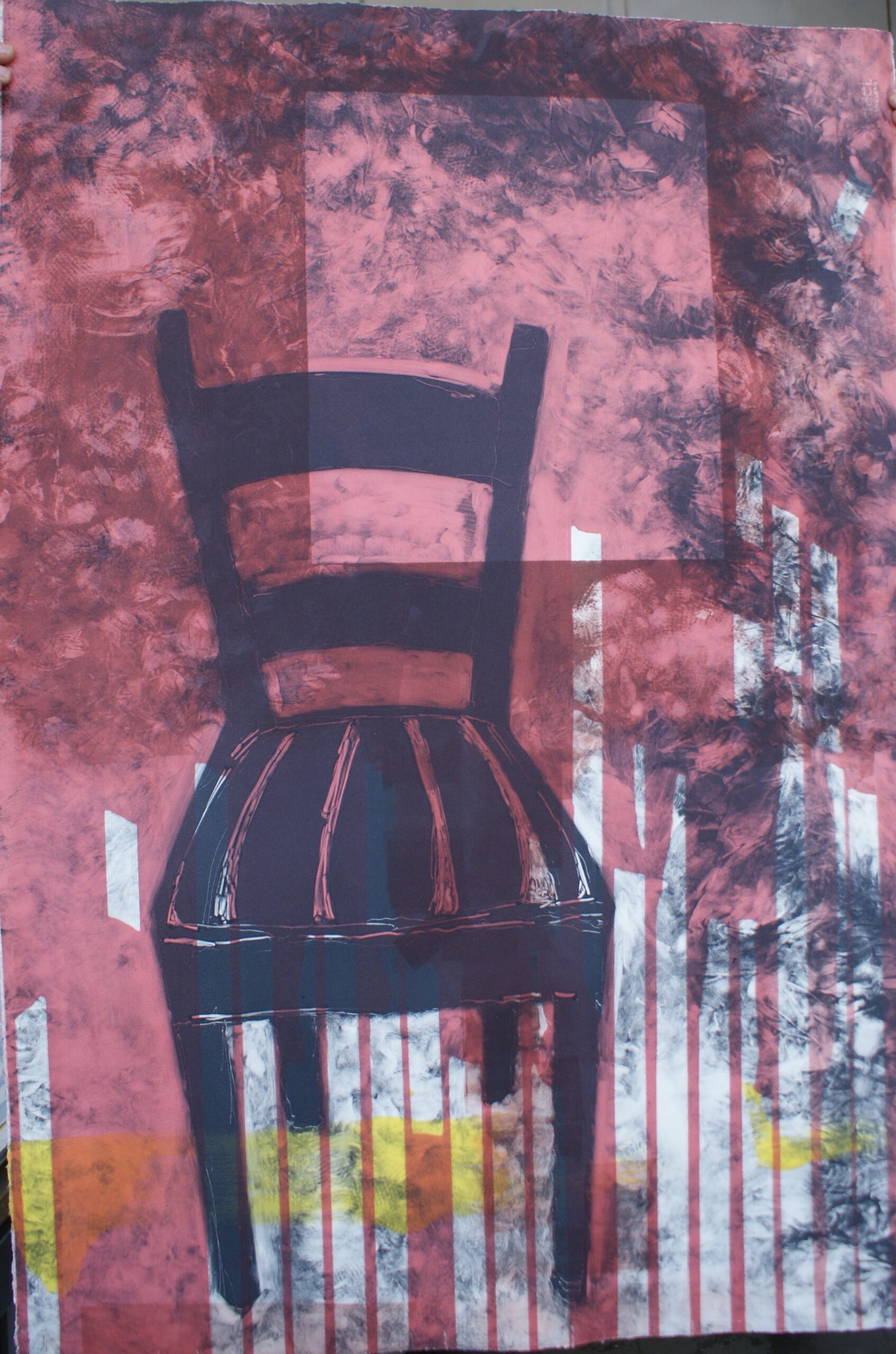
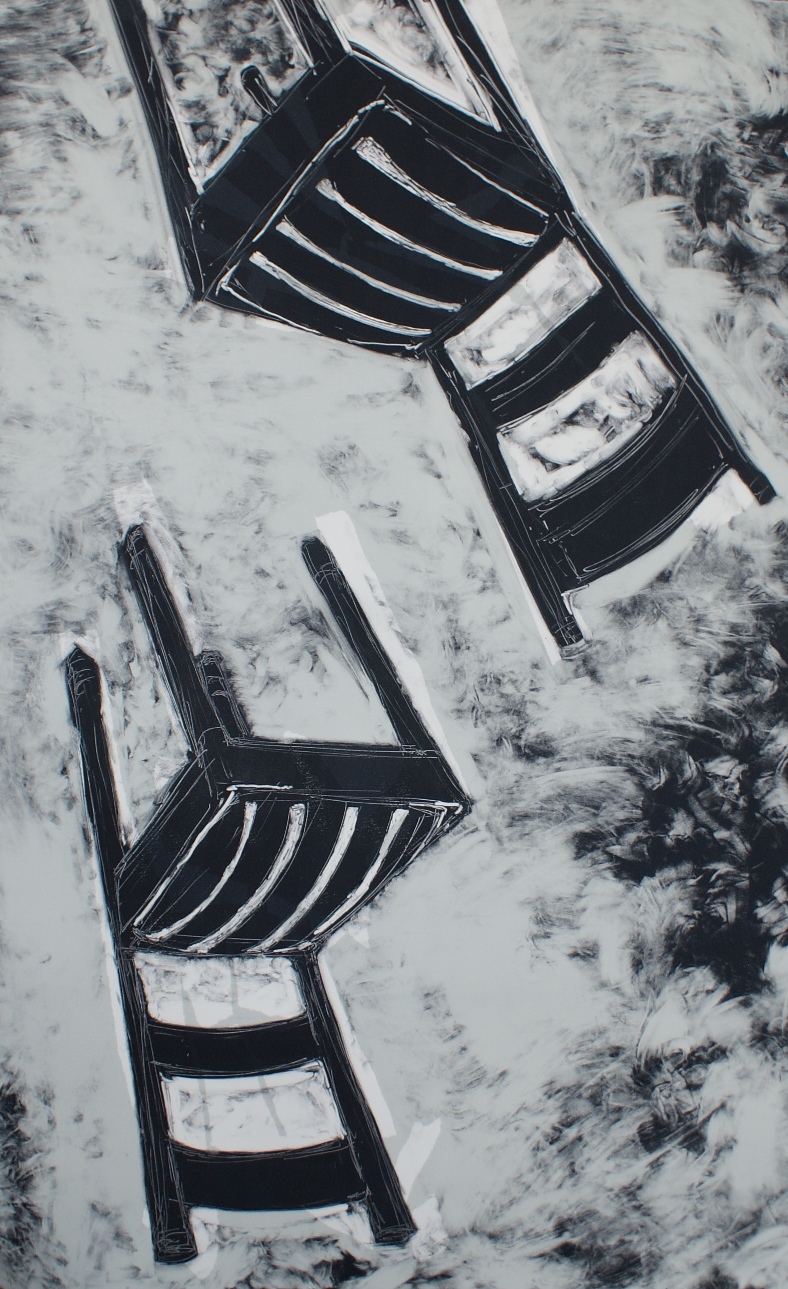
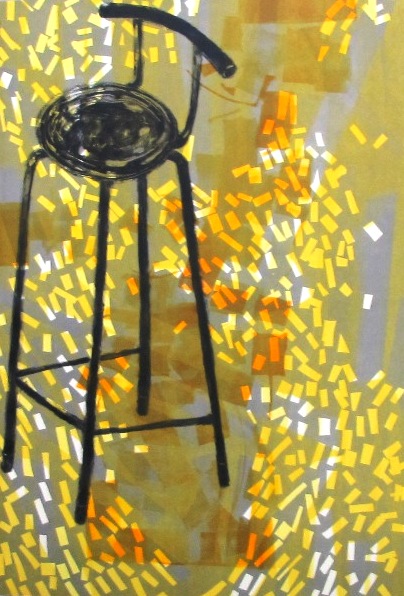
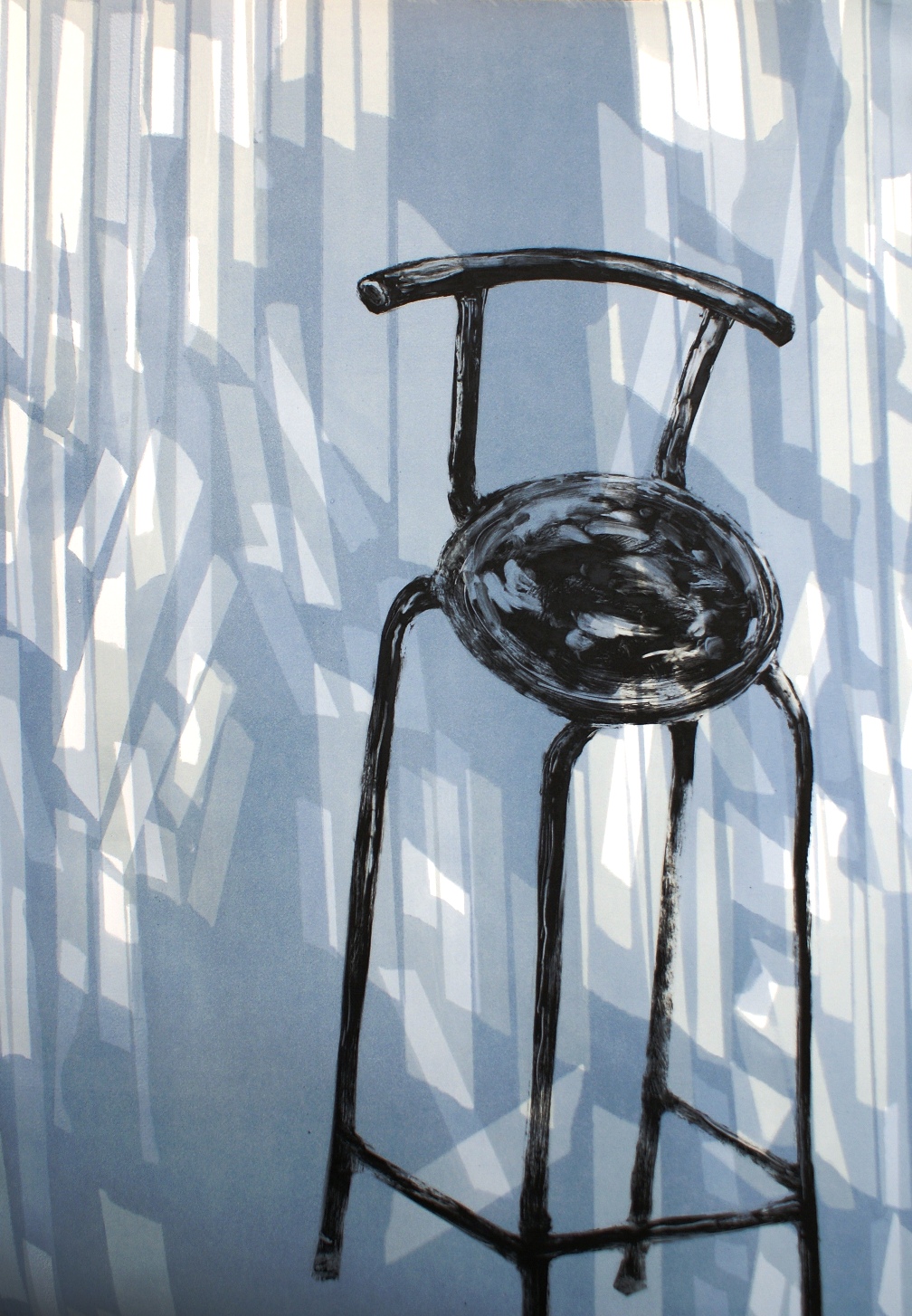
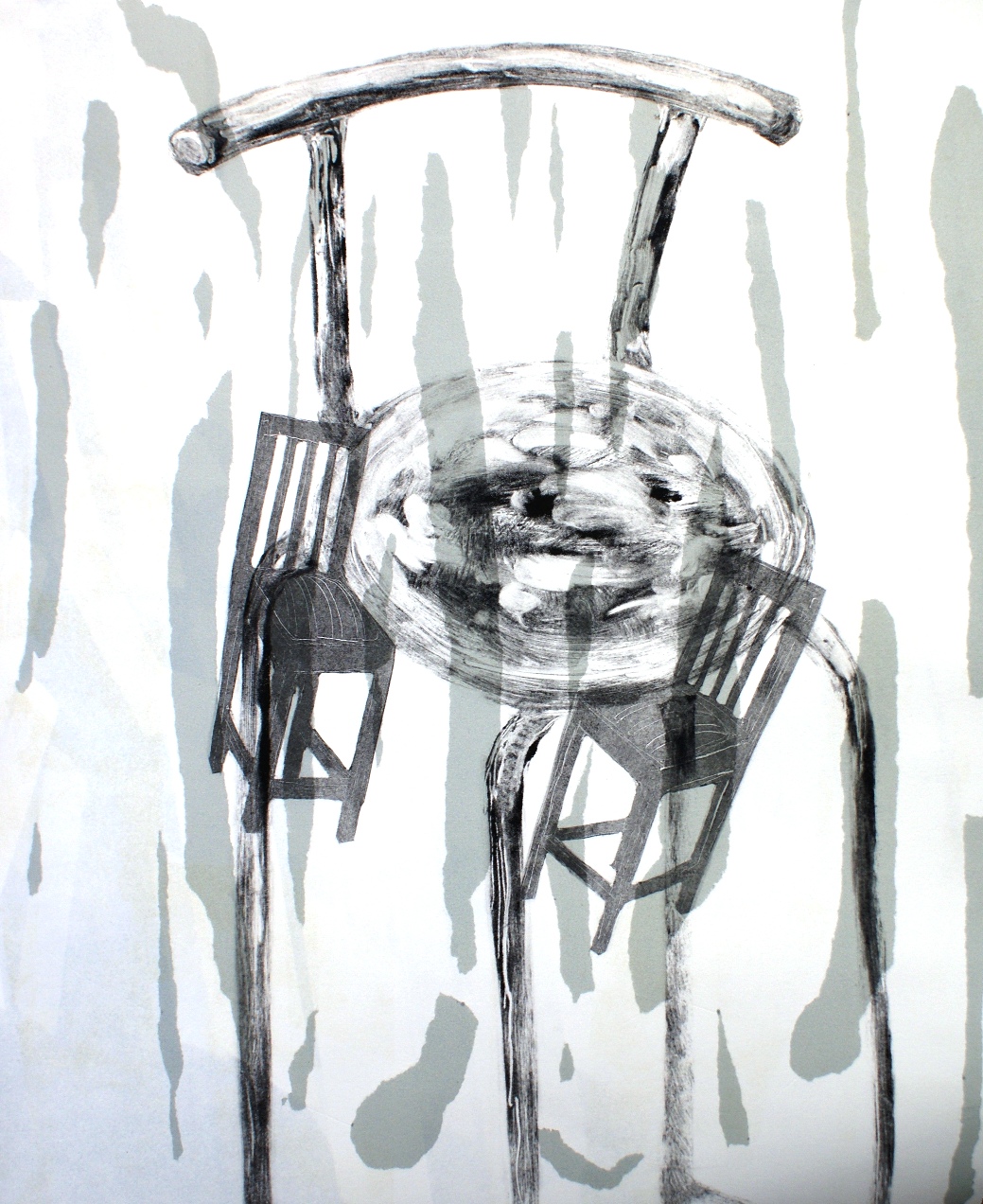
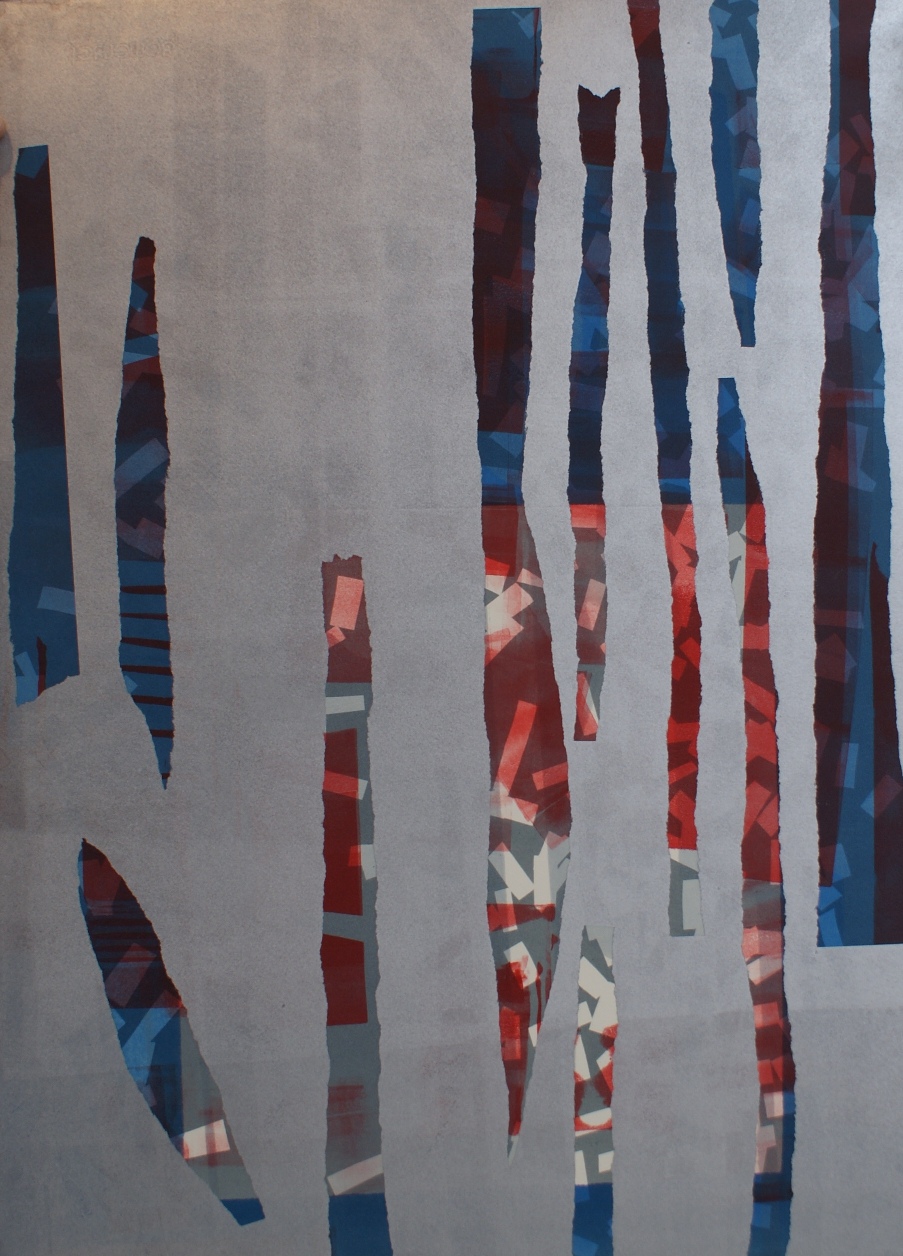
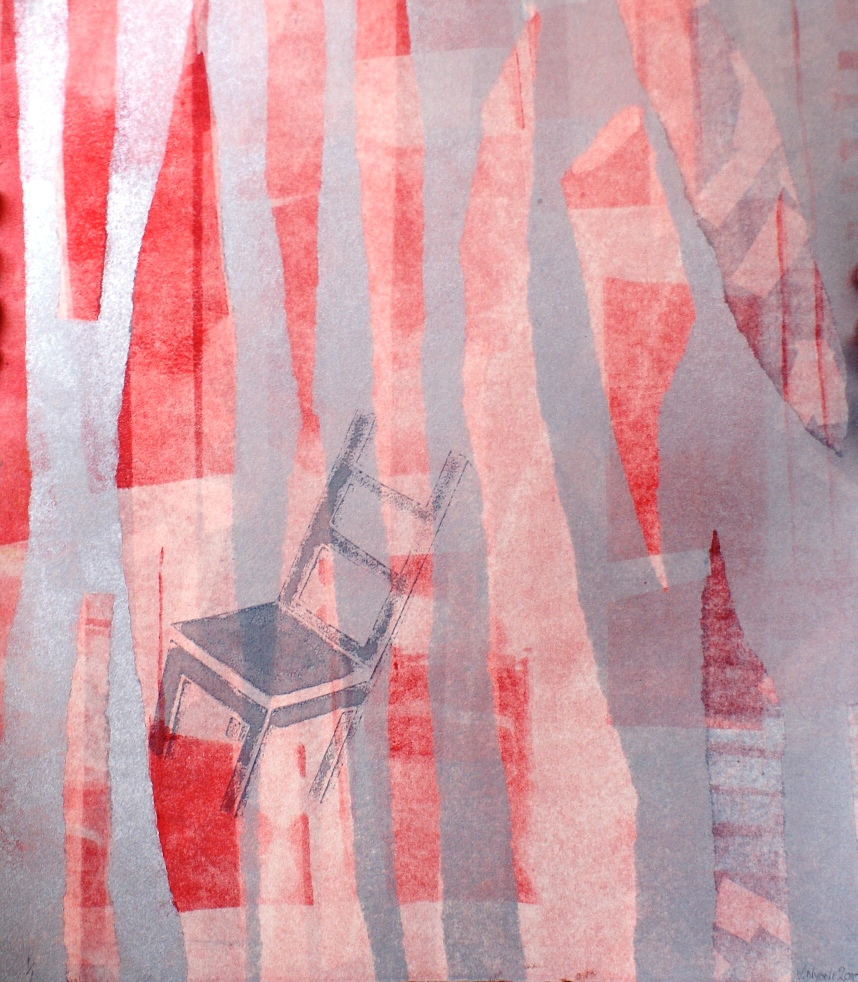
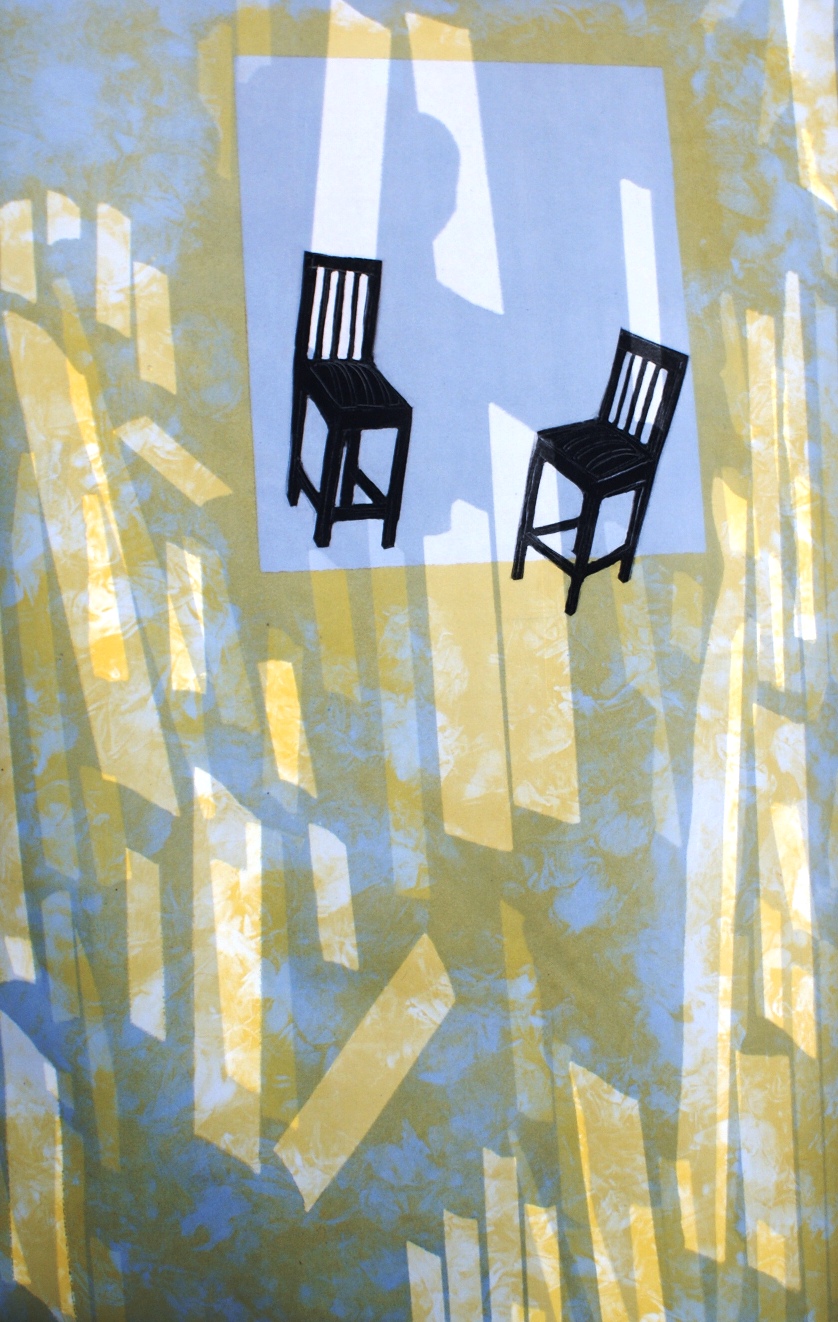
Former DKW printer Niall Bingham is his former student, which made for an interesting dynamic in the collaborative process. Nyoni is interested in the dialogue that happens with the printer and the process and how they help him realise his work. He talks about the relationships people have; relationships with one another, not just in relationships but in groups as well, and how to deal with the perceptions of others. The way people read and are read informs much of his work. The composition of the print is made up of the relationship of one shape or form to another and another, and so on. He deals with the work in terms of the layers and compositions. As a printer, Nyoni has a very real understanding of the surface and the process. He says “In terms of printmaking, you start with a concept, you take it somewhere, you hand it over to the technique and the technique takes it to the point of completion… The mistakes have to be negotiated and that’s the interesting part.”
A lot of Nyoni’s work is composed of symbolic imagery of things in relation to one another on a flat surface. He says, “I see image-making as a language. I see images as words, paragraphs and stories.” To him, the experience of reading a story is quite different from one person to another. It’s how you see it and that’s how he feels about his own work when it is viewed by an audience. The viewer makes sense of his visual narrative.